
How to Maintain Your Sump Pump: 5 Methods That Guarantee Results
By the American Plumbing Heating and Cooling Team
Licensed Florida contractors — HVAC CAC1821761 · Plumbing CFC1431919

Learn how to maintain your sump pump with monthly testing, annual cleaning, and seasonal checks to prevent flooding and extend equipment life.
Reviewed bythe American Plumbing Heating and Cooling Team — Licensed Florida contractors — HVAC CAC1821761 · Plumbing CFC1431919. Published June 15, 2026. About American Plumbing Heating and Cooling
Dealing with this problem right now? Call (941) 735-6616 and talk to our local team.
Request ServiceWhy Knowing How to Maintain Your Sump Pump Could Save You Thousands
Knowing how to maintain your sump pump is one of the most important things you can do to protect your home from water damage. Most homeowners never think about their sump pump — until it fails during a storm and the basement floods.
Here is a quick overview of the core maintenance steps:
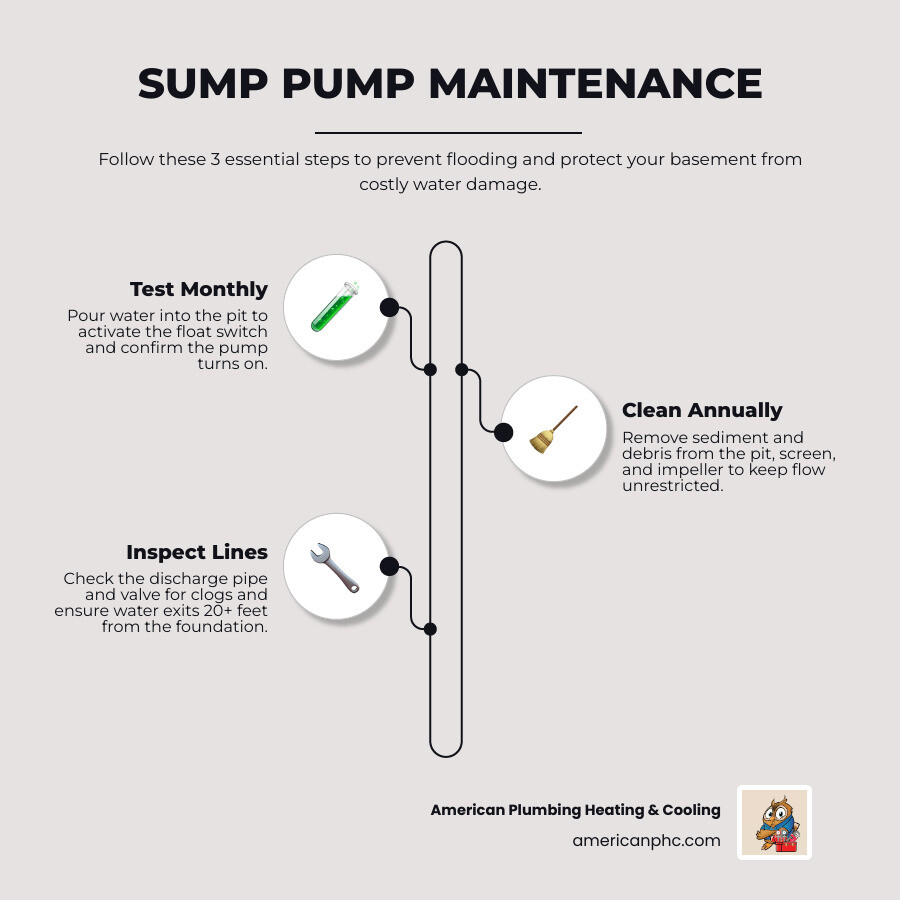
- Test the pump monthly by pouring a bucket of water into the pit until the float switch activates
- Clean the sump pit annually — remove debris, sediment, and buildup from the pit bottom and intake screen
- Inspect the float switch for free movement and correct alignment
- Check the discharge line to confirm it is clear and directs water at least 20 feet from your foundation
- Test your battery backup by unplugging the main pump and confirming the backup activates
- Schedule a professional inspection at least once a year — or twice yearly if your pump runs frequently
Most sump pumps last 7 to 10 years, but only with consistent care. Neglect is the number one reason pumps fail at the worst possible moment. Basement water damage can cost anywhere from $5,000 to $25,000 to restore — far more than the cost of a simple maintenance routine.
Whether you are a Florida homeowner dealing with heavy seasonal rainfall or tropical storm runoff, staying on top of sump pump care is not optional. It is the difference between a dry basement and a very expensive cleanup.
Why You Must Know How to Maintain Your Sump Pump
In May 2026, as we look at the increasing intensity of seasonal storms in Florida, the role of the sump pump has never been more critical. This mechanical guardian sits in the lowest part of your home, waiting to move groundwater away from your foundation. When it fails, the consequences are immediate and expensive.
How a Sump Pump Protects Against Flooding and Saves Your Sanity isn't just a catchy title; it's a reality for homeowners in areas like Sarasota and Cape Coral. Without a functioning pump, groundwater pressure can build up against your foundation walls, leading to structural cracks and persistent leaks. Even an inch of standing water can drive restoration costs up to $25,000, often because basic homeowners insurance policies don't always cover groundwater seepage without specific riders.
Beyond the structural integrity of your home, a neglected sump pump is a primary driver of mold growth. Florida’s humidity combined with a damp basement is a recipe for poor indoor air quality. By learning how to maintain your sump pump, you are effectively managing the moisture levels of your entire home, preventing emergency breakdowns during the height of a tropical storm.
A Comprehensive DIY Maintenance Schedule
Maintenance isn't a "one and done" task. To keep your system in peak condition, we recommend a tiered approach that balances quick monthly checks with deep annual cleaning.

The Monthly Quick-Check
During the wet months in Florida, a monthly visual assessment is vital.
- Power Check: Ensure the unit is plugged into a dedicated GFCI outlet. These outlets are prone to tripping during electrical storms, so always verify the "Reset" button is engaged.
- The Bucket Test: Pour about five gallons of water into the pit. The pump should activate quickly, empty the pit, and shut off smoothly.
- Visual Inspection: Look for any visible rust on the motor housing or loose wiring.
The Annual Deep Clean
Once a year, or twice if your pump runs frequently, you need to get into the nitty-gritty of Plumbing maintenance.
- Disconnect Power: Safety first. Always unplug the pump before reaching into the pit.
- Remove Debris: Use gloves or a wet/dry vacuum to remove stones, mud, and organic sediment from the bottom of the basin.
- Clean the Inlet Screen: This is where the water enters the pump. If it's clogged with silt, the motor has to work twice as hard, leading to premature burnout.
- Check for Corrosion: Wipe down the pump body. If you see flaking metal or unremovable rust, the unit may be nearing the end of its life.
Step-by-step on how to maintain your sump pump float switch
The float switch is the most common point of failure. It acts like a toilet tank float; as the water rises, the float lifts, triggering the motor. If it gets stuck, your basement floods while the pump sits idle.
- Clear the Path: Ensure the float isn't pressed against the side of the basin. Vibrations during operation can cause the pump to "walk" or shift position.
- Manual Trigger: Gently lift the float by hand. You should hear a click or feel the switch engage. Let it drop naturally to ensure it doesn't snag.
- Debris Removal: Small pebbles or twigs can wedge themselves in the switch mechanism.
- Vertical Alignment: Ensure the pump is sitting perfectly level. If it leans, the float may not rise high enough to activate the switch.
If your float switch is more than two years old, many manufacturers recommend a proactive replacement. For residents needing Sump Pump Installation Sarasota FL or Sump Pump Installation Bradenton FL, we often suggest upgrading to a vertical float switch, which is less likely to pin against the basin wall than the older tethered styles.
How to maintain your sump pump discharge lines and valves
The pump can only do its job if the water has somewhere to go. The discharge line is the pipe that carries water from the pit to the exterior of your home.
- The Check Valve: This is a one-way valve located on the discharge pipe. It prevents water from flowing back into the pit once the pump stops. If you hear a loud "thump" when the pump shuts off, or if the pump cycles too frequently, the check valve may be failing.
- The 20-Foot Rule: Water should be discharged at least 20 feet away from your foundation. If it's dumped too close, the water will simply soak back into the soil and return to your sump pit, creating a never-ending cycle that wears out your motor.
- Exterior Obstructions: Check the exit point of the pipe. Ensure it isn't blocked by mulch, overgrown grass, or debris. In areas like Milton and Navarre, keeping these lines clear is essential before the rainy season hits.
- Frozen Line Prevention: While rare in South Florida, North Florida homeowners should ensure the line is properly sloped to prevent water from pooling and freezing in the pipe during a cold snap.
For professional assistance with line clearing or Sump Pump Installation Milton FL and Sump Pump Installation Navarre FL, our team can ensure your drainage system is optimized for Florida's unique soil saturation levels.
Seasonal Strategies for Florida Homeowners
In Florida, "seasons" are defined by rainfall. Our maintenance strategy must shift to meet the demands of tropical weather patterns.
- Pre-Hurricane Season (Spring): This is your most important maintenance window. Check your drainage efficiency. Walk your property and ensure the grading moves water away from the house. If you see deep puddles forming near your foundation, your sump pump will be working overtime.
- Summer Storm Readiness: High heat and humidity can put extra stress on electrical components. Check your GFCI outlets more frequently, as lightning strikes can trip these breakers even if your home doesn't take a direct hit.
- Winter Maintenance: In the "dry" season, the pump might not run for weeks. This can cause the seals to dry out. We recommend running a gallon of water through the system once a month just to keep the motor lubricated and the seals moist.
Homeowners seeking Sump Pump Installation Venice FL or Sump Pump Installation Cape Coral FL should consider the local water table. In coastal areas, the soil saturates quickly, meaning your pump needs to be high-capacity and perfectly maintained to keep up with the inflow.
Warning Signs and Backup Solutions
How do you know if your pump is struggling? Your ears are often your best diagnostic tool.
| Warning Sign | Potential Issue | Recommended Action |
|---|---|---|
| Loud Grinding/Clanging | Worn impeller or motor bearings | Call for professional assessment |
| Frequent Cycling | Faulty check valve or undersized pit | Inspect check valve; consider upgrade |
| Pump Runs Constantly | Stuck float switch or high water table | Check float movement; verify pump size |
| Visible Rust/Corrosion | Aging unit (7+ years) | Prepare for replacement |
| Persistent Vibrations | Misaligned pump or debris in impeller | Level the pump and clean the intake |
If you notice these signs in Lakewood Ranch or Pensacola, it may be time to look into Sump Pump Installation Lakewood Ranch FL. The average lifespan of a pump is 7–10 years. If yours is approaching the decade mark, don't wait for a flood to replace it.
Testing battery backups and alarms
A sump pump is an electrical device. Unfortunately, the times you need it most — during heavy storms — are exactly when the power is most likely to go out.
A battery backup system is a secondary pump that runs on a dedicated deep-cycle battery. To test it:
- Unplug the main pump.
- Pour water into the pit.
- Verify the backup pump activates.
- Check the battery voltage. Most backup batteries last 3–5 years and require replacement even if they haven't been "used" much.
Alarms are another critical layer of protection. High-water alarms will sound a loud alert (or send a notification to your phone) if the water level rises above the primary pump's activation point. This gives you time to react before the water reaches your floorboards. You can find more about these integrated Services on our website.
Frequently Asked Questions about Sump Pump Care
How often should I test my sump pump?
At a minimum, you should perform a "bucket test" every three months. However, during the Florida wet season, a monthly check is much safer. If your pump runs frequently due to a high water table, increase this to twice a month.
How long does a typical sump pump last?
Most units last between 7 and 10 years. If your pump handles heavy sediment or runs constantly, expect a lifespan closer to 5–7 years. If your pump is over 10 years old, we recommend replacement even if it seems to be working, as internal components can fail without warning.
When should I call a professional for service?
While DIY cleaning is great, you should call a professional if you hear unusual noises, if the pump fails to activate during a test, or if you are uncomfortable dealing with electrical wiring. A professional inspection, which typically includes testing motor flow rates and electrical integrity, is recommended once a year.
Conclusion
Mastering how to maintain your sump pump is the best insurance policy you can have against the unpredictable Florida weather. From Sarasota to Pensacola, a well-maintained pump provides the peace of mind that your home and foundation are protected, no matter how hard the rain falls.
At American Plumbing Heating and Cooling, we bring over 100 years of combined experience to every job. Whether you need a routine inspection, a battery backup installation, or 24/7 emergency repair, our certified pros are here to help. Don't wait for the water to start rising — check our full list of Services and schedule your maintenance visit today.
Need HVAC Help?
Our certified technicians are ready to help with all your heating and cooling needs.
Request ServiceAbout the Author
American Plumbing Heating and Cooling Team
Licensed Florida contractors — HVAC CAC1821761 · Plumbing CFC1431919
More Articles
View All PostsRelated Articles


Ready to Get Started?
Whether you need a repair, maintenance, or a new system installation, our expert team is here to help.