
How Florida's Hard Water Affects Your Plumbing and How to Combat It
By the American Plumbing Heating and Cooling Team
Licensed Florida contractors — HVAC CAC1821761 · Plumbing CFC1431919

Discover how hard water affects your plumbing in Florida: scale buildup, low pressure, appliance damage. Combat it with softeners!
Reviewed bythe American Plumbing Heating and Cooling Team — Licensed Florida contractors — HVAC CAC1821761 · Plumbing CFC1431919. Published June 23, 2026. About American Plumbing Heating and Cooling
Dealing with this problem right now? Call (941) 735-6616 and talk to our local team.
Request ServiceHow Florida's Hard Water Is Quietly Damaging Your Plumbing Right Now
How hard water affects your plumbing in Florida is something every homeowner in the state should understand — because the damage starts long before you notice it. Here's a quick summary:
Hard water damages Florida plumbing by:
- Building up mineral scale inside pipes, reducing water flow by up to 25%
- Cutting water heater efficiency by 8–12% (and increasing energy bills by up to 20%)
- Clogging showerheads, faucet aerators, and toilet valves with calcium deposits
- Causing appliances like dishwashers and washing machines to fail up to 30% faster
- Raising internal pipe pressure, which accelerates corrosion and increases leak risk
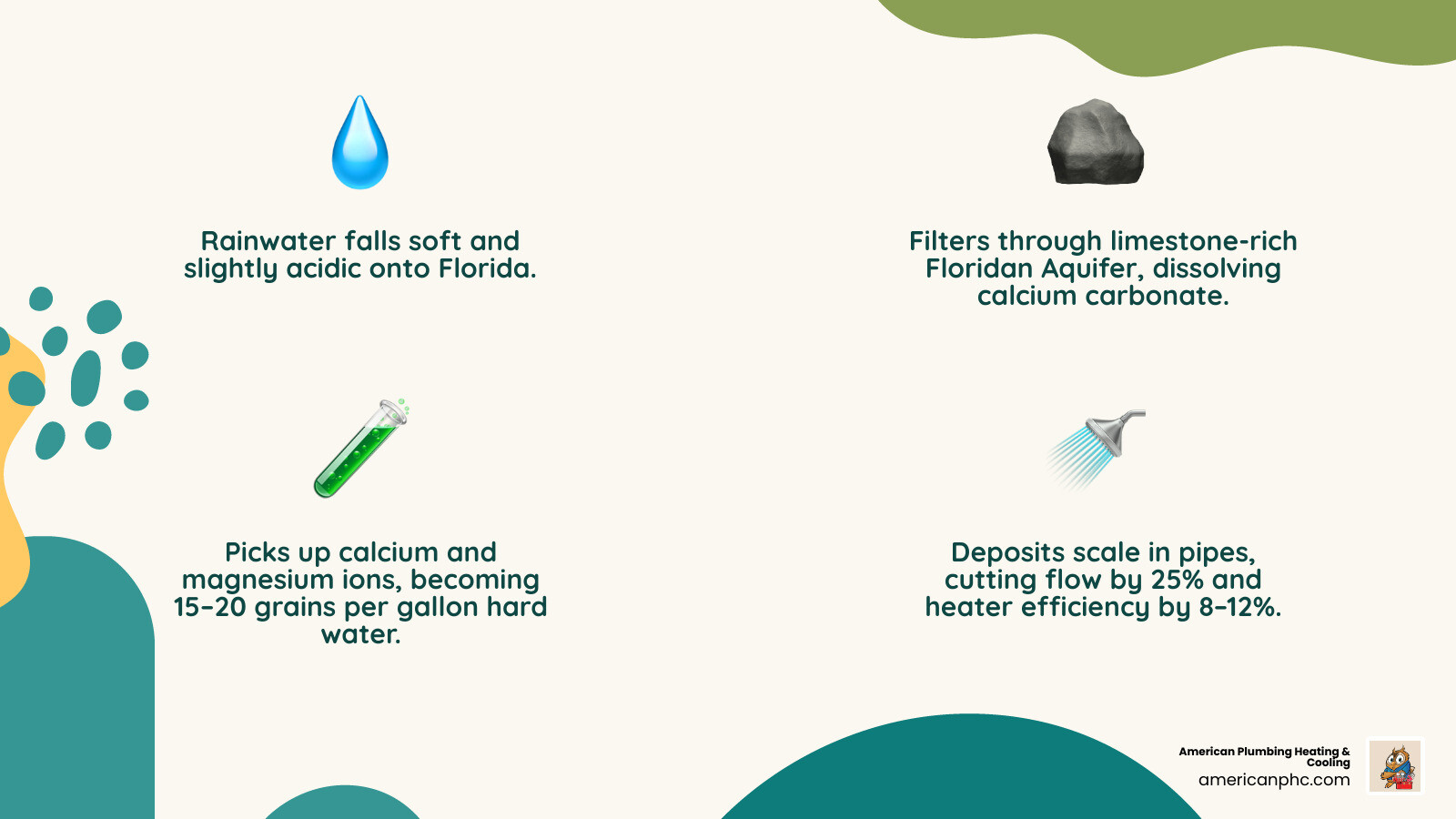
Florida sits on top of one of the largest limestone aquifer systems in the world. As groundwater moves through that rock, it picks up calcium and magnesium — the two minerals that make water "hard." The result? Many Florida homes receive water measuring 15–20 grains per gallon (gpg), far above the national average and well into the "very hard" classification used by the U.S. Geological Survey.
The frustrating part is that hard water looks and tastes normal. You might notice white spots on your glasses or a filmy residue on your shower door and chalk it up to a cleaning problem. But inside your pipes, fixtures, and appliances, scale is building up steadily — and left untreated, it leads to real plumbing failures, higher utility bills, and premature appliance replacements.
If you're already seeing the signs, you're not alone. This is one of the most common plumbing challenges across Sarasota, Bradenton, Cape Coral, and virtually every other Florida community.
Why is Florida’s Water So Hard?
To understand why your Plumbing is under constant siege, we have to look deep underground. Most of our water in Florida comes from the Floridan Aquifer, a massive underground reservoir that provides drinking water to millions. While the water is clean and safe, the geological formations it sits in are composed primarily of limestone and ancient coral.
Limestone is rich in calcium carbonate. As rainwater falls — which is naturally soft and slightly acidic — it filters down through the soil and rock. As it passes through these limestone deposits, it dissolves the rock, picking up calcium and magnesium ions. By the time it reaches your home’s intake, it is saturated with these minerals.
As of May 2026, water quality standards continue to confirm that Florida’s groundwater is among the hardest in the nation. While "hard" water isn't a health hazard, the chemical reality is that these minerals want to "fall out" of the water and stick to surfaces, especially when the water is heated. This process, known as scaling, is the root cause of nearly every hard water plumbing headache we see in areas like Pensacola and Sarasota.
How Hard Water Affects Your Plumbing in Florida
When we talk about how hard water affects your plumbing in Florida, we are primarily talking about "scale." Scale is a rock-hard mineral crust that forms inside your pipes. Think of it like cholesterol in an artery; it builds up slowly over years, narrowing the path through which water can flow.
This mineral adhesion does more than just slow down your morning shower. It causes structural degradation in several ways:
- Flow Restriction: As the internal diameter of the pipe shrinks, your home experiences a noticeable drop in volume.
- Increased Internal Pressure: Because the water is being forced through a smaller opening, the velocity and pressure within the system can fluctuate wildly, putting stress on joints and seals.
- Pipe Corrosion: While the minerals themselves don't eat the metal, the scale can trap moisture and bacteria against the pipe wall, leading to localized pitting and eventual leaks.
Our Services often involve diagnosing these "invisible" issues before they turn into a burst pipe behind a wall.
The Impact of Scale on Pipe Efficiency and Water Pressure
The math behind scale is staggering. Research shows that a scale buildup of just 1/16 of an inch inside a standard half-inch supply line can reduce your water flow capacity by approximately 25%.
| Pipe Condition | Flow Capacity | Efficiency Loss |
|---|---|---|
| New Pipe (0" Scale) | 100% | 0% |
| 1/16" Scale Buildup | 75% | 25% |
| 1/8" Scale Buildup | 55% | 45% |
| 1/4" Scale Buildup | 30% | 70% |
This reduction creates pressure imbalances. You might notice that if someone flushes a toilet, the shower pressure in the next room vanishes entirely. This isn't just an inconvenience; it’s a sign that your home’s "arteries" are clogged.
How Hard Water Affects Your Plumbing in Florida High-Rises
In multi-family systems and high-rise buildings common in Cape Coral and Sarasota, the stakes are even higher. High-rises rely on complex booster pumps and pressure-reducing valves to get water to the upper floors.
When hard water scale builds up in these systems, booster pumps have to work twice as hard to push water through narrowed pipes, leading to mechanical failure. Furthermore, mineral deposits can cause sensitive valves to seize up. For building management, this translates to constant resident complaints about lukewarm water or poor pressure on the 10th floor. Addressing these issues in a high-rise often requires extensive descaling or expensive repiping projects.
Damage to Water Heaters and Major Appliances
Your water heater is the most vulnerable part of your plumbing system when it comes to hard water. Why? Because heat accelerates the crystallization of minerals. As water is heated, calcium and magnesium settle at the bottom of the tank as sediment.
This creates a thick layer of thermal insulation between the burner (or heating element) and the water. The result is an 8–12% loss in heating efficiency. In many Florida homes, this sediment layer can increase energy bills by up to 20% because the heater has to run longer to penetrate the "rock" at the bottom of the tank.
If you hear strange popping or rumbling noises coming from your garage or utility closet, that is the sound of steam bubbles escaping from beneath the sediment layer. It’s a literal cry for help from your appliance. You can learn more about these sounds in our FAQs.
Signs of Hard Water Damage in Florida Appliances
It isn't just the water heater. Any appliance that uses water is at risk. Statistics show that appliances exposed to Florida’s hard water can fail up to 30% faster than those in soft-water regions.
- Dishwashers: Mineral deposits clog the tiny spray arm holes, leaving dishes cloudy and spotted.
- Washing Machines: Scale builds up on the internal heating elements and pumps. You may notice your clothes feel stiff or scratchy, and your brights look dull.
- Ice Makers: Small water lines in refrigerators are easily choked by even tiny amounts of scale, leading to smaller cubes or total failure of the ice maker.
If you are seeing these issues, it may be time for more info about plumbing services to protect your expensive investments.
Identifying the Signs of Hard Water in Your Home
How do you know if you're a victim of the "Florida Crust"? Look for these classic symptoms:
- Glassware Film: A white, cloudy haze on glasses that doesn't wash off.
- Dry Skin and Brittle Hair: Hard water prevents soap from rinsing away completely, leaving a film on your skin that causes itching and makes hair feel "straw-like."
- Poor Soap Lather: If you have to use a mountain of dish soap just to get a few bubbles, your water is likely very hard.
- Crusty Aerators: Look at the tip of your kitchen faucet. If you see white or yellowish "rocks" forming where the water comes out, that’s calcium carbonate.
At American Plumbing Heating and Cooling, we’ve been About helping neighbors identify these issues for years. As of May 2026, we are seeing more homeowners prioritize water quality as a part of their standard home maintenance.
How Hard Water Affects Your Plumbing in Florida Fixtures
Fixtures are the "face" of your plumbing, and hard water treats them poorly.
- Showerheads: Minerals clog the nozzles, leading to uneven spray patterns or "stray" streams that shoot sideways.
- Faucet Valves: Deposits can interfere with the internal cartridges and seals, leading to persistent drips.
- Toilet Flappers: In Florida, "toilet ghosts" (toilets that flush themselves) are often caused by mineral buildup on the flapper seat, preventing a watertight seal.
Effective Solutions for Florida Homeowners
The good news is that you don't have to just live with it. There are several professional ways to fight back:
- Water Softeners (Ion Exchange): This is the gold standard for Florida. These systems swap calcium and magnesium ions for sodium or potassium ions, effectively removing the "hardness" entirely.
- Reverse Osmosis (RO): Best for drinking water, RO systems use a semi-permeable membrane to strip away almost all dissolved solids.
- Salt-Free Conditioners: These don't remove the minerals but "crystallize" them so they can't stick to your pipes. These are a great low-maintenance option for many homes.
The first step is always a water hardness test. Hardness is measured in grains per gallon (gpg) or milligrams per liter (mg/L). If your water is over 7 gpg, it’s considered hard. In many of our service areas, we regularly see levels exceeding 15 gpg.
Ready to stop the damage? Contact us to discuss a custom solution for your home.
Frequently Asked Questions about Florida Hard Water
Why is my water pressure dropping in Sarasota or Cape Coral?
While it could be a leak, in Florida, the culprit is often mineral buildup. Scale accumulates inside your pipes and fixture aerators, slowly choking the flow. If the pressure drop is only happening with hot water, it’s a sign your water heater is heavily scaled.
Is hard water in Florida safe to drink?
Yes, it is perfectly safe. In fact, calcium and magnesium are essential minerals for your body. However, most people find the taste "metallic" or "chalky," and the aesthetic issues — like spotted dishes and dry skin — make it undesirable for most households.
How often should I flush my water heater in Florida?
Because our water is so mineral-heavy, we recommend a professional flush at least once a year. This removes the accumulated sediment, restores heating efficiency, and can significantly extend the life of your tank.
Conclusion
Living in the Sunshine State is a dream, but our geology presents unique challenges for our homes. Understanding how hard water affects your plumbing in Florida is the first step toward protecting your property value and your comfort.
At American Plumbing Heating and Cooling, we bring over 100 years of combined experience to every job. Whether you're in Sarasota, Cape Coral, or Pensacola, our certified pros are ready to help you descale your life. Don't wait for a pipe to burst or your water heater to die — Schedule your Florida water treatment service today and give your plumbing the relief it deserves.
Need HVAC Help?
Our certified technicians are ready to help with all your heating and cooling needs.
Request ServiceAbout the Author
American Plumbing Heating and Cooling Team
Licensed Florida contractors — HVAC CAC1821761 · Plumbing CFC1431919
More Articles
View All PostsRelated Articles


Ready to Get Started?
Whether you need a repair, maintenance, or a new system installation, our expert team is here to help.