
How to Make the Spring HVAC Switch From Heating to Cooling
By the American Plumbing Heating and Cooling Team
Licensed Florida contractors — HVAC CAC1821761 · Plumbing CFC1431919

Prepare your home with a smooth spring HVAC transition from heating to cooling using this Florida-ready checklist.
Reviewed bythe American Plumbing Heating and Cooling Team — Licensed Florida contractors — HVAC CAC1821761 · Plumbing CFC1431919. Published June 5, 2026 · Last updated July 29, 2026. About American Plumbing Heating and Cooling
Dealing with this problem right now? Call (941) 735-6616 and talk to our local team.
Request ServiceWhy the Spring HVAC Transition from Heating to Cooling Matters for Florida Homeowners
Making the spring HVAC transition from heating to cooling is one of the most important things you can do for your home before Florida's intense summer heat takes hold. In a state where temperatures can climb into the 90s seemingly overnight, waiting until your AC fails on the first brutal day of the season is a gamble most homeowners can't afford.
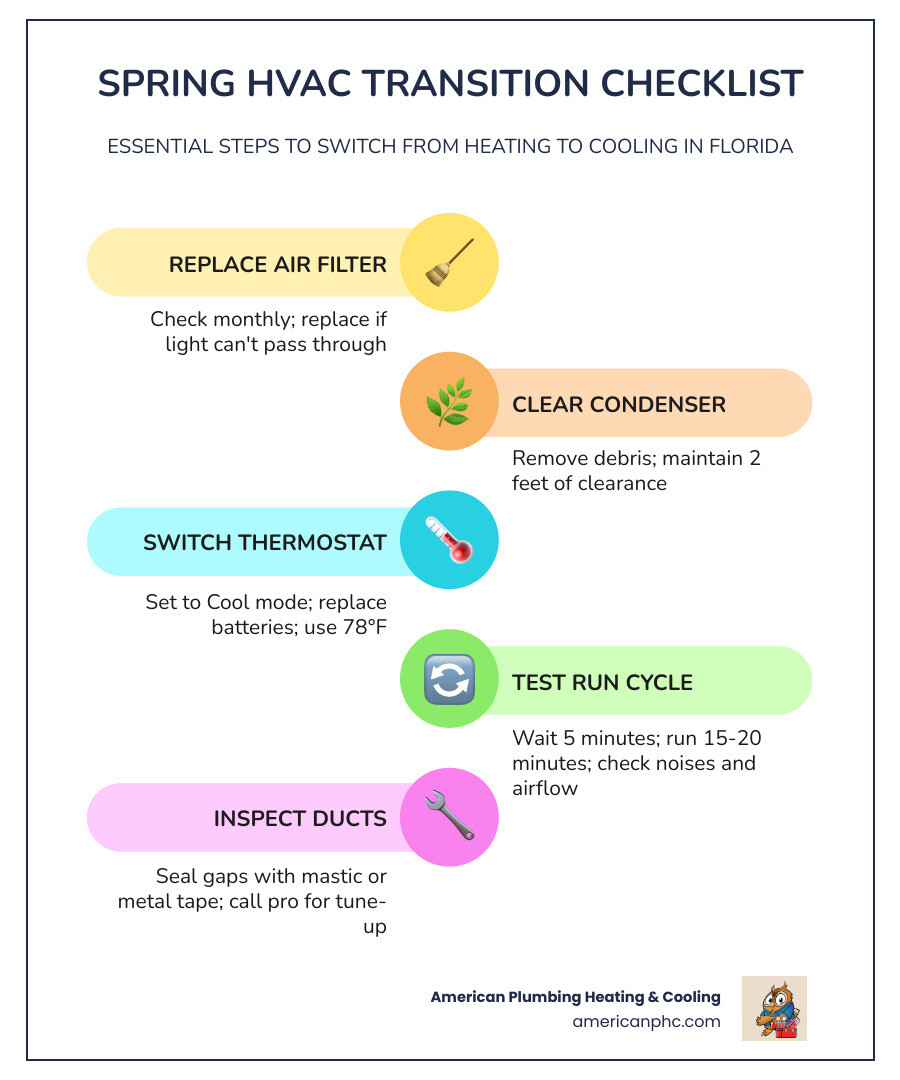
Here's a quick overview of the key steps to switch your HVAC from heating to cooling this spring:
- Replace or inspect your air filter — check monthly during spring; replace if light can't pass through
- Clear the outdoor condenser unit — remove debris and maintain at least 2 feet of clearance all around
- Switch your thermostat to Cool mode — replace batteries and set to 78°F when home
- Wait 5 minutes before switching modes — protects the compressor from pressure imbalance
- Run a 15-20 minute test cycle — listen for unusual noises and check for weak airflow or odd smells
- Inspect visible ductwork — seal any gaps with mastic sealant or metal tape
- Schedule a professional tune-up — a licensed technician handles refrigerant checks and electrical inspections
Unlike northern states that ease slowly into warm weather, Florida homeowners often go from running the heat on a cool March morning to needing full air conditioning by afternoon. That rapid shift puts real stress on your HVAC system — especially if it sat mostly idle through a mild winter. Skipping spring prep means risking poor airflow, higher energy bills, and a breakdown at the worst possible time.
The good news? A little attention now goes a long way. Whether you're in Sarasota, Bradenton, Pensacola, or Cape Coral, getting ahead of the season means staying comfortable all summer without the surprise repair calls.
Essential DIY Steps for Your Spring HVAC Transition from Heating to Cooling
Before you flip that thermostat switch, there are several hands-on tasks you can handle to ensure your system is ready for the long haul. Think of this as a "pre-flight check" for your home’s comfort.
The Power of a Fresh Air Filter
The single most effective DIY task is replacing your air filter. During the winter, your filter has been busy trapping dust, pet dander, and skin cells. As we move into May 2026, Florida’s high pollen counts add another layer of debris to the mix. A clogged filter is like trying to breathe through a thick sweater; it forces your Air Conditioning unit to work much harder than necessary.
We recommend checking your filter every 30 days during the spring. If you hold it up to a bright light and can't see the light passing through, it’s time for a change. For homes with pets or allergy sufferers, we suggest using a filter with a higher MERV rating (usually between 8 and 11), provided your system’s blower can handle it. One Simple Way to Spring AC Maintenance Before Florida Heat is simply keeping these filters clean to prevent the system from freezing up or burning out.
Your Spring DIY Checklist:
- Vacuum Vents and Registers: Dust accumulates on the grilles over the winter. Use a brush attachment to clear them out so air can flow freely.
- Clear the Drain Line: Locate your AC condensate drain line (usually a PVC pipe near the outdoor unit) and ensure it isn't clogged with algae or sludge.
- Check Thermostat Batteries: If your thermostat isn't hardwired, fresh batteries in the spring can prevent a "no-cool" emergency in July.
- Inspect for Air Leaks: Check for gaps around windows and doors where your expensive cool air might escape.

Preparing the Outdoor Unit and Ductwork for Peak Performance
Your outdoor condenser unit is the workhorse of the cooling process. It’s responsible for releasing the heat collected from inside your home. If it’s buried under leaves or choked by weeds, it can’t do its job.
Give Your Condenser Room to Breathe
Take a walk outside and inspect the area around your unit. Over the winter, Florida’s wind and rain may have piled up debris. How to Spring Maintenance the Right Way starts with maintaining at least a two-foot clearance around the entire unit. Trim back any shrubs, grass, or low-hanging branches.
You can also gently rinse the exterior fins with a garden hose to remove salt air residue (especially important in coastal areas like Siesta Key or Cape Coral) and dirt. Warning: Never use a pressure washer, as the high-powered spray can easily bend the delicate metal fins and ruin the unit.
| Feature | DIY Cleaning | Professional Deep Cleaning |
|---|---|---|
| Debris Removal | Clear leaves and grass | Full internal cabinet cleaning |
| Coil Care | Gentle hose rinse | Chemical coil cleaning and fin straightening |
| Electrical | Visual check for damage | Testing capacitors and wire integrity |
| Refrigerant | Not applicable (EPA license required) | Pressure testing and leak detection |
Don't Let Your Cool Air Escape
While you’re focusing on the units themselves, don't forget the "veins" of your home: the ductwork. Research shows that leaky ducts can lose up to 30% of conditioned air before it even reaches your living spaces. In Florida, where your Heating system may have caused ducts to expand and contract during a few cold snaps, joints can become loose. If you have access to your ducts in the attic or crawlspace, look for visible gaps and seal them with mastic sealant or metal-backed tape—standard "duct tape" actually degrades too quickly for this job.
Thermostat Settings and Testing Procedures
The thermostat is the brain of your spring HVAC transition from heating to cooling. Proper settings are the difference between a reasonable utility bill and a shock at the end of the month.
Thermostat Calibration for a Spring HVAC Transition from Heating to Cooling
We recommend setting your thermostat to 78°F when you are at home and awake. While that might sound high to some, using ceiling fans (rotating counter-clockwise!) can make the room feel 4 degrees cooler through the wind-chill effect.
If you haven't already, May 2026 is a great time to upgrade to a smart thermostat. These devices can cut cooling costs by about 10% annually by learning your schedule. Setting your thermostat 7 to 10 degrees higher when the house is empty is one of the best ways How to Get Your Cooling System Ready for Hot Weather without sacrificing comfort when you return.
Safe Testing During Your Spring HVAC Transition from Heating to Cooling
Don’t wait for a 95-degree afternoon to find out your AC isn't working. Follow the "5-minute rule": if you just turned off the heat, wait at least five minutes before switching to cool. This allows the refrigerant pressures to equalize and protects your compressor from "short-cycling."
Once you switch to "Cool," run a test cycle for 15 to 20 minutes. During this time, perform a sensory check:
- Listen: Do you hear banging, screeching, or clicking? These could indicate a failing motor or loose belt.
- Smell: A musty or "dirty sock" smell often indicates mold or mildew on the evaporator coils—a common Florida issue.
- Feel: Is the air coming out of the vents significantly cooler (about 15-20 degrees) than the air in the room?
Preventing HVAC Emergencies with Regular Maintenance is much easier when you catch these warning signs in April or May rather than in the middle of a heatwave. For more detailed tips, check out Don't Sweat It: A Local Guide to HVAC System Maintenance.
The Value of Professional Spring Maintenance in Florida
While DIY steps are a great foundation, there are parts of your system that only a certified pro should touch. In Florida, the humidity and salt air create unique challenges that a standard checklist might miss.
A professional Spring AC Tune-Up in Florida 101 includes:
- Refrigerant Level Checks: Low refrigerant makes your system run constantly, driving up bills and eventually killing the compressor. Only licensed technicians can handle refrigerant.
- Electrical Inspections: We tighten all connections and measure voltage to prevent "fried" components.
- Deep Coil Cleaning: We clean the indoor evaporator coil and the outdoor condenser coil with specialized solutions to maximize heat transfer.
- Drain Line Flushing: We use professional-grade tools to ensure your drain line is clear, preventing water damage and mold growth.
There are 20 Reasons to Schedule Your HVAC Tune-Up Today, but the biggest one is peace of mind. A well-maintained unit lasts significantly longer than one that struggles through dirty components year after year. We often say that The Magic Number for HVAC Maintenance Success is twice a year—once for cooling and once for heating—especially for heat pumps that work year-round.
Frequently Asked Questions about Seasonal HVAC Transitions
How often should I replace air filters during the spring transition?
In Florida, you should inspect your filter every month. During the spring pollen surge, you may need to replace it every 30 days. If you have pets or live near construction (common in growing areas like Lakewood Ranch or Cape Coral), monthly changes are a must to maintain airflow.
Can I safely run my heat and AC on the same day?
Yes, but be careful. Florida mornings can be 60°F and afternoons 85°F. If you switch manually, always wait at least 5 minutes between modes. If you have a smart thermostat, use the "Auto" setting with a "deadband" (a 3-5 degree gap between the heat and cool setpoints) to prevent the system from fighting itself.
Why does my air conditioner smell musty when I first turn it on?
This is often called "Dirty Sock Syndrome." It’s caused by bacteria and mold growing on the damp evaporator coils or in the drain pan. While a fresh filter helps, a persistent smell usually requires a professional deep cleaning of the coils to ensure your indoor air quality remains healthy.
Conclusion
The spring HVAC transition from heating to cooling doesn't have to be a stressful event. By following these DIY steps and understanding when to call in the pros, you can protect your system's longevity and keep your utility bills under control. Whether you're enjoying the breeze in Milton or the sun in Sarasota, a prepared HVAC system is your best defense against the Florida elements.
At American Plumbing Heating and Cooling, we’ve spent years helping our neighbors in Bradenton, Pensacola, and across Southwest Florida stay comfortable. Our team of certified pros is ready to ensure your system is optimized for the 2026 cooling season.
Don't wait for the heat to catch you off guard. Schedule Your Professional HVAC Services Today or join our Maintenance Plan to ensure your home remains a cool sanctuary all year long.
{"@context": "https://schema.org", "@graph": [{"@type": "Article", "headline": "Spring HVAC Transition to Cooling | American Plumbing", "description": "Master your spring HVAC transition from heating to cooling with simple Florida prep tips. Schedule a tune-up to stay cool all summer.", "author": {"@type": "Person", "name": "American Plumbing Heating and Cooling"}, "publisher": {"@type": "Organization", "name": "American Plumbing Heating and Cooling", "logo": {"@type": "ImageObject", "url": "https://firebasestorage.googleapis.com/v0/b/ai-templates.appspot.com/o/bot%2FiTB8FxoyvSplQzS7StV8%2Flogo%2FScreenshot%202026-03-16%20at%2012.43.20%E2%80%AFPM.png?alt=media&token=4ae5e171-7bb5-4a27-91f4-47e969b91c80"}}, "datePublished": "2026-06-05T15:27:33+00:00", "dateModified": "2026-06-05T15:27:53.699414", "mainEntityOfPage": {"@type": "WebPage", "@id": "https://pms.ciwebgroup.com/americanphc/2026/06/05/how-to-make-the-spring-hvac-switch-from-heating-to-cooling/"}, "image": "https://images.pexels.com/photos/20046692/pexels-photo-20046692.jpeg?auto=compress&cs=tinysrgb&h=650&w=940"}, {"@type": "FAQPage", "mainEntity": [{"@type": "Question", "name": "How do I switch my HVAC from heating to cooling in spring?", "acceptedAnswer": {"@type": "Answer", "text": "To switch your HVAC from heating to cooling, inspect or replace the air filter, clear debris from the outdoor condenser, switch the thermostat to Cool mode, wait 5 minutes before changing modes, and run a 15-20 minute test cycle. You should also inspect visible ductwork and schedule a professional tune-up."}}, {"@type": "Question", "name": "Why is spring HVAC maintenance important for Florida homeowners?", "acceptedAnswer": {"@type": "Answer", "text": "Florida temperatures can rise into the 90s quickly, forcing HVAC systems to shift from heating to cooling with little warning. Spring maintenance helps prevent poor airflow, higher energy bills, and breakdowns during the hottest part of the season."}}, {"@type": "Question", "name": "What thermostat setting is recommended when switching to cooling?", "acceptedAnswer": {"@type": "Answer", "text": "The article recommends switching the thermostat to Cool mode, replacing the batteries if needed, and setting it to 78°F when you are home. It also advises waiting 5 minutes before switching modes to protect the compressor."}}, {"@type": "Question", "name": "How should I prepare my outdoor AC condenser for spring?", "acceptedAnswer": {"@type": "Answer", "text": "Clear debris from around the outdoor condenser unit and maintain at least 2 feet of clearance on all sides. This helps the system operate properly as cooling demand increases."}}, {"@type": "Question", "name": "Why should I replace my HVAC air filter before using the AC?", "acceptedAnswer": {"@type": "Answer", "text": "A fresh air filter is important because the filter may have collected dust, pet dander, skin cells, and spring pollen. A clogged filter restricts airflow and makes the system work harder."}}]}]}Need HVAC Help?
Our certified technicians are ready to help with all your heating and cooling needs.
Request ServiceAbout the Author
American Plumbing Heating and Cooling Team
Licensed Florida contractors — HVAC CAC1821761 · Plumbing CFC1431919
More Articles
View All PostsRelated Articles


Ready to Get Started?
Whether you need a repair, maintenance, or a new system installation, our expert team is here to help.