
How to Get Your Cooling System Ready for Hot Weather
By the American Plumbing Heating and Cooling Team
Licensed Florida contractors — HVAC CAC1821761 · Plumbing CFC1431919

Get your cooling system ready for hot weather with our 5-step checklist, DIY tips, pro tune-ups and Florida heatwave prep!
Reviewed bythe American Plumbing Heating and Cooling Team — Licensed Florida contractors — HVAC CAC1821761 · Plumbing CFC1431919. Published May 5, 2026 · Last updated July 29, 2026. About American Plumbing Heating and Cooling
Dealing with this problem right now? Call (941) 735-6616 and talk to our local team.
Request ServiceIs Your Cooling System Ready for Hot Weather? Here's What Florida Homeowners Need to Know
Getting your cooling system ready for hot weather is one of the most important things you can do as a Florida homeowner before summer arrives. And in Florida, summer doesn't wait — temperatures climb fast, and your AC works harder here than almost anywhere else in the country.
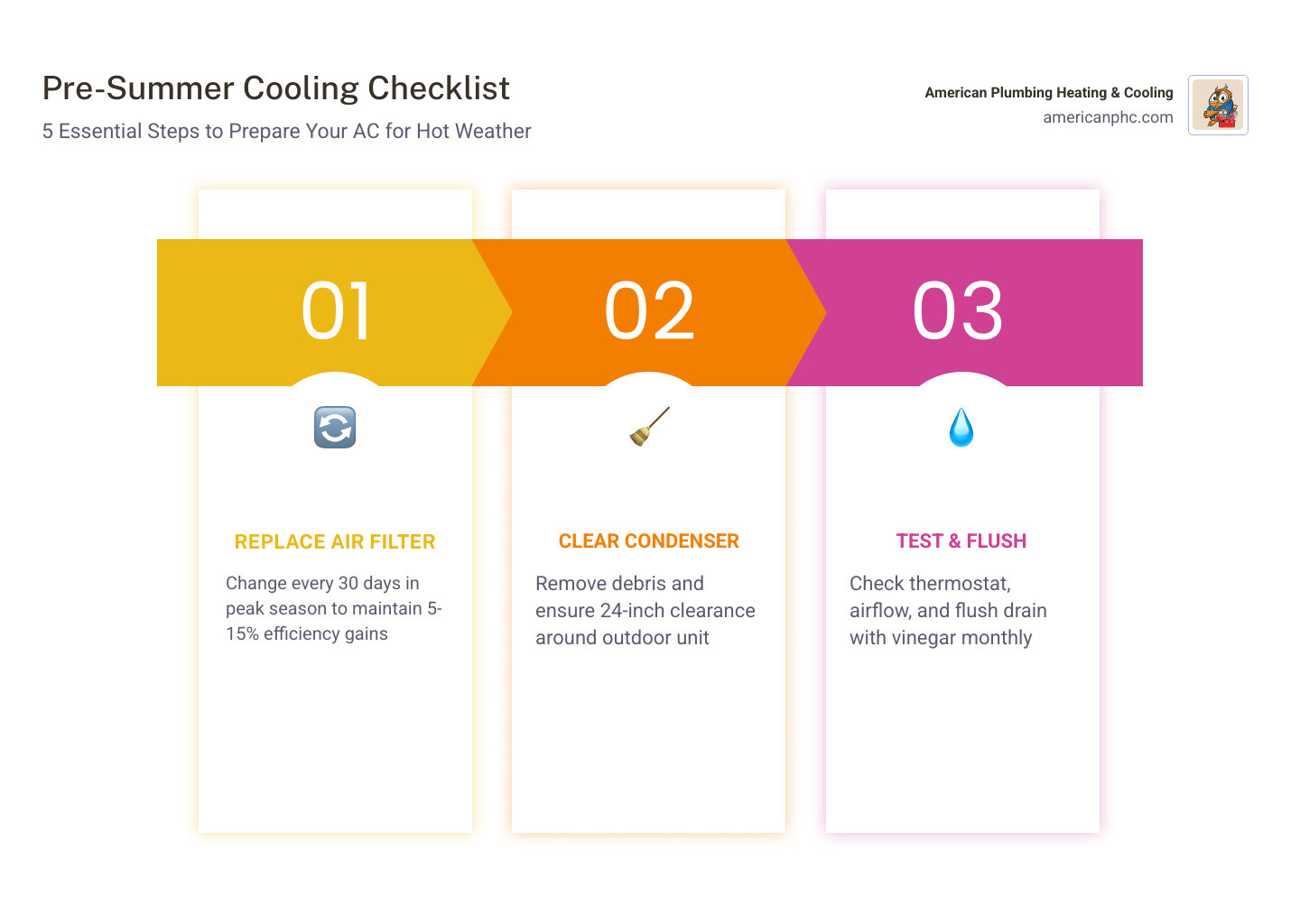
Here's a quick overview of the core steps to prepare your cooling system before the heat hits:
- Replace your air filter — every 30 days during peak season
- Clear the outdoor condenser unit — remove debris and maintain at least 24 inches of clearance
- Test your thermostat — switch to cooling mode and confirm cold air within 10–15 minutes
- Flush the condensate drain line — pour white vinegar through it monthly to prevent clogs
- Schedule a professional tune-up — ideally in March or April before peak demand
According to the EPA, summer heatwaves across the United States are becoming more frequent, more intense, and longer-lasting. That trend hits Florida especially hard. When your AC fails on a 95-degree afternoon, you're not just uncomfortable — you're looking at emergency service calls, premium repair costs, and days without relief.
The good news? Most summer breakdowns are preventable. A little preparation in spring goes a long way toward keeping your system running efficiently all season long.
Why Early Spring is the Best Time for Getting Your Cooling System Ready for Hot Weather
In Florida, waiting until the first 90-degree day in May to check your air conditioner is a recipe for a stressful afternoon. As we move through April 2026, we are already seeing the local climate shift toward higher humidity and rising afternoon temperatures. The ideal window for getting your cooling system ready for hot weather is early spring—specifically March and April.
The Environmental Protection Agency (EPA) has noted that heatwaves have become significantly more intense over the last 60 years. In areas like Sarasota, Cape Coral, and Pensacola, our systems don't just provide comfort; they provide safety. By addressing maintenance early, you avoid the "summer rush." Once the heat hits, HVAC companies across Florida see a massive spike in emergency calls. Scheduling your Air Conditioning Services now ensures that your system is vetted and ready before the technicians' calendars are booked weeks in advance.
Preventing a breakdown is always more affordable and less stressful than reacting to one. Think of early spring maintenance as "insurance" for your comfort. It allows us to catch small issues—like a weakening capacitor or a tiny refrigerant leak—before they turn into a total system failure during a July heatwave.
Essential DIY Maintenance for Florida Homeowners
While some tasks require a professional touch, there are several vital steps you can take yourself to ensure you are getting your cooling system ready for hot weather.
Air Filters: Your First Line of Defense
The single most important thing a homeowner can do is manage the air filters. In Florida’s dusty and humid environment, a filter can clog quickly. A dirty air filter restricts airflow, forcing your blower motor to work twice as hard. This doesn't just increase wear and tear; it can reduce your HVAC energy efficiency by 5% to 15%.
We recommend checking your filter every 30 days. If it looks grey or dusty, swap it out. For homes in Sarasota or Lakewood Ranch with pets or high occupancy, this monthly check is non-negotiable for maintaining system health.
The Outdoor Condenser: Give it Room to Breathe
Your outdoor unit (the condenser) is responsible for releasing the heat collected from inside your home. If it’s choked by weeds, mulch, or debris, that heat has nowhere to go.
- Clear Debris: Remove leaves, grass clippings, and twigs from the top and sides of the unit.
- Maintain Clearance: Ensure there is at least a 24-inch "buffer zone" around the unit. Trim back any bushes or hedges that have grown too close during the spring rains.
- Gently Rinse: Use a garden hose (never a pressure washer, which can bend the delicate fins) to gently wash away salt air residue and dust from the coils.
Testing Your Unit While Getting Your Cooling System Ready for Hot Weather
Don't wait for a heatwave to find out if your AC works. Perform a "stress test" on a warm afternoon:
- Thermostat Test: Switch your thermostat to "Cool" and "Auto" fan mode. Lower the setting about 5 degrees below the current room temperature.
- Listen for Startup Sounds: Head outside. The fan should start smoothly without grinding, squealing, or clanking noises.
- Check the Airflow: Feel the air coming out of your vents. It should be forceful and noticeably cold within 10 to 15 minutes.
- The Temperature Drop: A healthy system should produce air that is 15 to 20 degrees cooler than the air entering the return vent. If the air feels "lukewarm," you may need AC Repair in Bradenton to check for refrigerant issues.
Monthly Tasks for Getting Your Cooling System Ready for Hot Weather
Once the cooling season is in full swing, your maintenance shouldn't stop. Consistency is key to longevity.
- Drain Flushing: Florida humidity means your AC pulls gallons of water out of the air every day. This water exits through a condensate drain line. To prevent algae growth and "the dreaded clog," pour a cup of white vinegar down the drain line access point once a month.
- Coil Rinsing: If you live near the coast in Milton or Navarre, salt spray can corrode your coils. A quick, gentle rinse with fresh water once a month can extend the life of your unit significantly.
Professional Tune-Ups and Identifying Common System Problems
While DIY steps are great, there are technical components that only a certified pro should handle. A professional tune-up is a comprehensive "physical" for your AC. When we perform AC Maintenance in Venice or Cape Coral, we look for the "silent killers" of HVAC systems.
Refrigerant Levels and Leaks
Refrigerant is the lifeblood of your cooling system. It doesn't get "used up" like gas in a car; if it's low, you have a leak. Low refrigerant levels cause the compressor to overheat and can lead to ice forming on your indoor coils. This reduces heat transfer efficiency by 10% to 30% and eventually causes the system to fail entirely.
Electrical and Capacitor Health
The capacitor is a small component that gives your motor the "kick" it needs to start. During Florida summers, capacitors are the #1 cause of emergency calls. They often fail on the hottest days because they are under maximum electrical load. During a professional visit, we test the electrical draw and replace aging capacitors before they leave you in the heat.
Professional Coil Cleaning
While you can rinse the outside, the indoor evaporator coil is often hard to reach and requires specialized cleaners. Dirty coils act as an insulator, preventing the refrigerant from absorbing heat efficiently. This leads to longer run times and much higher energy bills.
Optimizing Your Home Environment to Reduce AC Strain
Getting your cooling system ready for hot weather isn't just about the machine; it's about the environment it lives in. You can significantly reduce the "cooling load" on your AC by making a few strategic changes to your home.
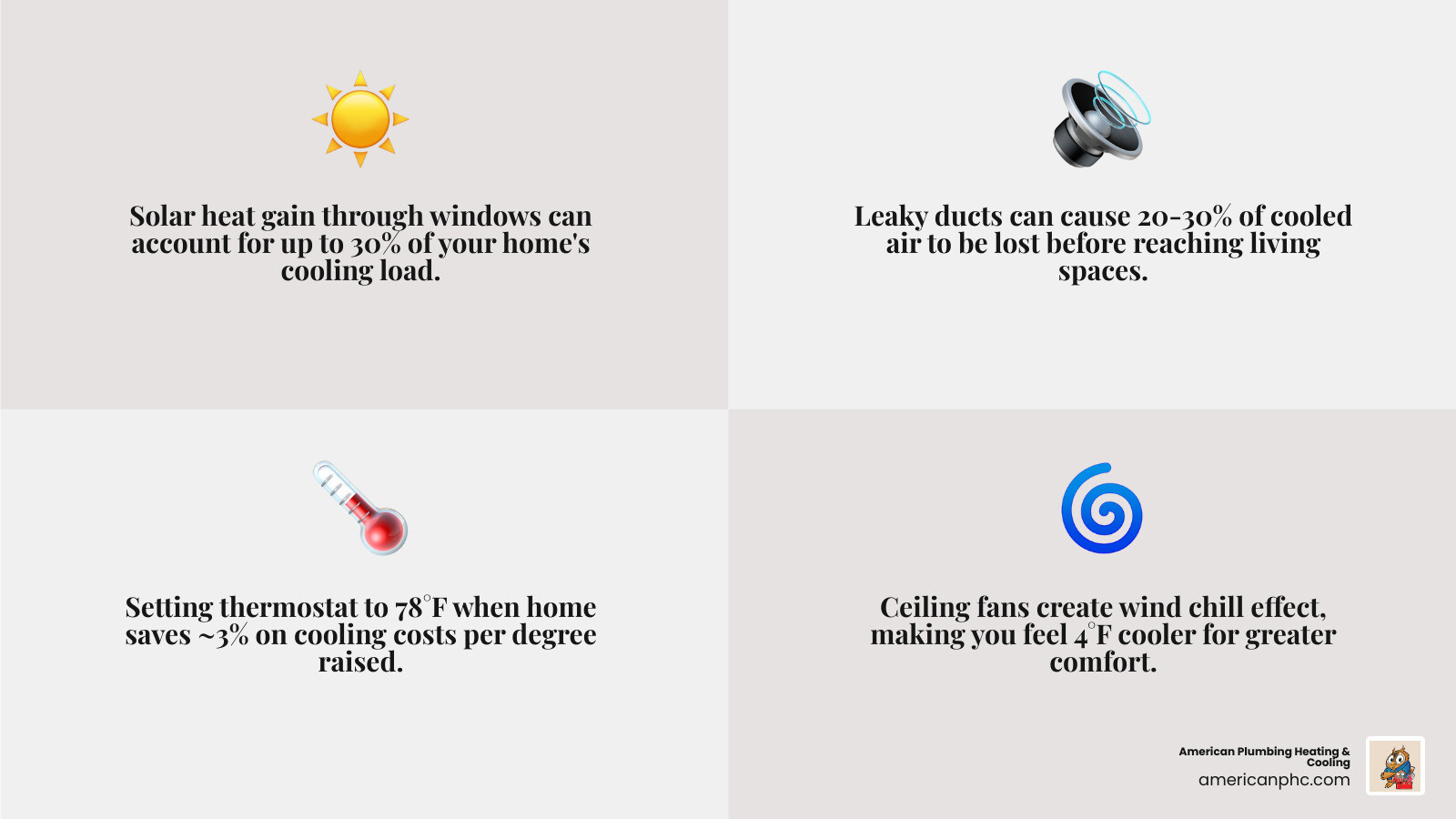
- Thermostat Settings: The Department of Energy (DOE) recommends setting your thermostat to 78 degrees when you are home and 80 degrees when you are away. We know that sounds high for Florida, but every degree you raise your thermostat can save you approximately 3% on your cooling costs.
- The Power of Ceiling Fans: Ceiling fans don't lower the room temperature, but they create a "wind chill effect" on your skin. This can make you feel up to 4 degrees cooler, allowing you to raise the thermostat without losing comfort. Just remember to turn them off when you leave the room!
- Combatting Solar Gain: In places like Sarasota, solar heat gain through windows can account for up to 30% of your cooling load. Keep south- and west-facing curtains or blinds closed during the peak of the day to block out the sun's rays.
- Sealing the Leaks: Duct problems are responsible for 20% to 30% of cooling energy loss in many homes. If your ducts are leaking, you are paying to cool your attic. Ensuring your home is properly sealed and your Indoor Air Quality is managed will keep the cold air where it belongs—inside with you.
Preparing Your Vehicle for Extreme Summer Heat
Your home isn't the only place where a cooling system failure can ruin your day. Florida's summer roads are brutal on vehicles.
- Coolant Flush: Your car’s radiator needs a 50/50 mix of antifreeze and water to keep the engine from melting down. Have your coolant checked and flushed if it’s been more than two years.
- Cabin Air Filters: Just like your home, your car has a filter. If your car’s AC feels weak, a clogged cabin filter is often the culprit.
- Hoses and Belts: Extreme heat can cause rubber components to crack or become brittle. A quick visual inspection can prevent a roadside breakdown.
Knowing When to Upgrade to Energy-Efficient Options
Sometimes, no amount of maintenance can save an aging unit. If your system is over 15 years old, it might be time to stop pouring money into repairs. Modern technology has made massive leaps in efficiency.
- Heat Pumps: Don't let the name fool you; heat pumps are incredible at cooling. They can reach efficiencies of 300% or more because they move heat rather than generating it.
- Smart Thermostats: These devices typically pay for themselves within a single cooling season. By learning your schedule and adjusting temperatures automatically, they can save you 10% to 15% on energy costs.
- New AC Installations: If you are constantly calling for repairs, AC Installation in Sarasota or Cape Coral can lower your monthly bills so significantly that the system eventually pays for itself. We even offer Financing to help make the transition to a high-efficiency system easier on your budget.
Frequently Asked Questions about Summer Cooling
What is the best thermostat setting for a Florida heatwave?
The Department of Energy recommends 78°F when you’re home and 80°F when you’re away. If that feels too warm, try using ceiling fans to circulate air. Every degree higher saves you about 3% on your monthly bill.
How often should I change my AC filter in the summer?
In Florida, you should check your filter every 30 days. If you have pets that shed or live in an area with high dust levels, you will likely need to replace it every month. During the "off-season," you might get away with every 60 to 90 days, but summer requires more frequent changes to maintain airflow.
What are the signs that my AC is low on refrigerant?
Common signs include air that feels warm coming from the vents, a hissing or bubbling sound from the unit, and the formation of ice on the refrigerant lines (the copper pipes). If your system is running constantly but the house isn't getting cooler, a refrigerant leak is a likely candidate.
Conclusion
Getting your cooling system ready for hot weather is the best gift you can give your future self. By taking a few DIY steps now and scheduling professional care, you can enjoy the Florida summer without the fear of a mid-July breakdown.
At American Plumbing Heating and Cooling, we bring over 100 years of combined experience to every job. Whether you need a quick spring tune-up, an emergency repair, or a brand-new installation, our certified pros are here to help with honest, upfront pricing. We are locally owned and operated, serving our neighbors across Sarasota, Bradenton, Cape Coral, and beyond.
Don't wait for the heat to win. Protect your home and your wallet by joining our Maintenance Plan today, ensuring your system is always ready for whatever the Florida weather throws your way. Give us a call for 24/7 emergency service or to schedule your pre-summer inspection!
{"@context": "https://schema.org", "@graph": [{"@type": "Article", "headline": "Getting Your Cooling System Ready for Hot Weather", "description": "Getting your cooling system ready for hot weather? Use these Florida AC prep tips and schedule service with American Plumbing Heating and Cooling.", "author": {"@type": "Person", "name": "American Plumbing Heating and Cooling"}, "publisher": {"@type": "Organization", "name": "American Plumbing Heating and Cooling", "logo": {"@type": "ImageObject", "url": "https://firebasestorage.googleapis.com/v0/b/ai-templates.appspot.com/o/bot%2FiTB8FxoyvSplQzS7StV8%2Flogo%2FScreenshot%202026-03-16%20at%2012.43.20%E2%80%AFPM.png?alt=media&token=4ae5e171-7bb5-4a27-91f4-47e969b91c80"}}, "datePublished": "2026-05-05T02:46:56+00:00", "dateModified": "2026-05-05T02:46:59.349572", "mainEntityOfPage": {"@type": "WebPage", "@id": "https://pms.ciwebgroup.com/americanphc/2026/05/05/how-to-get-your-cooling-system-ready-for-hot-weather/"}, "image": "https://images.pexels.com/photos/5463587/pexels-photo-5463587.jpeg?auto=compress&cs=tinysrgb&h=650&w=940"}, {"@type": "FAQPage", "mainEntity": [{"@type": "Question", "name": "How do I get my cooling system ready for hot weather in Florida?", "acceptedAnswer": {"@type": "Answer", "text": "Key steps include replacing your air filter every 30 days during peak season, clearing debris around the outdoor condenser with at least 24 inches of clearance, testing the thermostat, flushing the condensate drain line monthly with white vinegar, and scheduling a professional tune-up. These steps help prepare the system before summer heat puts it under heavy strain."}}, {"@type": "Question", "name": "When should Florida homeowners prepare their AC system for summer?", "acceptedAnswer": {"@type": "Answer", "text": "The best time is early spring, specifically March and April, before temperatures and humidity rise further. Preparing the system early also helps homeowners avoid the summer rush, when HVAC companies are booked with emergency calls."}}, {"@type": "Question", "name": "How often should I replace my air filter during peak cooling season?", "acceptedAnswer": {"@type": "Answer", "text": "The article recommends replacing your air filter every 30 days during peak season. Doing so is one of the core maintenance steps for keeping your cooling system ready for hot weather."}}, {"@type": "Question", "name": "How do I test my thermostat before hot weather arrives?", "acceptedAnswer": {"@type": "Answer", "text": "Switch the thermostat to cooling mode and confirm that cold air starts coming out within 10 to 15 minutes. This quick check helps verify that the system is working before the hottest weather arrives."}}, {"@type": "Question", "name": "Why is early AC maintenance important in Florida?", "acceptedAnswer": {"@type": "Answer", "text": "Early maintenance can help prevent many summer breakdowns, which often lead to emergency service calls, higher repair costs, and days without relief. In Florida, where heatwaves are becoming more frequent and intense, a working AC system is important for both comfort and safety."}}]}]}Need HVAC Help?
Our certified technicians are ready to help with all your heating and cooling needs.
Request ServiceAbout the Author
American Plumbing Heating and Cooling Team
Licensed Florida contractors — HVAC CAC1821761 · Plumbing CFC1431919
More Articles
View All PostsRelated Articles


Ready to Get Started?
Whether you need a repair, maintenance, or a new system installation, our expert team is here to help.