
Leaving the Nest? Don't Forget to Adjust Your Thermostat
By the American Plumbing Heating and Cooling Team
Licensed Florida contractors — HVAC CAC1821761 · Plumbing CFC1431919

Optimize thermostat settings when you leave the house for energy savings, home protection, and comfort. Get expert tips for Florida.
Reviewed bythe American Plumbing Heating and Cooling Team — Licensed Florida contractors — HVAC CAC1821761 · Plumbing CFC1431919. Published April 28, 2026. About American Plumbing Heating and Cooling
Dealing with this problem right now? Call (941) 735-6616 and talk to our local team.
Request ServiceWhy Thermostat Settings When You Leave the House Matter More Than You Think
Thermostat settings when you leave the house can make a real difference in your energy bill — and in protecting your home while you're gone. Whether you're heading to work for the day or leaving on a two-week vacation, the right setting keeps your Florida home safe from humidity, mold, and (yes, even here) the occasional freeze.
Here's a quick reference for the most common situations:
| Situation | Recommended Setting |
|---|---|
| Away at work (summer) | 85°F |
| Away at work (winter) | 60°F |
| Short summer trip (1-3 days) | 78-80°F |
| Longer summer vacation (1+ week) | 85-88°F |
| Short winter trip | 60-65°F |
| Extended winter absence | 55-60°F |
| Pets at home (dogs) | 60-82°F |
| Pets at home (cats) | 70-88°F |
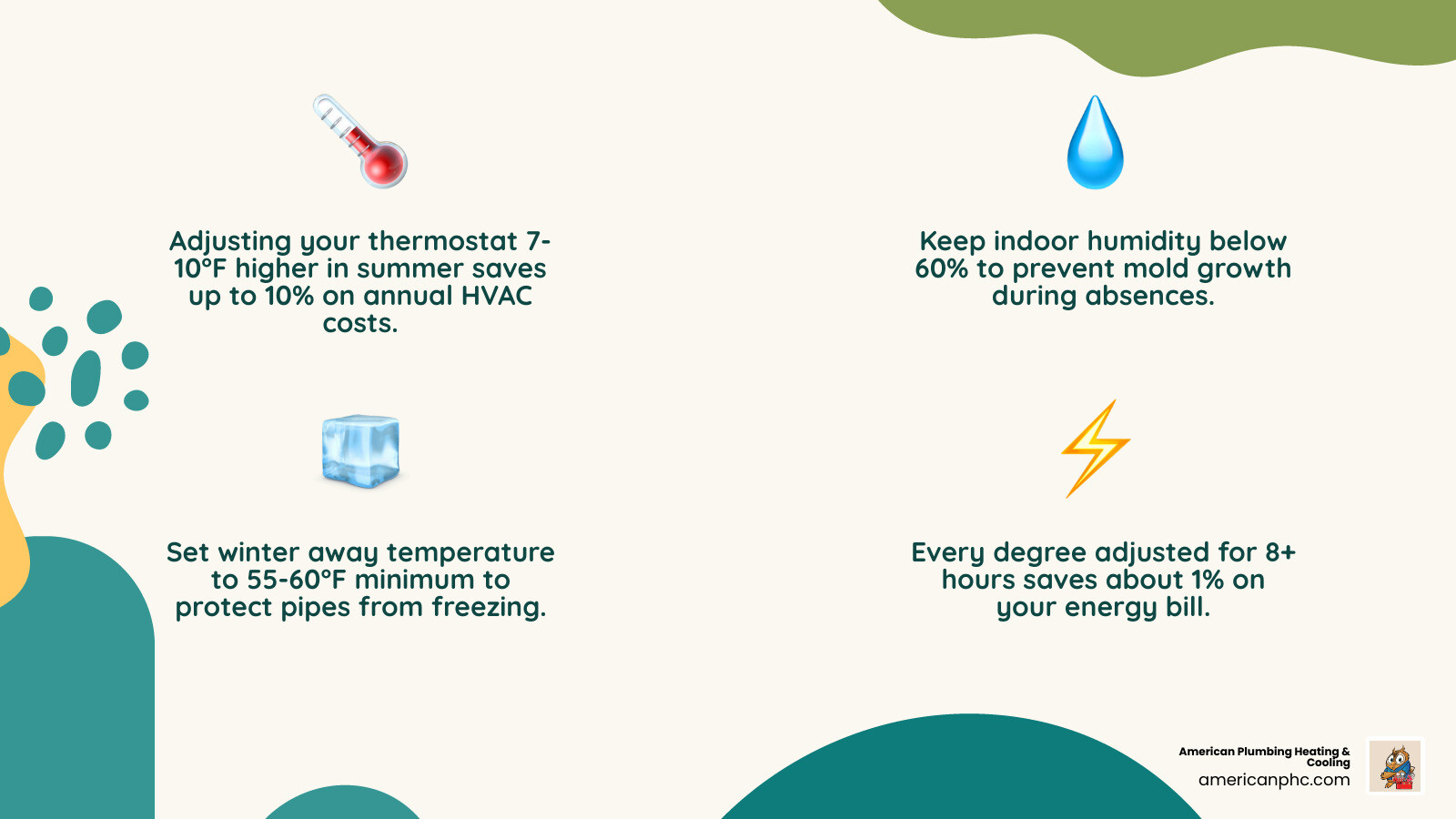
The general rule is simple: adjust your thermostat 7-10 degrees from your normal setting when you leave. According to the Department of Energy, this kind of consistent adjustment can save you nearly 10% on your annual HVAC costs — and every single degree you hold for at least 8 hours saves about 1% on energy.
What you should never do is turn your system off entirely. In Florida's humid climate, a home without running AC can become a breeding ground for mold and pests within days. And in the Panhandle during winter cold snaps, pipes are more vulnerable than most people expect.
The sections below walk through every scenario — from your daily commute to a months-long snowbird absence — so you always leave home with confidence.
Finding the Best Thermostat Settings When You Leave the House for Work
For most of us in Florida, the "daily away" period is the most consistent opportunity to save money. If you are heading out for an eight-hour workday, leaving your air conditioner at its usual 72°F or 74°F is essentially throwing money out the window.
The Department of Energy suggests that a 7-to-10-degree shift from your normal comfortable setting is the "sweet spot" for efficiency. By allowing your home to warm up slightly in the summer or cool down in the winter while you are at your desk, you can realize up to 10% annual savings on your HVAC spending. In a state like Florida, where the AC runs almost year-round, those savings add up fast.
If you're looking to optimize your system for these daily shifts, more info about HVAC services can help you find the right equipment to handle frequent adjustments without extra wear.
Maximizing efficiency during short daily absences
Some homeowners worry that letting the house get warm during the day makes the system work "too hard" when they get home. In reality, a smaller indoor-outdoor temperature differential actually slows down the flow of heat into your home. This means your AC doesn't have to cycle as often throughout the day.
In high-humidity areas like Sarasota or Cape Coral, we generally recommend setting the thermostat to 78°F or 80°F for a standard workday. This keeps the air moving enough to prevent that "stale" feeling while significantly reducing your electricity consumption.
Summer Vacation: Balancing Savings and Humidity Control
When April 2026 rolls around and you’re planning that tropical getaway, your thermostat shouldn't be an afterthought. Summer vacations in Florida present a unique challenge: heat is one thing, but humidity is the real enemy.
If you set your thermostat too high—or worse, turn it off—the relative humidity inside your home can quickly soar above 60%. This is the danger zone where mold spores begin to thrive on drywall, upholstery, and even inside your ductwork. To keep your home protected, we recommend an 85-degree threshold as your maximum vacation setting.
Recommended thermostat settings when you leave the house for summer vacation
For a summer trip, the best thermostat settings when you leave the house depend on how long you'll be gone:
- Short Trips (Weekend Getaways): Aim for 78°F to 80°F. This keeps the house relatively cool so it doesn't take all night to reach a comfortable sleeping temperature when you return.
- Long Vacations (One Week or More): You can safely push the setting to 85°F. Energy Star guidelines suggest this range is ideal for maximizing savings while ensuring the AC still runs enough to pull moisture out of the air.
Why you should never turn the AC off completely
It might be tempting to shut the system down to save every penny, but the risks far outweigh the rewards. Without the dehumidification provided by your air conditioner, Florida homes can suffer from:
- Mold and Mildew: Once mold takes hold in your carpets or walls, the remediation costs will dwarf any energy savings.
- Pest Attraction: Many pests, including cockroaches and silverfish, are attracted to high-humidity environments.
- Interior Damage: High heat and moisture can cause wood furniture to warp and electronics to fail prematurely.
Winter Protection: Preventing Frozen Pipes During Florida Cold Snaps
While we don't deal with sub-zero blizzards, Florida—especially in the Panhandle areas like Milton and Pensacola—does experience hard freezes. When the temperature dips, the water in your pipes can freeze, leading to thermal expansion and, eventually, burst pipes.
For winter absences, the goal shifts from dehumidification to heat retention. We generally recommend keeping your thermostat between 50°F and 60°F.
Ideal winter thermostat settings when you leave the house for long trips
If you are heading out for an extended winter break, set your thermostat to a minimum of 55°F. This is widely considered the industry standard for preventing pipe freezes.
We also suggest the "10-degree rule" here: if you usually keep your home at 70°F, dropping it to 60°F is a safe, energy-efficient choice. To help that warm air reach the most vulnerable areas, leave your kitchen and bathroom cabinet doors open. This allows the ambient heat from the room to circulate around the plumbing under your sinks.
Additional winter prep for Sarasota and Pensacola homes
Beyond the thermostat, there are a few physical steps you should take if a freeze is forecasted while you're away:
- Main Water Shut-off: If you'll be gone for a long time, turning off the main water valve is the best way to prevent a catastrophic flood if a pipe does burst.
- Exterior Hose Bibs: Disconnect hoses and wrap outdoor faucets in insulated covers.
- Pipe Insulation: Ensure any pipes in unconditioned spaces (like garages or crawlspaces) are properly sleeved.
If you're unsure if your heating system is ready for a cold snap, more info about HVAC services can provide the seasonal maintenance check you need for peace of mind.
Beyond Temperature: Preparing Your Home for Extended Absences
Adjusting the thermostat is the biggest step, but it’s part of a larger strategy. Your home's "envelope" determines how hard your HVAC system has to work to maintain your chosen away settings.
One of the most effective things you can do is close your blinds and drapes. In the Florida sun, "solar heat gain" can raise the temperature of a room by several degrees in just a few hours. By blocking that light, you keep the house naturally cooler, meaning your AC doesn't have to cycle as often to maintain that 85°F vacation setting.
Don't forget about "phantom loads" either. Unplugging small appliances and electronics can prevent them from generating tiny amounts of heat (and consuming electricity) while you're gone. Finally, check your water heater; most modern units have a "Vacation Mode" that keeps the water warm enough to prevent bacterial growth without wasting energy to keep it piping hot.
Adjusting for pets, plants, and sensitive electronics
If you aren't leaving the house completely empty, your thermostat settings when you leave the house must account for your "roommates":
- Dogs: Most breeds are comfortable between 60°F and 82°F. If you have a long-haired breed like a Husky, keep the summer setting closer to 78°F.
- Cats: Generally more heat-tolerant, cats do well between 70°F and 88°F.
- Plants: Tropical houseplants usually need at least 60°F to survive. If you have sensitive orchids or ferns, don't let the winter setting drop too low.
- Electronics: Most home servers and high-end electronics prefer temperatures below 85°F to prevent hardware degradation.
The Benefits of Smart and Programmable Technology
In 2026, there is no reason to manually guess your settings. Smart thermostats have revolutionized how we manage empty homes. These devices offer Wi-Fi connectivity, allowing you to check the temperature of your Sarasota home from a beach in another country.
If you're interested in upgrading your home's tech, more info about HVAC services can help you select a model that integrates with your current system.
Why smart thermostats are essential for Florida snowbirds
For our "snowbird" community moving between Southwest Florida and northern states, smart thermostats are a lifesaver. They offer:
- Freeze Protection: If your furnace fails during a rare Florida freeze, the app will alert you before the pipes burst.
- High-Heat Notifications: If the AC stops working in July, you'll know immediately, allowing you to call for repairs before mold sets in.
- Variable-Speed Integration: Many smart thermostats can communicate with high-efficiency HVAC units to run at lower, moisture-removing speeds rather than just "on" or "off."
- Energy Reports: You can see exactly how much you saved by adjusting your settings, often showing a 10% reduction in monthly costs.
Frequently Asked Questions about Away Settings
Is it more efficient to leave the thermostat at a constant temperature?
This is a common myth. Some people believe that the energy required to cool a "hot" house back down is more than what is saved by turning the AC up. Physics tells us otherwise.
Heat moves from hot areas to cool areas. The closer your indoor temperature is to the outdoor temperature (the "differential"), the slower the heat moves into your home. By letting your home stay warmer while you're away, you actually reduce the total amount of heat your system has to remove over a 24-hour period.
How much can I actually save by adjusting my settings?
The rule of thumb is 1% savings for every degree you adjust, provided that adjustment lasts for at least eight hours. If you normally keep your home at 72°F and you set it to 82°F for a week-long vacation, you are looking at significant savings on your next bill.
Will my system work harder to cool the house back down?
Your system will run for a longer "recovery period" when you first get home, but it won't be working "harder" in terms of strain. HVAC systems are designed to run in cycles. A longer cycle to cool the house down is actually more efficient than the constant "short-cycling" that happens when you try to maintain a very low temperature against the Florida afternoon sun.
Conclusion
Finding the right thermostat settings when you leave the house is the easiest way to protect your investment and keep your utility bills under control. Whether you are navigating a daily commute in Bradenton or leaving your Cape Coral home for the season, remember the 7-to-10-degree rule and never turn the system completely off.
At American Plumbing Heating and Cooling, we have over 100 years of combined experience helping Florida homeowners stay comfortable and efficient. From Sarasota to Pensacola, our certified pros are ready to help you optimize your HVAC system for every season. For more help with your thermostat or to schedule a maintenance visit, more info about HVAC services is just a click away. Safe travels!
Need HVAC Help?
Our certified technicians are ready to help with all your heating and cooling needs.
Request ServiceAbout the Author
American Plumbing Heating and Cooling Team
Licensed Florida contractors — HVAC CAC1821761 · Plumbing CFC1431919
More Articles
View All PostsRelated Articles


Ready to Get Started?
Whether you need a repair, maintenance, or a new system installation, our expert team is here to help.