
All About Oil Heat's Future and Obsolescence
By the American Plumbing Heating and Cooling Team
Licensed Florida contractors — HVAC CAC1821761 · Plumbing CFC1431919

Is oil heat becoming obsolete in 2026? Explore modern oil systems, Bioheat blends, and heat pump alternatives for efficient home heating.
Reviewed bythe American Plumbing Heating and Cooling Team — Licensed Florida contractors — HVAC CAC1821761 · Plumbing CFC1431919. Published July 1, 2026. About American Plumbing Heating and Cooling
Dealing with this problem right now? Call (941) 735-6616 and talk to our local team.
Request ServiceIs Oil Heat Becoming Obsolete? Here's What You Need to Know in 2026
Is oil heat becoming obsolete is a question millions of homeowners are asking right now — and the honest answer is: it depends on where you live and what system you're running. Oil heat isn't dead, but it's under more pressure than ever. Modern alternatives like electric heat pumps are outselling traditional systems in several markets, government programs are actively paying homeowners to switch, and cities like Seattle have set goals to eliminate oil-heated homes entirely by 2030. At the same time, high-efficiency oil systems and cleaner Bioheat blends are giving oil a second wind in rural areas and cold climates where alternatives aren't always practical.
Quick answer: Is oil heat becoming obsolete?
- In urban areas: Yes, increasingly — rebate programs, emissions regulations, and heat pump adoption are pushing oil out fast
- In rural or off-grid areas: Not yet — on-site fuel storage and no pipeline access keep oil relevant
- For new construction: Largely yes — heat pumps and gas are now the default in most new builds
- For existing systems: It varies — modern oil systems (up to 95% efficiency) and Bioheat blends extend their usefulness, but long-term the trend is toward electrification
- Financially: Households switching to heat pumps are saving over 50% on heating bills on average
The full picture is more nuanced. This guide breaks down the real comparisons — efficiency, cost, environmental impact, technology, and regional practicality — so you can make a confident decision about your home's heating future.
Is Oil Heat Becoming Obsolete in 2026?
As we move through 2026, the heating landscape is undergoing a massive transformation. For decades, oil was the gold standard for warmth, known for its high BTU output and reliability. However, the conversation around is oil heat becoming obsolete has intensified due to the rapid rise of high-efficiency alternatives.
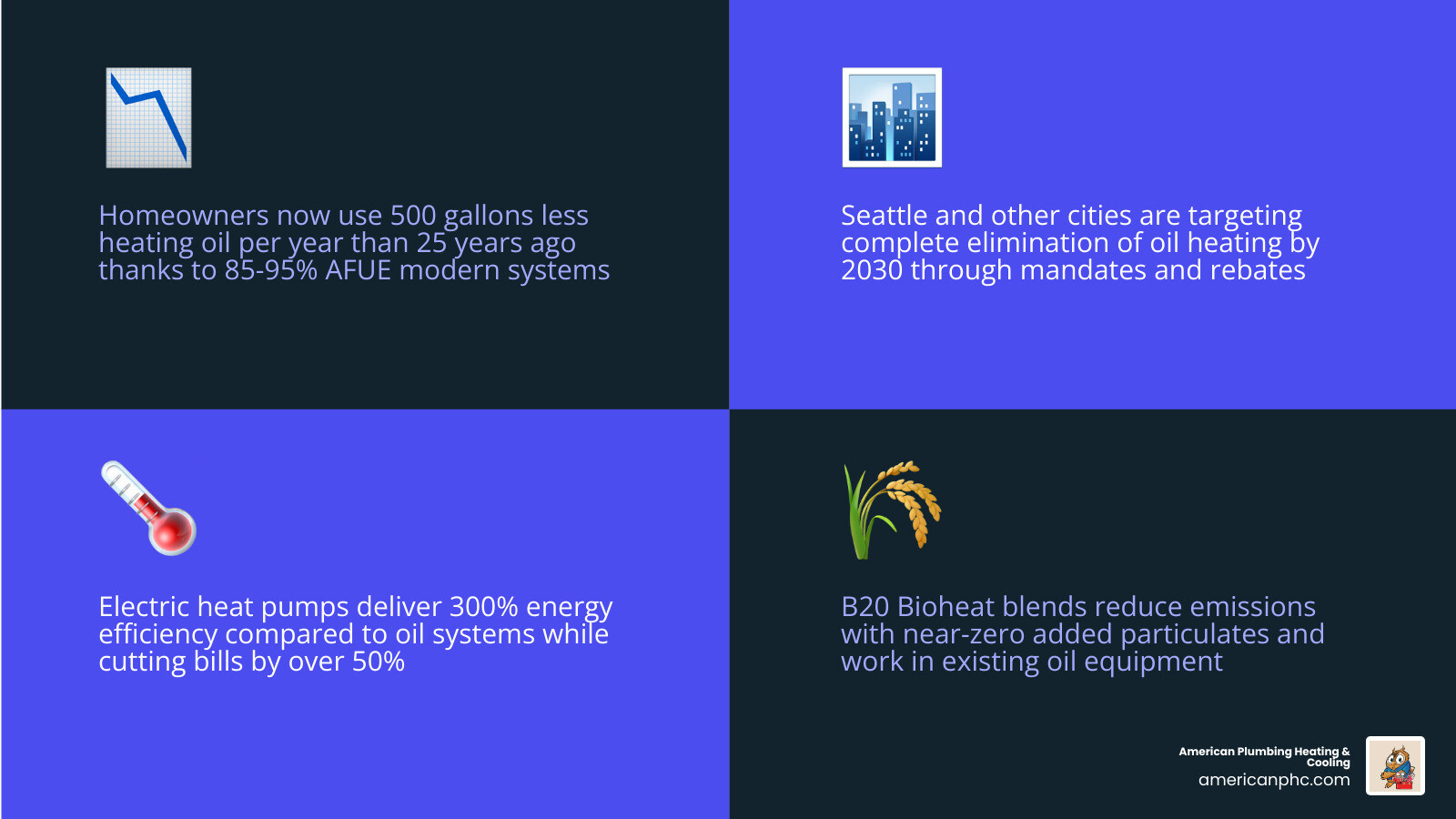
That said, modern oil-burning furnaces and boilers have fought back with impressive technological leaps. Today’s top-tier oil systems can achieve efficiency ratings of 85% to 95% AFUE. To put that in perspective, homeowners now require an average of 500 gallons less heating oil per year compared to 25 years ago. This efficiency gain is one of the reasons why some homeowners aren't ready to call it quits on oil just yet.
Another factor is system longevity. While a gas furnace might last 15 to 20 years, a well-maintained oil furnace or boiler can reliably serve a home for 20 to 30 years or more. This durability makes it a "long-game" investment for many. Furthermore, oil offers a level of energy independence that utility-bound systems can't match. Having a tank on your property means you aren't at the mercy of gas pipeline disruptions or grid failures during a storm. However, if your current unit is decades old, Why Your Old Oil Furnace is Ghosting Your Wallet is a reality many Floridians are facing as maintenance costs and fuel prices fluctuate.

Policy shifts and why is oil heat becoming obsolete in urban areas
Government intervention is perhaps the strongest driver behind the obsolescence of oil heat in metropolitan areas. Major cities have pioneered programs to move residents away from fossil fuels. For instance, Seattle’s Clean Heat Program has already helped over 2,000 households transition to electric heat pumps, eliminating the need for 20 million gallons of heating oil. In these regions, the goal is clear: zero oil-heated homes by 2030.
Beyond local initiatives, broader environmental mandates are making oil more difficult to justify. Carbon neutral mandates and stricter emissions regulations are being implemented across various states. For homeowners in our Florida service areas, staying informed on How to Get Paid for Upgrading Your Florida Home is crucial, as many federal and state rebates are specifically designed to offset the cost of switching from oil or gas to high-efficiency electric systems.
Efficiency gaps and why is oil heat becoming obsolete for modern builds
When it comes to new construction in 2026, oil is rarely the first choice. The market has shifted decisively toward heat pumps, which accounted for nearly half of new heating system sales in major European markets like Germany in 2025—a trend that is mirrored in many parts of the U.S.
The primary reason is the efficiency gap. While a high-end oil furnace is 95% efficient, a modern heat pump is 300% to 400% efficient because it transfers heat rather than creating it through combustion. This leads to massive reductions in greenhouse gas emissions and significantly lower operating costs. When we look at the long-term financial data, Making Cents of the Switch: When Oil-to-Gas Conversion Pays Off, the savings on monthly bills often outweigh the initial investment within just a few years.
Comparing Modern Oil Systems to Heat Pumps and Natural Gas
To understand if your current system is truly outdated, it helps to look at the hard numbers. Oil still wins in one specific category: raw heat power. A gallon of heating oil produces approximately 140,000 BTUs, which is significantly higher than the energy density of natural gas or electricity. This allows oil systems to warm a house much faster during extreme cold snaps.
| Feature | Modern Oil System | Electric Heat Pump | Natural Gas |
|---|---|---|---|
| Efficiency (AFUE/HSPF) | 85% - 95% | 300% - 400%+ | 90% - 98% |
| Average Lifespan | 20 - 30 Years | 15 - 20 Years | 15 - 20 Years |
| Energy Density | 140,000 BTU/gal | N/A | 1,030 BTU/cu ft |
| Environmental Impact | Moderate to High | Low (Carbon Neutral Potential) | Moderate |
| On-site Storage | Yes (Independence) | No (Grid Dependent) | No (Pipeline Dependent) |
While oil is powerful, the reliability of the electrical grid in Florida and the versatility of heat pumps (providing both heating and cooling) make them a formidable competitor.
Advantages of modern oil hardware
For those who choose to stick with oil, the hardware has seen major upgrades. Modern systems often feature variable-speed motors that use up to 80% less electricity than older, fixed-speed models. They are also much more compact; some modern boilers are no larger than a three-drawer filing cabinet.
Safety has also improved. New galvanized steel tanks come with integrated leak detection and corrosion-resistant coatings, addressing the old fear of soil contamination. If you are currently using an oil system in the Sunshine State, considering an Oil-to-Gas Conversion in Sarasota, FL might still be on your mind, but these hardware advancements ensure that if you stay with oil, you are at least using the cleanest and safest version of it.
The rise of electric alternatives
The surge in heat pump adoption isn't just about "going green"—it's about "staying cool." In Florida, where air conditioning is a necessity, a heat pump serves as a two-in-one solution. By switching, homeowners can improve indoor air quality and enjoy integrated climate control year-round.
In areas like Cape Coral, the transition is gaining momentum. Residents looking for an Oil-to-Gas Conversion in Cape Coral, FL often find that moving toward electric heat pumps offers even greater long-term bill savings—sometimes exceeding 50% or $1,100 per year. These milestones reflect a broader consumer trend toward systems that are quieter, safer, and more sustainable.
The Role of Bioheat and Technological Advancements
One of the most exciting developments keeping oil in the race is Bioheat fuel. Bioheat is a blend of traditional ultra-low-sulfur heating oil and renewable biodiesel made from organic materials like vegetable oils and animal fats.
B20 Bioheat Plus (a 20% biodiesel blend) can actually produce fewer greenhouse gas emissions than a traditional natural gas system. It burns cleaner, reducing particulates and near-zero pollution levels, which also means less wear and tear on your burner. The best part? Most existing oil systems are compatible with Bioheat blends without needing expensive hardware modifications. For those in Bradenton exploring an Oil-to-Gas Conversion in Bradenton, FL, Bioheat represents a "middle ground" that improves environmental performance while maintaining the existing infrastructure.
Regional Practicality: When Does Oil Heat Still Make Sense?
Despite the national trend toward electrification, oil heat remains highly practical in specific scenarios. In rural parts of Florida where natural gas pipelines haven't reached, oil is a lifeline. It provides a level of fuel delivery independence that is vital for remote properties.
We see this often in our service areas. Whether you are considering an Oil-to-Gas Conversion in Navarre, FL or looking at options for an Oil-to-Gas Conversion in Milton, FL, the availability of infrastructure is the deciding factor. In planned communities like those seeking Oil-to-Gas Conversion in Lakewood Ranch, FL or Oil-to-Gas Conversion in Venice, FL, gas or electric is usually the standard. However, for older, more isolated estates in Cape Coral, maintaining a high-efficiency oil system may still be the most cost-effective path until the local grid or pipeline infrastructure catches up.
Frequently Asked Questions about Heating Transitions
How long do modern oil furnaces last compared to gas?
Oil furnaces are the heavyweights of the HVAC world. While a gas furnace typically lasts 15 to 20 years, an oil system—thanks to the lubricating properties of the fuel and the heavy-duty construction of the combustion chamber—can last 30 years or more with annual maintenance. This makes it a high-value investment for homeowners who plan to stay in their homes for the long haul.
Can I use Bioheat in my existing oil system?
In most cases, yes! B20 blends are designed to be "drop-in" replacements. You don't need to rip out your furnace to start reducing your carbon footprint. Switching to Bioheat is one of the easiest ways to meet modern renewable fuel standards without a massive upfront equipment cost.
What are the main benefits of switching to a heat pump?
The biggest draw is the dual-functionality; you get world-class heating and cooling in a single unit. Beyond that, the energy efficiency is unbeatable, often leading to significantly lower monthly bills. Plus, with the current 2026 incentives, you can often find ways to Get Paid for Upgrading Your Florida Home through federal tax credits and local utility rebates.
Conclusion
So, is oil heat becoming obsolete? The answer isn't a simple yes or no. While the world is moving toward cleaner, electric-based solutions, oil heat has evolved to be more efficient and environmentally friendly than ever before. For many Florida homeowners, the decision comes down to a balance of infrastructure, long-term savings, and personal preference for energy independence.
At American Plumbing Heating and Cooling, we’ve seen it all over our 100+ years of combined experience. Whether you want to optimize your current oil system with a high-efficiency burner or you're ready to make the leap to a modern heat pump, we are here to provide honest, upfront guidance. Our certified pros serve everyone from Sarasota to Pensacola, ensuring your home stays comfortable no matter what the future of energy looks like.
Ready to future-proof your home's comfort? Explore our comprehensive heating and cooling services today and let us help you find the perfect fit for your Florida home.
Need HVAC Help?
Our certified technicians are ready to help with all your heating and cooling needs.
Request ServiceAbout the Author
American Plumbing Heating and Cooling Team
Licensed Florida contractors — HVAC CAC1821761 · Plumbing CFC1431919
More Articles
View All PostsRelated Articles


Ready to Get Started?
Whether you need a repair, maintenance, or a new system installation, our expert team is here to help.