
Mini-Split Air Conditioning 101
By the American Plumbing Heating and Cooling Team
Licensed Florida contractors — HVAC CAC1821761 · Plumbing CFC1431919

Discover mini-split air conditioning benefits for Florida homes. Learn how it works, choose the right system, and get pro installation tips for energy savings.
Reviewed bythe American Plumbing Heating and Cooling Team — Licensed Florida contractors — HVAC CAC1821761 · Plumbing CFC1431919. Published April 30, 2026. About American Plumbing Heating and Cooling
Dealing with this problem right now? Call (941) 735-6616 and talk to our local team.
Request ServiceWhat Is Mini-Split Air Conditioning — and Is It Right for Your Florida Home?
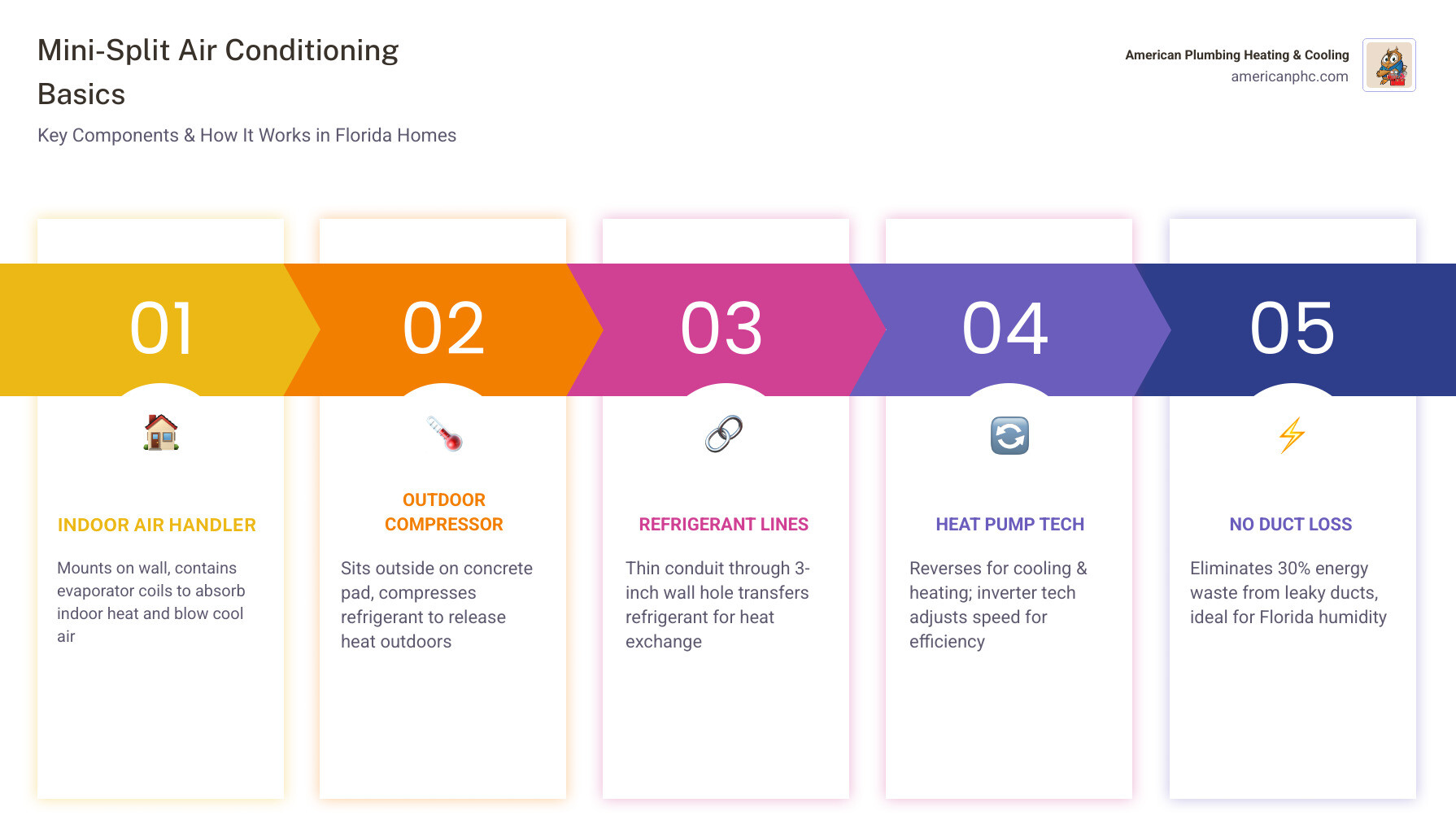
Mini-split air conditioning is a ductless heating and cooling system made up of two main parts: an indoor air handler and an outdoor compressor unit, connected by a small conduit running through a three-inch hole in the wall. No ductwork required.
Here's what you need to know at a glance:
- What it does: Cools and heats individual rooms or zones independently
- How it works: Transfers heat via refrigerant lines between an indoor unit and an outdoor compressor
- Key advantage: No ducts means no duct energy loss — central AC systems can lose more than 30% of energy through leaky ductwork
- Efficiency: SEER2 ratings range from 15.2 to 35, making them among the most efficient systems available
- Ideal for: Room additions, garages, sunrooms, older Florida homes without ductwork, and multi-zone comfort control
- Lifespan: 10 to 15 years on average, up to 20 years with proper maintenance
- Installation: Requires a licensed HVAC professional in most cases due to refrigerant handling and electrical work
If you live in Florida and your home has a room that never seems to cool down — or you're adding a sunroom, converting a garage, or tired of high energy bills from an aging central system — mini-splits deserve a serious look. Florida's heat, humidity, and long cooling seasons make energy efficiency more than a nice-to-have. It's a real monthly cost that adds up fast.
This guide covers everything you need to know: how these systems work, which type fits your space, what installation involves, and how to keep your system running for years to come.
Understanding How Mini-Split Air Conditioning Works
To understand why mini-split air conditioning is so effective for our Florida climate, it helps to look at the technology under the hood. Unlike a window unit that sits in a frame and blocks your view, or a central system that hides in the attic, a mini-split is a split system. This means the noisy part stays outside, while the sleek air handler stays inside.
At the heart of the system is the outdoor compressor. This unit is connected to the indoor air handler by a conduit that houses the power cable, refrigerant lines, and a condensate drain. The "magic" happens through heat pump technology. In the summer, the system absorbs heat from inside your home and pumps it outdoors. Because it moves heat rather than just "creating" cold air, it is incredibly efficient.
Modern systems also utilize inverter technology. Traditional AC units are either 100% on or 100% off, which wastes energy and creates temperature swings. Inverters allow the compressor to speed up or slow down based on the actual cooling demand. It’s like having a dimmer switch for your cooling system instead of a standard on/off toggle.
Components of a Mini-Split Air Conditioning System
Every system we install includes several high-tech components designed to work in harmony. The indoor air-handling unit contains the evaporator coils and a quiet fan. These units are usually controlled by a wireless remote or a smartphone app, allowing you to adjust the temperature from the comfort of your couch.
One of the most critical parts is the condensate drain, which removes the moisture pulled from our humid Florida air. Proper drainage is essential to prevent water damage and mold. If you're curious about how these ductless options stack up against the systems you're used to, check out The Great Chill Debate of Ducted vs Ductless Systems for a deeper dive into the mechanics.
Why Mini-Split Air Conditioning is Ideal for Florida Additions
In areas like Sarasota and Cape Coral, we see many homeowners adding sunrooms or converting garages into home offices. Extending existing ductwork to these spaces is often a nightmare—it’s expensive, messy, and can actually strain your main AC unit.
Mini-split air conditioning provides the perfect solution through zoning control. You can keep your new guest house at a crisp 72 degrees without freezing out the rest of the main house. Furthermore, these systems are champions at humidity removal. In Florida, "hot" is only half the battle; "sticky" is the other half. Mini-splits are designed to pull moisture out of the air efficiently, making those August afternoons much more bearable. For those living near the water, Coastal Cooling Battles Between Central AC and Mini Splits explains why these systems are becoming the go-to choice for seaside comfort.
The Benefits of Going Ductless in Florida Homes
The most significant advantage of going ductless is the energy savings. According to the Department of Energy, duct losses in central forced-air systems can account for more than 30% of energy consumption. That is essentially money flying out of the cracks in your attic ductwork. By eliminating ducts, you ensure that 100% of the air you pay to cool actually reaches your living space.
Efficiency is measured by SEER2 ratings. While many ducted heat pumps max out around 25 SEER2, some ductless mini-split air conditioning models can reach a staggering 35 SEER2. This can result in lowering your cooling costs by over 50% compared to older, less efficient units.
Beyond the wallet, there are lifestyle benefits:
- Quiet Operation: Many indoor units are so quiet you’ll barely notice they are on, even when the fan is on high.
- Air Quality: Multi-stage filtration helps trap dust, allergens, and particulates, which is a big win for Florida residents dealing with seasonal pollen.
- Eco-Friendly: Most modern mini-splits use R32 or R454B refrigerants, which have a lower global warming potential than older chemicals.
For a breakdown of how the initial investment compares to long-term savings, take a look at the Central AC vs Mini Split Price Tag Showdown.
Choosing the Right System for Your Space
Getting the right size is the most important step in your mini-split journey. If the unit is too small, it will run constantly and never get the room cool. If it's too large, it will "short cycle," turning on and off so quickly that it never has a chance to dehumidify the air, leaving you with a cold but clammy room.
We generally use the rule of 20 BTUs per square foot as a starting point. However, in Florida, we have to consider other factors:
- Ceiling Height: Vaulted ceilings mean more air volume to cool.
- Sunlight Exposure: South-facing rooms with lots of windows need more cooling power.
- Insulation Quality: Older homes in Bradenton or Milton might lack the thick insulation found in newer builds.
[TABLE] Mini-Split Indoor Unit Types
| Unit Type | Best For | Aesthetic Impact |
|---|---|---|
| Wall-Mount | Bedrooms, offices, living areas | Visible on wall, very common |
| Ceiling Cassette | Open floor plans, offices | Nearly invisible, recessed into ceiling |
| Floor Console | Attic conversions, low-window rooms | Sits low on the wall like a radiator |
Determining Zone Requirements
One of the coolest features of mini-split air conditioning is the ability to create a multi-zone system. You can connect up to four (and sometimes more) indoor air handlers to a single outdoor compressor. Each indoor unit has its own independent thermostat.
This means the kids can have their rooms at one temperature, while the master bedroom stays at another. Some high-end models even feature occupancy sensors that detect when a room is empty and shift into an energy-saving mode, or adjust airflow direction so the air isn't blowing directly on you while you sleep.
Professional Installation and Maintenance for Longevity
While some "DIY" kits exist on the market, we always recommend professional installation. In Florida, specific building codes and EPA 608 certifications are required for handling refrigerants. A professional installation involves more than just hanging a box on the wall; it requires:
- Precise Sizing: Ensuring the BTU capacity matches the room perfectly.
- Electrical Upgrades: Many systems require a dedicated 220V circuit, which may necessitate an electrical panel upgrade.
- Refrigerant Charging: Ensuring the lines are vacuumed and charged correctly to prevent system failure.
- Drainage Slope: Ensuring the condensate line has the correct pitch so water doesn't back up into your home.
For our neighbors in Sarasota and coastal areas, salt air protection is a major consideration. The salt in our air can eat through metal components in just a few years. We use specialized coatings and maintenance techniques to protect your investment from coastal corrosion.
Maximizing System Lifespan
A well-maintained mini-split air conditioning system can last between 15 and 20 years. To get that kind of longevity, a little TLC goes a long way.
Annual Maintenance Checklist:
- Filter Cleaning: You should wash your filters every 4–6 weeks. It’s easy to do and keeps airflow high.
- Coil Inspection: We check the indoor and outdoor coils for dirt and debris.
- Performance Testing: Checking refrigerant pressures and electrical draws.
- Airflow Clearance: Ensuring no bushes or debris are blocking the outdoor unit.
If you need help with a tune-up or a new install, you can find More info about AC services on our main service page.
Frequently Asked Questions about Mini-Split Air Conditioning
Can a mini-split provide both heating and cooling?
Yes! Most mini-splits are heat pumps. This means they have a reverse cycle that allows them to pull heat from the outside air and bring it inside during our occasional Florida cold snaps. It is much more energy-efficient than the "heat strips" found in many older central AC units.
How many indoor units can connect to one outdoor compressor?
This depends on the model, but multi-zone capability is a standard feature. Most residential outdoor compressors can support between two and five indoor units. This gives you incredible zoning flexibility without needing a yard full of outdoor units.
Is professional installation required for these systems?
In almost all cases, yes. To maintain your warranty protection and ensure the system meets local building codes, a licensed technician is necessary. Handling refrigerant requires specialized tools and training to prevent leaks that can damage the environment and your system's efficiency.
Conclusion
At American Plumbing Heating and Cooling, we’ve seen how mini-split air conditioning can transform a home's comfort level. Whether you're in Sarasota, Bradenton, or Cape Coral, our team brings over 100 years of combined experience to every job. We pride ourselves on honest, upfront pricing and certified expertise.
If you have a room that’s too hot, or you’re looking to slash your energy bills with the latest ductless technology, we’re here to help. We offer 24/7 emergency availability because we know that AC failures don't always happen during business hours.
Schedule your professional installation today and let us help you find the perfect cooling solution for your Florida home.
Need HVAC Help?
Our certified technicians are ready to help with all your heating and cooling needs.
Request ServiceAbout the Author
American Plumbing Heating and Cooling Team
Licensed Florida contractors — HVAC CAC1821761 · Plumbing CFC1431919
More Articles
View All PostsRelated Articles


Ready to Get Started?
Whether you need a repair, maintenance, or a new system installation, our expert team is here to help.