
The Ultimate Guide to Maintaining Your Heating and Cooling System
By the American Plumbing Heating and Cooling Team
Licensed Florida contractors — HVAC CAC1821761 · Plumbing CFC1431919

Follow our guide on how to maintain your heating and cooling system for Florida comfort from American Plumbing Heating and Cooling.
Reviewed bythe American Plumbing Heating and Cooling Team — Licensed Florida contractors — HVAC CAC1821761 · Plumbing CFC1431919. Published June 13, 2026. About American Plumbing Heating and Cooling
Dealing with this problem right now? Call (941) 735-6616 and talk to our local team.
Request ServiceWhy Knowing How to Maintain Your Heating and Cooling System Can Save You Money and Stress
Knowing how to maintain your heating and cooling system is one of the smartest things you can do as a Florida homeowner. Your HVAC system works hard year-round — fighting summer heat and humidity while keeping your home comfortable through cooler months. Without regular upkeep, it works harder, costs more to run, and breaks down sooner.
Here is a quick overview of the most important HVAC maintenance steps:
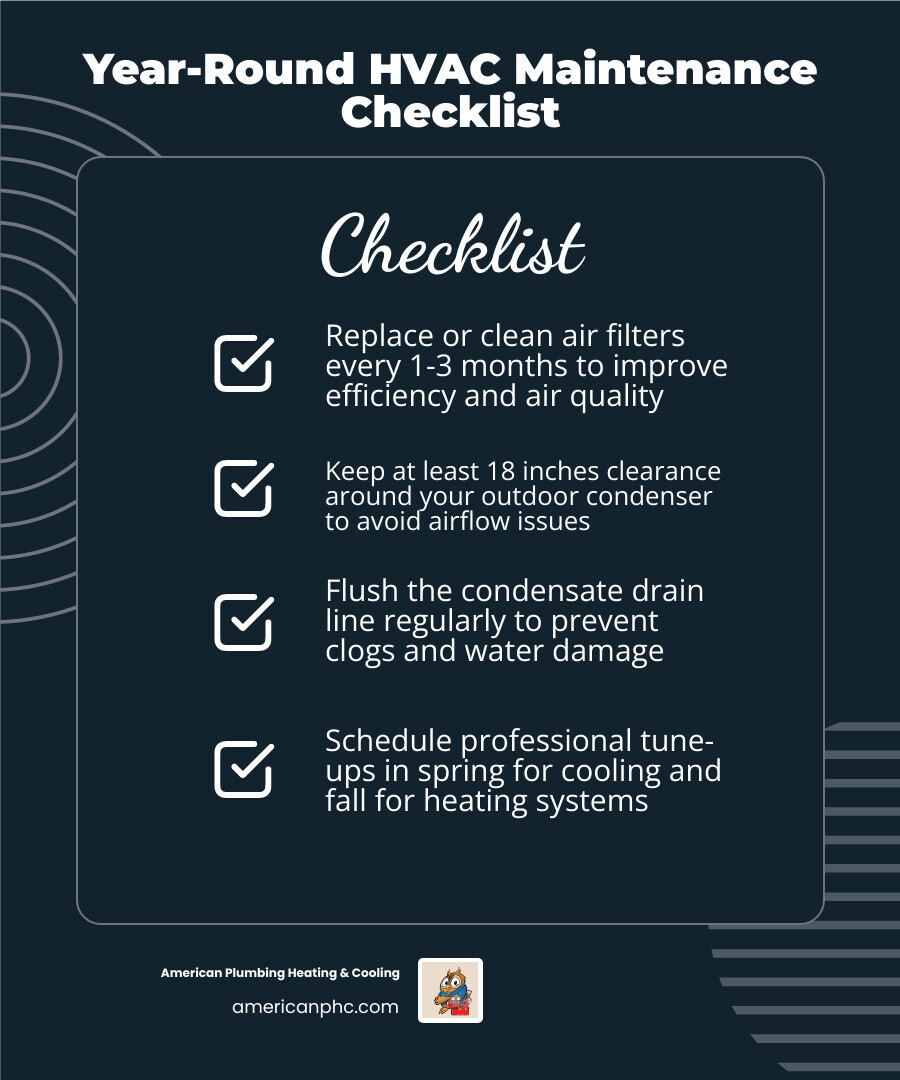
- Replace or clean air filters every 1 to 3 months
- Clear debris from around your outdoor condenser unit (keep at least 18 inches of clearance)
- Keep supply and return vents open and free of furniture or drapes
- Check your thermostat settings each season
- Flush the condensate drain line to prevent clogs and water damage
- Listen and smell for anything unusual — strange noises or odors are early warning signs
- Schedule professional tune-ups in spring (for cooling) and fall (for heating)
- Test carbon monoxide detectors and smoke alarms regularly
The numbers tell a clear story. Routine maintenance can improve your system's efficiency by 10 to 20 percent. Duct leaks alone can waste 20 to 30 percent of the air your system produces. And small, consistent habits can extend your HVAC system's lifespan by 25 percent or more. In Florida's demanding climate, that kind of return is hard to ignore.
This guide walks you through everything — from simple monthly tasks you can do yourself to seasonal checklists and the warning signs that mean it is time to call a professional.
How to Maintain Your Heating and Cooling System Year-Round
The easiest way to stay ahead of HVAC problems is to think in seasons, not emergencies. In Florida, cooling equipment often carries the bigger workload, but heating still needs attention before cooler weather arrives. A good routine includes monthly check-ins, pre-season service, and a simple maintenance log so you can track filter changes, tune-ups, and any odd behavior.
We recommend scheduling cooling maintenance in late winter or early spring, before the hottest stretch hits Sarasota, Cape Coral, Fort Myers, Pensacola, and surrounding Florida communities. Heating service is best handled in late summer or early fall, before you actually need heat.
A steady routine helps you avoid the classic homeowner problem: noticing trouble only when the house feels like a sauna or an icebox. For more timing tips, see The Magic Number for HVAC Maintenance Success.
How to maintain your heating and cooling system with a simple monthly checklist
A monthly HVAC check does not need to be complicated. In most homes, this takes 10 to 15 minutes.
- Check the air filter and replace or clean it if dirty
- Make sure supply and return vents are not blocked by rugs, furniture, or curtains
- Look at your thermostat settings and confirm schedules still match your routine
- Pay attention to airflow from vents in the rooms you use most
- Listen for rattling, banging, buzzing, or squealing
- Notice any musty, burning, or sulfur-like odors
- Inspect the condensate drain area for moisture or signs of clogging
- Remove leaves, grass, and debris from around the outdoor unit
- Write down anything unusual in a maintenance log
That last step matters more than people think. If cooling weakens slowly over time, your notes can help spot patterns before a breakdown happens.
How to maintain your heating and cooling system before summer and winter
Pre-season maintenance is your system's warm-up lap.
Before summer:
- Test the AC early, not on the first 90-degree day
- Check filters, vents, thermostat, and outdoor clearance
- Make sure the condensate drain is flowing properly
- Schedule a spring tune-up before peak demand
Before winter:
- Test the heating mode before the first cool front
- Replace the filter
- Verify the thermostat switches correctly between cooling and heating
- Check smoke alarms and carbon monoxide detectors
- Schedule fall service for heating components
If you want a deeper pre-summer checklist, visit How to Get Your Cooling System Ready for Hot Weather.
DIY HVAC Maintenance Tasks Every Homeowner Should Handle
Not every HVAC task belongs on a technician's to-do list. Homeowners can safely handle several important jobs that protect performance and reduce wear.

These are the big DIY wins:
- Change or clean air filters
- Dust supply and return grilles
- Keep vents open and unblocked
- Clear debris around the outdoor condenser
- Gently rinse dirt from the outdoor unit when needed and safe
- Check for visible water around the indoor unit
- Flush the condensate drain line if your system allows for it
- Monitor thermostat accuracy and battery status if applicable
- Watch, listen, and smell for early warning signs
For a Florida-friendly overview, read Don't Sweat It: A Local Guide to HVAC System Maintenance.
Air filters: how often to clean or replace them and why it matters
If you only do one maintenance task, make it the filter.
For most homes, filters should be checked monthly and replaced every 1 to 3 months. In Florida, homes with pets, allergies, renovation dust, or heavy year-round system use may need monthly replacement. During heavy cooling season, many systems benefit from more frequent checks.
Why this matters:
- Dirty filters restrict airflow
- Restricted airflow can reduce efficiency by up to 15 percent
- A clogged filter can let dirt build up on the evaporator coil
- A clean filter can reduce energy use by roughly 5 to 15 percent in some systems
- Better filtration supports indoor air quality
If you replace the filter yourself:
- Turn off the system
- Remove the old filter
- Check the airflow arrow on the frame
- Install the new filter with the arrow pointing toward the blower or furnace/air handler
- Close the access panel securely
As for filter type, many homes do well with manufacturer-recommended filters in the MERV 8 to 13 range, but higher is not always better. Too-restrictive filters can hurt airflow if your system is not designed for them.
Outdoor and indoor upkeep that protects performance
A little housekeeping around the system goes a long way.
For the outdoor unit:
- Keep at least 18 inches of clearance, and up to 2 feet is even better where space allows
- Trim back shrubs and plants
- Remove leaves, mulch, and grass clippings
- Make sure the top of the unit is not covered with debris
For the indoor system:
- Keep return vents clear
- Dust registers and grilles
- Check around the air handler for water stains or dampness
- Watch the condensate drain line for clogs, algae, or overflow
In Florida's humidity, the condensate drain deserves extra respect. If it clogs, your system may shut off or overflow and cause water damage. Also, never close a bunch of vents thinking it will save energy. It usually does the opposite by increasing pressure and reducing balanced airflow.
Safe DIY checks before you call for service
Safety first, bravery second.
Before any basic inspection:
- Turn off power to the unit if you are opening panels or working near components
- Wear gloves and eye protection
- Keep hands away from electrical parts
- Do not try to handle refrigerant
- Never bypass safety switches or sensors
Important safety checks for homeowners:
- Test smoke alarms regularly
- Test carbon monoxide detectors monthly, especially if you have a gas furnace or boiler
- If you smell burning, shut the system off
- If you smell gas or sulfur-like odor, leave the area and call for help
- If a breaker keeps tripping, stop resetting it and call a professional
DIY maintenance is helpful. DIY electrical, combustion, or refrigerant work is not.
Professional HVAC Tune-Ups: When to Schedule Them and What They Should Include
Even a careful homeowner cannot replace a professional tune-up. A trained technician can test, measure, clean, and inspect parts you cannot safely or practically service yourself.
We recommend:
- One cooling tune-up in spring
- One heating tune-up in fall
That schedule is especially useful in Florida, where air conditioning runs hard for much of the year. For more reasons to stay on schedule, see 20 Reasons to Schedule Your HVAC Tune-Up Today.
What a cooling system tune-up should include
A proper AC or heat pump cooling inspection should include:
- Thermostat check and calibration review
- System start-up and control sequence testing
- Electrical connection inspection
- Condenser coil inspection and cleaning
- Evaporator coil inspection and cleaning as needed
- Refrigerant level and leak check
- Blower component cleaning and adjustment
- Condensate drain inspection
- Airflow testing
- Inspection of refrigerant lines and insulation
- Review of overall cooling performance
Dirty coils, low refrigerant, or blower issues can all make your AC run longer and cool less. Learn more in Spring AC Tune-Up in Florida 101.
What a heating system tune-up should include
Even in Florida, your heating system should not be ignored. A fall inspection should include:
- Thermostat operation check
- Electrical connection inspection
- Gas connection and pressure checks, if applicable
- Burner and combustion inspection
- Ignition system testing
- Heat exchanger inspection
- Flue and venting inspection
- Safety control testing
- Carbon monoxide safety check
- Blower and airflow review
If a heating system has combustion issues, cracked components, or venting problems, that is not just a comfort issue. It is a safety issue.
Warning signs that mean it is time to call a professional
Some problems should move straight from "hmm" to "call now."
Call a professional if you notice:
- Rising utility bills without a change in usage
- Uneven temperatures between rooms
- Short cycling
- Weak airflow
- Water leaks or repeated drain pan overflow
- Ice on refrigerant lines or coils
- Tripped breakers
- Loud banging, grinding, or screeching
- Burning smells
- Sulfur or gas odors
- Carbon monoxide detector alarms
- Little or no heating or cooling
Routine care helps reduce emergency calls, which is exactly why Preventing HVAC Emergencies with Regular Maintenance is such an important read.
Seasonal HVAC Maintenance for Cooling, Heating, Ductwork, and Efficiency
Different seasons stress different parts of your system. In Florida, cooling dominates, but year-round efficiency also depends on ductwork, insulation, ventilation, and humidity control.
| Cooling maintenance | Heating maintenance |
|---|---|
| Schedule service in late winter or early spring | Schedule service in late summer or early fall |
| Replace or check filters monthly during heavy use | Replace filter before heating season |
| Clean around condenser and maintain clearance | Test heating mode before cool weather |
| Inspect drain line and watch for water issues | Check detectors and venting safety |
| Confirm thermostat cooling schedule | Confirm thermostat heating schedule |
| Watch for poor cooling, icing, or weak airflow | Watch for odd smells, ignition issues, or poor heat |
Spring and summer maintenance steps for cooling systems
Spring is the time to get ahead of Florida heat.
Your spring checklist:
- Replace or inspect the air filter
- Clear debris around the outdoor unit
- Rinse the condenser exterior gently if dirty and safe to do
- Check insulation on refrigerant lines
- Flush or inspect the condensate line
- Test thermostat settings and programming
- Make sure vents are open and unobstructed
- Schedule professional AC service before peak summer demand
Your summer checklist:
- Recheck the filter monthly
- Monitor for weak airflow or longer cooling cycles
- Watch for water leaks near the air handler
- Keep outdoor clearance maintained
- Use blinds or shades during peak sun
- Keep humidity under control
For more seasonal guidance, see One Simple Way to Spring AC Maintenance Before Florida Heat.
Fall and winter maintenance steps for heating systems
Heating season in Florida may be shorter, but skipping maintenance is still risky.
Your fall checklist:
- Replace the air filter
- Test the thermostat in heat mode
- Schedule a heating tune-up
- Check vents and returns for blockage
- Test smoke and carbon monoxide detectors
- Inspect around the indoor unit for dust, damage, or moisture
Your winter checklist:
- Monitor filter condition monthly
- Listen for unusual sounds when heat starts up
- Keep vents open for balanced airflow
- Watch for odd smells beyond the brief dusty smell of first startup
- Check that outdoor heat pump units remain clear
One important note: if you have a heat pump, do not cover the outdoor unit in winter. It still needs to operate for heating. Central AC-only units may be protected from falling debris if appropriate, but heat pumps should stay uncovered.
Ductwork, insulation, and ventilation: the hidden factors behind comfort and bills
If your HVAC system seems to run forever but some rooms still feel wrong, the problem may not be the equipment itself.
Ductwork matters because:
- In a typical house, 20 to 30 percent of conditioned air can be lost through leaks, holes, and poor connections
- Airflow problems can reduce efficiency by up to 15 percent
- Leaky ducts can pull in dust, attic air, and humidity
Good maintenance in this area includes:
- Inspecting accessible ducts for gaps, disconnected sections, or damaged insulation
- Having leaks professionally sealed with mastic or proper foil-backed products
- Keeping return paths clear
- Avoiding the myth that closing vents in unused rooms saves energy
Insulation and ventilation matter too:
- Poor attic insulation increases HVAC workload
- Air leaks around the home let heat and humidity in
- Proper ventilation helps manage stale air and moisture
- Florida homes benefit from humidity awareness to reduce mold risk
For related seasonal best practices, visit How to Spring Maintenance the Right Way.
Benefits of Regular HVAC Maintenance for Comfort, Lifespan, and Lower Bills
The payoff for regular maintenance is not just theoretical. It shows up in daily comfort, energy use, indoor air quality, and how long your system lasts.
Routine maintenance can help deliver:
- 10 to 20 percent better seasonal efficiency
- 8 to 15 percent lower heating and cooling use with a properly installed smart thermostat
- Longer equipment life, often by 25 percent or more with consistent care
- Fewer surprise breakdowns
- More even temperatures
- Better humidity control
- Cleaner indoor air
In Florida, comfort is not only about temperature. It is also about moisture. A system that cools but does not manage humidity well can leave the house feeling clammy and make mold more likely. For more on that topic, see How to Keep Your Florida Home Mold-Free and Cool.
The biggest maintenance habits that improve energy efficiency
If your goal is lower utility bills, focus on the habits with the biggest impact:
- Change filters on schedule
- Keep vents open and unobstructed
- Seal leaking ducts
- Maintain proper outdoor unit clearance
- Use smart thermostat schedules wisely
- Keep coils and blower components clean through regular service
- Check insulation and air leaks in the home
- Avoid ignoring weak airflow or rising run times
If your system is older, ENERGY STAR certified replacement equipment may also reduce annual energy use, but maintenance should come first. A neglected high-efficiency system still behaves like a neglected system.
Why regular maintenance improves indoor air quality and system longevity
Cleaner equipment supports cleaner air. When filters clog and coils collect dirt, airflow suffers and dust, humidity, and biological growth can become bigger problems.
Regular maintenance helps by:
- Reducing dust circulation
- Protecting the evaporator coil from buildup
- Helping the system remove humidity properly
- Lowering the chance of mold-friendly moisture problems
- Reducing strain on motors and moving parts
- Catching small issues before they become major repairs
- Supporting quieter, steadier operation
Think of it this way: your HVAC system does not need constant drama to prove it is working. Quiet, consistent comfort is the real success story.
Conclusion
Knowing how to maintain your heating and cooling system comes down to a few smart habits: check filters, keep airflow open, clean up around the equipment, stay alert to warning signs, and schedule professional tune-ups before the hottest and coolest parts of the year.
That simple routine can improve efficiency, support better indoor air quality, reduce breakdowns, and help your system last longer in Florida's demanding climate.
If you want expert help with seasonal service, repairs, or a long-term maintenance strategy, American Plumbing Heating and Cooling is here for homeowners across Sarasota, Bradenton, Cape Coral, Fort Myers, Pensacola, and surrounding Florida communities. You can learn more about our HVAC solutions here: More info about services.
If you prefer a set-it-and-forget-it approach, explore our Maintenance Plan to keep your system on track year-round.
Need HVAC Help?
Our certified technicians are ready to help with all your heating and cooling needs.
Request ServiceAbout the Author
American Plumbing Heating and Cooling Team
Licensed Florida contractors — HVAC CAC1821761 · Plumbing CFC1431919
More Articles
View All PostsRelated Articles


Ready to Get Started?
Whether you need a repair, maintenance, or a new system installation, our expert team is here to help.