
What to Expect During an Emergency HVAC Service Call
By the American Plumbing Heating and Cooling Team
Licensed Florida contractors — HVAC CAC1821761 · Plumbing CFC1431919

Learn emergency HVAC repair what to expect: diagnosis, repair steps, safety tips and prevention for Florida heatwaves. 24/7 service!
Reviewed bythe American Plumbing Heating and Cooling Team — Licensed Florida contractors — HVAC CAC1821761 · Plumbing CFC1431919. Published April 22, 2026 · Last updated July 29, 2026. About American Plumbing Heating and Cooling
Dealing with this problem right now? Call (941) 735-6616 and talk to our local team.
Request ServiceIdentifying a True HVAC Emergency
Emergency HVAC repair what to expect is one of the most stressful things a Florida homeowner can face — especially when your AC stops working in the middle of a summer heatwave or your heat goes out on a cold night. When your system fails, you need answers fast.
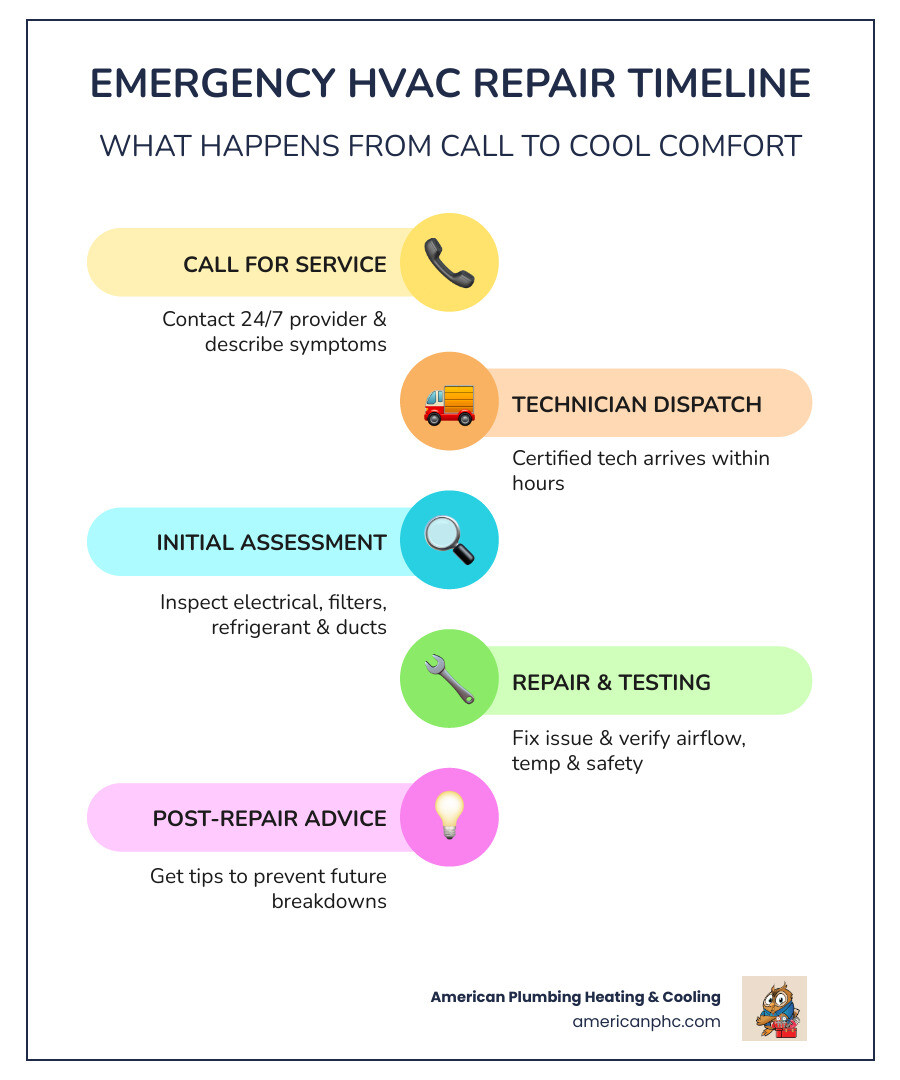
Here's a quick overview of what the emergency HVAC repair process typically looks like:
- Call for service - Contact a 24/7 HVAC provider and describe your symptoms
- Technician dispatch - A certified tech is sent to your home, often within a few hours
- Initial assessment - The technician inspects your system, including electrical components, thermostat, filters, refrigerant levels, and ductwork
- Repair plan - You receive a clear explanation of the problem, recommended fix, and timeframe before any work begins
- Repair and testing - The technician completes the repair and runs performance checks to verify airflow, temperature output, and safe operation
- Post-repair advice - You get maintenance recommendations to help prevent future breakdowns
Knowing what to expect takes the panic out of the situation. According to industry data, 70% of homeowners experience an HVAC breakdown during peak seasons — so you're far from alone.
The good news? Most emergency repairs are completed within a few hours. And with the right information, you can take smart steps before the technician even arrives to protect your home and your family.
This guide walks you through every stage of the process — from recognizing a true emergency to what happens after the repair is done.

In the Florida climate, the line between an "inconvenience" and a "true emergency" can blur quickly. However, certain situations demand an immediate response to protect your health, your property, and your safety.
A true emergency exists when the failure of your system creates a direct risk. For example, if your air conditioning fails during a July afternoon in Cape Coral and there are infants or elderly family members in the home, the risk of heat exhaustion is real. Similarly, if your heating fails during a rare North Florida freeze in Milton, your plumbing is at risk. Frozen Pipe Repair in Sarasota is a common consequence of heating failures that homeowners often overlook until it is too late.
If you are unsure whether you need AC Repair in Sarasota or Furnace Repair in Milton on an emergency basis, look for these critical indicators:
- The Smell of Gas: If you have a gas furnace and smell "rotten eggs," evacuate immediately and call from outside. This is a life-threatening emergency.
- Electrical Burning Smells: If you smell ozone, burning plastic, or see sparks from your indoor or outdoor unit, shut off the power at the breaker and call us immediately.
- Extreme Indoor Temperatures: If indoor temperatures exceed 85-90°F or drop below 50°F, your home is no longer a safe environment for vulnerable residents.
- Major Water Leaks: A clogged condensate line or a failing boiler can dump gallons of water into your home, leading to thousands of dollars in structural damage and mold growth.
- Loud, Unusual Noises: Screeching, banging, or grinding sounds often indicate a mechanical failure that could destroy your compressor or motor if the system continues to run.
Emergency HVAC Repair: What to Expect During the Service Call
Once you’ve made the call, our dispatch team will prioritize your visit based on the severity of the situation and the presence of high-risk occupants. When our technician arrives, the process is methodical and designed to get your home back to a comfortable state as quickly as possible.
The first step is a comprehensive initial assessment. The technician won't just look at the most obvious symptom; they will evaluate the entire system to ensure the root cause is addressed. This includes checking the thermostat calibration, inspecting electrical connections, measuring refrigerant levels, and verifying airflow through the ductwork. If you are experiencing issues with a specialized system, such as Boiler Repair in Navarre, the technician will also inspect safety controls and pressure valves.
For those in the coastal regions needing AC Repair in Bradenton, the technician will often pay close attention to the outdoor condenser, as salt air and high humidity can accelerate the corrosion of electrical components and coils.
Emergency HVAC repair what to expect: Preparing your home
To make the most of the technician's time, there are a few things you can do before we arrive. Efficiency is key during an emergency.
- Clear the Path: Ensure the technician has easy access to your indoor air handler (usually in a closet, attic, or garage) and the outdoor unit. Remove any debris, storage boxes, or overgrown brush.
- Secure Pets: HVAC repairs often involve moving in and out of the house. Keep your pets in a secure room so they stay safe and don't interfere with the repair process.
- Document Symptoms: Be ready to tell the technician exactly what happened. Did you hear a pop? Did the air gradually get warmer? Is there a specific error code on the thermostat?
- Check the Basics: Before the tech arrives, double-check that your circuit breaker hasn't tripped and that your thermostat batteries are still good. This can sometimes resolve the issue before a full diagnostic is needed.
If you are dealing with a winter emergency, such as Frozen Pipe Repair in Cape Coral, clearing access to your main water shut-off valve is also highly recommended. Providing a clear workspace for AC Repair in Lakewood Ranch ensures the technician can focus entirely on getting your cooling back online.
Emergency HVAC repair what to expect: The diagnosis and repair plan
After the inspection, the technician will sit down with you to explain the findings. Transparency is our priority. You will receive a clear explanation of what failed and what is required to fix it.
Common culprits in Florida HVAC emergencies include:
- Faulty Capacitors: These small components help start your motors. They often fail during heatwaves due to the stress of constant cycling.
- Compressor Failure: The "heart" of your AC. If this fails, it is a major repair that requires careful consideration of repair vs. replacement.
- Refrigerant Leaks: If your system is low on "freon," it won't just need a refill; the leak must be found and sealed to prevent future failures.
- Clogged Condensate Drains: High humidity in Florida leads to lots of condensation. If the drain line clogs, safety switches will shut the whole system down to prevent flooding.
Whether you need Furnace Repair in Sarasota or Water Heater Repair in Venice, we will provide a timeframe for the repair. If a specific part isn't on the truck, we may provide a temporary solution to keep your home safe until the permanent fix can be completed.
Immediate Steps and Comfort Measures
While you wait for the technician to arrive, your primary goal is to keep the indoor temperature from rising (or falling) too rapidly.
First, perform a quick "DIY" check. Is the thermostat set to "Cool" and the temperature set below the current room temp? Is the air filter so clogged that air can't pass through? Did a breaker trip? Sometimes, these simple fixes are the answer. For more local tips, check out our Navarre AC Repair Guide for Hot Florida Days.
If the system is making a terrible noise or smelling like smoke, turn it off immediately. Running a failing system can turn a simple part replacement into a total system replacement. This is especially true for AC Repair in Milton FL for People Who Hate Sweating — don't let a small issue snowball.
Staying safe while waiting
If the Florida sun is beating down on your home, use these strategies to stay cool:
- Close the Blinds: Block out the "greenhouse effect" by closing all curtains and blinds, especially on the sunny side of the house.
- Use Portable Fans: While fans don't lower the temperature, they help with sweat evaporation, making you feel cooler.
- Hydrate: Drink plenty of water. Avoid caffeine or alcohol, which can contribute to dehydration.
- Limit Appliance Use: Avoid using the oven, stove, or dryer, as these all add significant heat to your home interior.
If you are waiting for AC Repair in Navarre and the heat becomes unbearable, consider heading to a public library or shopping mall until the technician confirms your system is back in operation.
Preventing Future System Breakdowns
The best way to handle an HVAC emergency is to prevent it from happening in the first place. Statistics show that homeowners who schedule regular maintenance are 50% less likely to experience an emergency breakdown.
In April 2026, as we look at modern high-efficiency systems, maintenance is more important than ever. These systems are finely tuned machines. A small amount of dirt on a coil or a slightly low refrigerant charge can cause the system to work 15-20% harder, leading to a premature death for your compressor.
Regular tune-ups for Furnace Repair in Bradenton or maintaining your hot water system with Tankless Water Heater Repair in Sarasota ensures that small "wear and tear" issues are caught before they become midnight emergencies.
| Feature | Well-Maintained System | Neglected System |
|---|---|---|
| Lifespan | 15–20 Years | 8–10 Years |
| Breakdown Risk | Low (caught during tune-ups) | High (usually during peak heat) |
| Efficiency | 100% of rated SEER | Drops 5% per year of neglect |
| Energy Bills | Consistent and optimized | Gradually increasing |
| Air Quality | High (clean filters/coils) | Poor (dust and mold buildup) |
Frequently Asked Questions about Emergency HVAC Repair
What constitutes a true HVAC emergency?
A true emergency involves any situation that threatens the safety of the occupants or the integrity of the property. This includes gas leaks, electrical hazards (burning smells), or the total loss of climate control during extreme Florida weather (above 95°F or below freezing). If you have vulnerable individuals like infants or seniors at home, any loss of cooling is typically considered an emergency. For those with older homes, issues requiring Boiler Repair in Bradenton often qualify if they involve pressure leaks or no heat during a cold snap.
How long does a typical emergency repair take?
Most emergency repairs are completed within one to three hours once the technician is on-site. However, the total timeframe depends on the complexity of the issue. A simple capacitor or fuse replacement is very quick. If your system requires AC Repair in Cape Coral involving a proprietary part that isn't stocked on the truck, it may take longer to source the component. Our technicians always strive to provide a temporary fix to keep you comfortable in the meantime.
Can regular maintenance prevent these emergencies?
Absolutely. Over 60% of HVAC emergencies happen during peak seasons because that is when the system is under the most stress. Maintenance identifies thinning wires, failing capacitors, and clogged drains before they cause a total system shutdown. Whether it is your cooling system or Water Heater Repair in Milton, an ounce of prevention truly is worth a pound of cure.
Conclusion
Dealing with a broken air conditioner or heater is never fun, but knowing emergency hvac repair what to expect can make the process much smoother. From the moment you call American Plumbing Heating and Cooling, our goal is to restore your comfort with honesty and expertise.
With over 100 years of combined experience, our certified professionals serve Sarasota, Bradenton, Milton, Navarre, Cape Coral, and the surrounding regions 24 hours a day, 7 days a week. We don't just fix the immediate problem; we look out for your home's long-term health.
Don't suffer in the Florida heat or shiver through a cold night. If your system is failing, give us a call. We’ll get a technician to your door, provide a clear repair plan, and get your life back to normal.
Schedule your professional HVAC service today with the experts at American Plumbing Heating and Cooling.
Need HVAC Help?
Our certified technicians are ready to help with all your heating and cooling needs.
Request ServiceAbout the Author
American Plumbing Heating and Cooling Team
Licensed Florida contractors — HVAC CAC1821761 · Plumbing CFC1431919
More Articles
View All PostsRelated Articles


Ready to Get Started?
Whether you need a repair, maintenance, or a new system installation, our expert team is here to help.