
Why Your Warranty Depends on Who Holds the Wrench
By the American Plumbing Heating and Cooling Team
Licensed Florida contractors — HVAC CAC1821761 · Plumbing CFC1431919

Discover why dealer certification matters for your warranty. Protect your HVAC investment with factory-backed service, OEM parts and expert tips.
Reviewed bythe American Plumbing Heating and Cooling Team — Licensed Florida contractors — HVAC CAC1821761 · Plumbing CFC1431919. Published May 7, 2026. About American Plumbing Heating and Cooling
Dealing with this problem right now? Call (941) 735-6616 and talk to our local team.
Request ServiceWhy Dealer Certification Matters for Your HVAC Warranty in Florida
Why dealer certification matters for your warranty comes down to one simple truth: if the wrong technician touches your HVAC system, your manufacturer may refuse to honor the coverage you paid for.
Here is a quick breakdown of what is at stake:
- Certified technicians are trained and authorized by the manufacturer to work on your specific equipment
- Factory-backed warranties require repairs to be performed by authorized service providers — or coverage can be voided
- Non-certified repairs may use aftermarket or mismatched parts that fail to meet manufacturer standards
- Dealer-only certifications carry fewer guarantees than manufacturer-backed programs and can leave you with limited options if something goes wrong
- Documentation matters — certified service creates a paper trail that protects your claim if you ever need to use your warranty
In Florida's intense heat and humidity, your HVAC system works harder than almost anywhere else in the country. That makes your warranty one of your most valuable protections as a homeowner. But that protection is not automatic. Research shows that certified pre-owned vehicles — and by the same logic, certified service programs — had about 14 percent fewer problems than non-certified alternatives, based on analysis of over 300,000 units. The same principle applies to HVAC systems: who does the work directly affects whether your warranty holds up when you need it most.
Whether you are dealing with a late-night breakdown or planning a system upgrade, understanding the difference between factory-backed certification and dealer-only programs can save you from a denied claim and an expensive out-of-pocket repair.
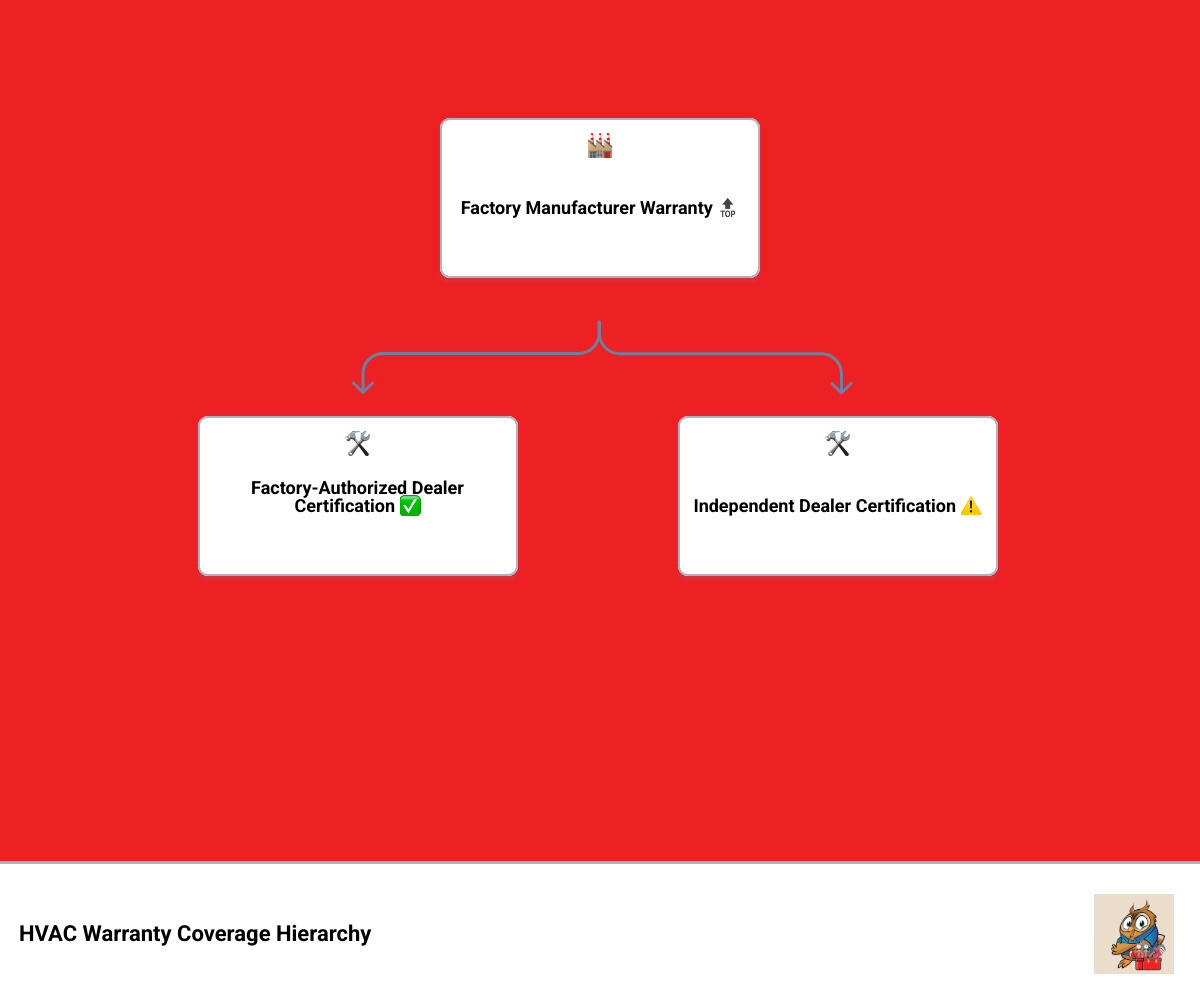
Understanding Manufacturer-Backed vs. Dealer-Only Programs
When we talk about certification in the home services world, it is easy to get confused by the terminology. Much like the automotive industry, where there is a massive difference between a "Factory Certified Pre-Owned" car and a car with a "Dealer Certified" sticker, HVAC systems have distinct tiers of authorization.
A factory-authorized status means the manufacturer (the brand that built your AC or heater) has vetted the service provider. These companies receive brand-specific training directly from the factory. In contrast, an independent dealer certification is often a self-imposed standard. While a dealer might be highly skilled, their "certification" may not carry the legal weight required to keep your manufacturer's warranty intact.
At American Plumbing Heating and Cooling, we emphasize that our About page highlights our 100+ years of combined experience, but we also maintain the specific factory-level standards that keep your equipment protected.
Comparison Table: Factory-Backed vs. Independent Dealer Certification
| Feature | Factory-Authorized / CPO | Independent Dealer Certified |
|---|---|---|
| Backing | Manufacturer-backed | Dealer-backed |
| Parts Used | Genuine OEM parts | May use aftermarket parts |
| Training | Brand-specific factory training | General industry training |
| Warranty Validity | Fully protects factory warranty | May risk factory warranty voiding |
| Service Network | Nationwide/Brand-wide | Limited to the specific dealer |
Why dealer certification matters for your warranty validity
The validity of your warranty is often a contractual obligation. When you buy a high-efficiency system, the fine print usually stipulates that repairs must be performed by "authorized service providers." If you hire a non-certified "handyman" to fix a complex evaporator coil issue in Sarasota or Milton, the manufacturer can argue that the repair was not performed to their specifications.
Furthermore, factory-backed programs often include enforcement protocols. This means if a part fails under warranty, the manufacturer pays the dealer directly for the part and sometimes the labor. If the dealer is not "certified" by that manufacturer, you might have to pay the full price upfront and hope for a reimbursement that never comes. You can learn more about these nuances in our FAQs.
Identifying the risks of non-factory certifications
The biggest risk of a non-factory "dealer-certified" program is the involvement of third-party administrators. Many independent dealers sell service contracts that they call "warranties," but these are actually separate products. These third-party companies are notorious for finding "coverage gaps" to deny claims.
If your AC fails in the middle of a Cape Coral July, you don't want to find out that your "dealer certification" only covers a limited service network or that your claim is denied because the technician didn't follow a specific manufacturer checklist. Our Services ensure that we follow the rigorous standards required to keep your coverage active.
Why dealer certification matters for your warranty and long-term reliability
In the Florida climate, system longevity is not just a luxury; it’s a necessity. The salty air in Pensacola and the high humidity in Bradenton put immense strain on HVAC components. Why dealer certification matters for your warranty is directly linked to how your system performs over its 10-to-15-year lifespan.
When a certified professional handles your system, they are optimizing it for peak performance. This investment protection ensures that you aren't just fixing a symptom, but maintaining the integrity of the whole unit. We often run Promotions to help homeowners get this high-level service at a more accessible price point.
When to choose certified service over standard repairs
While a standard repair might be fine for a simple drain line clog, you should always insist on certified service for:
- Critical system failures: Compressor or heat exchanger issues.
- New installations: To ensure the warranty clock starts correctly.
- High-efficiency upgrades: Systems with complex inverter technology.
- Seasonal maintenance: To document that the system is being cared for according to factory specs.
A structured Maintenance Plan is the best way to ensure these standards are met year-round.
How component quality explains why dealer certification matters for your warranty
A warranty is only as strong as the parts it covers. Factory-backed certifications mandate the use of OEM (Original Equipment Manufacturer) parts. These parts are built to the exact fitment standards and safety protocols of your original unit. Reliability data suggests that using non-OEM parts can lead to premature wear on surrounding components, eventually leading to a total system failure that your warranty won't cover. Explore our full range of Services to see how we prioritize quality.
The Role of OEM Parts and Rigorous Inspection Standards
One of the hallmarks of a true certification is the multi-point inspection. In the automotive world, CPO vehicles undergo 100- to 300-point checks. In the HVAC world, we follow similar reconditioning protocols. We don't just see if the air is cold; we check refrigerant levels, electrical connections, and airflow pressures against the manufacturer’s "birth certificate" for that model.
Using aftermarket or used components is a significant hazard. While they might be cheaper in the short term, they often lack the safety system verification required by modern building codes in Florida. If you need help managing the cost of these high-quality repairs, we offer Financing options to keep your home comfortable without compromise.
Comparing inspection rigor between certification tiers
| Inspection Tier | Scope of Work | Documentation |
|---|---|---|
| Standard Repair | Fix the immediate broken part | Basic receipt |
| Dealer Certified | Check related components | Dealer-specific checklist |
| Factory Authorized | Full manufacturer multi-point check | Official factory service record |
Why aftermarket parts impact reliability and safety
Aftermarket parts are "one size fits most." In a high-performance AC unit in Fort Myers, "most" isn't good enough. Fitment issues can cause vibrations that lead to refrigerant leaks. Performance degradation is common when a non-brand fan motor doesn't spin at the exact RPM required for the coil. Most importantly, many manufacturers have "voided warranty clauses" specifically targeting the use of non-authorized parts. Our Services focus on keeping your system 100% compliant.
Protecting Your Rights Under Consumer Protection Laws
As a homeowner in Sarasota or Siesta Key, you are protected by the Magnuson-Moss Act. This federal law states that a manufacturer cannot void your warranty just because you used an independent shop for routine maintenance, unless they can prove that the independent work caused the damage.
However, "routine maintenance" is different from "warranty repairs." For actual warranty claims (where the manufacturer pays for the part), they have the right to require a certified dealer. This is why record-keeping is a best practice. Always keep your service receipts and technician notes in a dedicated folder. You can find more tips on our About page.
Avoiding common scams and service contract pitfalls
Be wary of unsolicited offers. If you receive a "final notice" about your HVAC warranty in the mail, it is almost certainly a scam. These high-pressure tactics are designed to sell you overpriced, low-value service contracts. Always check the administrator reputation before signing anything. If the company isn't a licensed Florida contractor like us, walk away.
Steps to verify legitimate dealer credentials in Florida
Before you let someone hold the wrench, take these steps:
- License Verification: Check the Florida Department of Business and Professional Regulation (DBPR). (Our HVAC: CAC1821761 / Plumbing: CFC1431919).
- Manufacturer Portals: Most major brands have a "Find a Dealer" tool on their website.
- Official Documentation: Ask for the technician’s certification ID.
- Customer Reviews: Look for mentions of warranty successes in local reviews.
Check our FAQs for more advice on verifying pros.
Frequently Asked Questions about HVAC Warranties
Can I use an independent shop without voiding my warranty?
Yes, for routine maintenance like filter changes and coil cleanings. Under the Magnuson-Moss Act, you have the right to choose your service provider for maintenance. However, you must keep "proof of service" to show the manufacturer that the system wasn't neglected if a part fails later.
What is the difference between a warranty and a service contract?
A warranty is included in the price of the equipment and covers manufacturing defects. A service contract (or "extended warranty") is an optional add-on you purchase separately. Service contracts are often managed by third-party administrators, whereas warranties are managed by the manufacturer.
How do I know if my technician is factory-certified?
Look for manufacturer badges on their uniforms or service trucks. You can also use authorized dealer locators on brand websites or ask the company directly for their training certifications.
Conclusion

At American Plumbing Heating and Cooling, we understand that your HVAC system is the heartbeat of your home. With over 100 years of combined experience, our certified professionals are dedicated to ensuring your warranty remains a shield, not a liability. Whether you are in Sarasota, Cape Coral, or anywhere in between, we provide the expert service required to keep your manufacturer happy and your family cool.
Don't leave your coverage to chance. Ensure the right hands are holding the wrench.
Need HVAC Help?
Our certified technicians are ready to help with all your heating and cooling needs.
Request ServiceAbout the Author
American Plumbing Heating and Cooling Team
Licensed Florida contractors — HVAC CAC1821761 · Plumbing CFC1431919
More Articles
View All PostsRelated Articles


Ready to Get Started?
Whether you need a repair, maintenance, or a new system installation, our expert team is here to help.