
Don't sweat the heat with this pre summer ac inspection checklist
By the American Plumbing Heating and Cooling Team
Licensed Florida contractors — HVAC CAC1821761 · Plumbing CFC1431919

Master your pre summer ac inspection checklist: Boost efficiency, prevent breakdowns and stay cool in Florida heat with our expert DIY + pro tips!
Reviewed bythe American Plumbing Heating and Cooling Team — Licensed Florida contractors — HVAC CAC1821761 · Plumbing CFC1431919. Published July 8, 2026. About American Plumbing Heating and Cooling
Dealing with this problem right now? Call (941) 735-6616 and talk to our local team.
Request ServiceDon't Get Caught in the Florida Heat Without This Pre Summer AC Inspection Checklist
A pre summer ac inspection checklist is a step-by-step walkthrough of your AC system's key components — done before peak heat arrives — to catch problems early, improve efficiency, and avoid emergency breakdowns. Here's a quick overview of the essential tasks:
Quick Pre-Summer AC Inspection Checklist:
- Replace or clean the air filter
- Clear debris from the outdoor condenser unit and maintain 2-foot clearance
- Flush the condensate drain line with white vinegar
- Test the thermostat in cooling mode
- Inspect vents and registers for blockages
- Check refrigerant lines for visible damage or ice
- Schedule a professional tune-up for refrigerant, electrical, and coil checks
Florida summers don't ease you in gently. One day it's manageable, and the next the heat index is pushing past 100°F — and your AC has been sitting completely idle since last fall. That's a recipe for trouble.
HVAC systems account for roughly 60% of home energy consumption, and a system that hasn't been checked since last season is already working against you. In Florida's high-humidity climate, the stakes are even higher. Clogged drain lines cause water damage. Dirty coils kill efficiency. And a unit that skips pre-season prep often fails on the hottest day of the year — when every technician in the region is already booked solid.
The good news? Most of the problems that cause mid-summer breakdowns are completely preventable with a simple inspection done in spring.
Pre summer ac inspection checklist terms to know:
- getting your cooling system ready for hot weather
- how spring maintenance extends your ac lifespan
- spring ac maintenance before the florida heat
Why Pre-Summer Maintenance is Critical for Florida Homes
In Florida, our air conditioners aren't just a luxury; they are survival equipment. Whether you are in Sarasota, Cape Coral, or Milton, the humidity and heat levels during May 2026 are already starting to climb. Why Your Milton Home Needs Regular AC Maintenance to Survive the Heat isn't just a catchy title—it's a reality for anyone living in the Sunshine State.
When your system is well-maintained, it operates at peak efficiency. This is vital because HVAC systems account for roughly 60% of a home’s total energy consumption. A dirty, neglected system has to work harder to achieve the same cooling effect, which shows up directly on your monthly power bill. Beyond the immediate costs, Preventing HVAC Emergencies with Regular Maintenance helps you avoid the "no-cool" calls that inevitably happen during the first major heatwave.
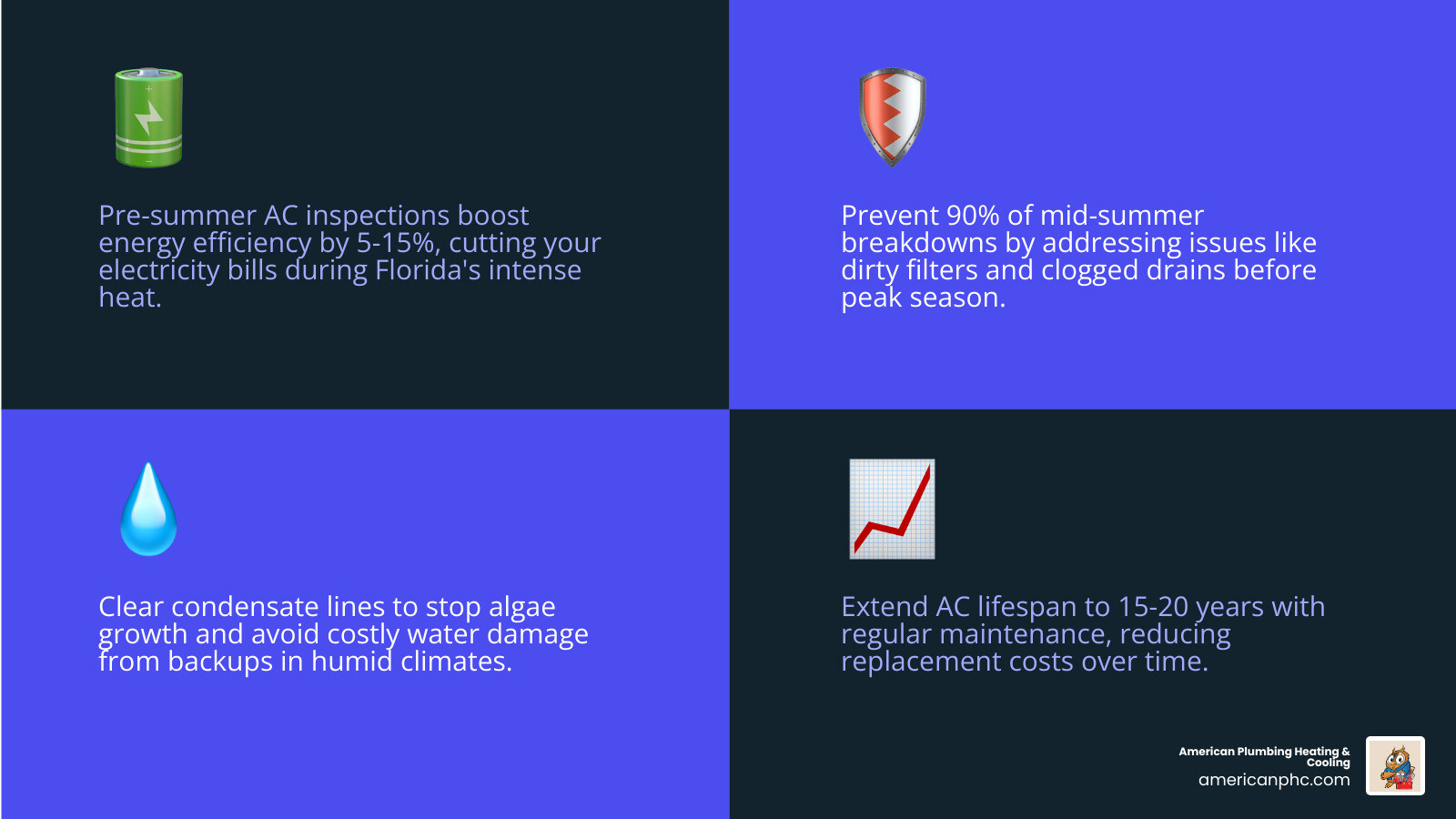
Proper maintenance also has a massive impact on the lifespan of your equipment. A well-maintained AC unit can last 15–20 years, whereas a neglected one might fail in as little as 10–12 years. In coastal areas like Venice or Navarre, where salt air can accelerate corrosion, staying on top of your pre summer ac inspection checklist is the difference between a system that lasts and one that requires an expensive premature replacement.
Your Essential Pre Summer AC Inspection Checklist for Homeowners
While some tasks require a certified professional, there are several steps you can take to ensure your home is ready for the humidity. Taking a proactive approach to How to Prepare AC for Florida Heat in 7 Easy Steps can save you a world of trouble.
Before you dive in, safety is the priority. Always turn off the power at the thermostat and the breaker before inspecting electrical components or the outdoor unit. Understanding Everything You Need to Know About AC Maintenance in Sarasota starts with mastering the basics of airflow and hygiene.
Step 1: Air Filter Replacement and Airflow Optimization
The single most important task on your pre summer ac inspection checklist is checking your air filter. A dirty filter acts like a wall in your ductwork, forcing the blower motor to work overtime. Replacing a soiled filter can lower your AC energy use by 5% to 15%.
For most Florida homes, we recommend a filter with a MERV 8-11 rating. This provides a "sweet spot" of high-quality filtration without creating too much static pressure for your system to handle. During the peak of summer, check these filters every 30 days. If you have pets or suffer from allergies, you may need to change them even more frequently to maintain indoor air quality.
Step 2: Cleaning the Outdoor Condenser Unit
Your outdoor unit is responsible for releasing the heat collected from inside your home. If it’s buried under leaves, grass clippings, or overgrown shrubs, it can’t breathe. Follow the "2-foot rule": ensure there is at least a two-foot clearance around the entire unit and five feet of clear space above it.
Use a garden hose on a gentle setting to rinse the coils from the inside out. Never use a pressure washer, as the high-pressure stream can flatten the delicate aluminum fins. If you notice bent fins, you can use a tool called a "fin comb" to carefully straighten them, which restores proper airflow and heat dissipation.
Step 3: Clearing the Condensate Drain Line
In Florida’s high humidity, your AC removes gallons of water from the air every day. This water travels through a condensate drain line. Over time, algae and mold can grow in the damp environment of the pipe, leading to clogs. A clogged drain line is one of the most common causes of water damage in homes.
A One Simple Way to Spring AC Maintenance Before Florida Heat is to pour one cup of distilled white vinegar down the drain line access point. This helps kill algae and prevents the "August callback" where homeowners find water leaking through their ceilings. Also, check your drain pan for any standing water, which indicates a blockage is already forming.
Professional-Only Tasks for a Reliable Cooling Season
While DIY maintenance is great for hygiene, certain tasks are legally and technically reserved for the pros. Handling refrigerant, for example, requires EPA Section 608 certification. If your system is low on refrigerant, it means there is a leak—refrigerant is not a fuel that gets "used up." A professional will find the leak rather than just putting a "band-aid" on the problem.
When we perform an AC Maintenance Tune-Up in Sarasota, FL, our technicians go deep into the system. We test the capacitors—which act like batteries to give the compressor the jolt it needs to start—and tighten all electrical connections. Faulty wiring is a major fire hazard and a leading cause of system failure.
Our AC Maintenance Tune-Up in Bradenton, FL also includes:
- Evaporator Coil Cleaning: These indoor coils are magnets for dust and pollen.
- Motor Lubrication: Reducing friction in moving parts lowers electricity use.
- Blower Component Testing: Ensuring the fan is moving the right amount of air.
- Safety Control Inspection: Verifying that the system will shut down safely if a problem occurs.
Warning Signs and Performance Benchmarks
How do you know if your maintenance worked? You can perform a simple "Delta T" calculation. Measure the temperature of the air going into your return vent and compare it to the air coming out of a supply register. A healthy, functioning system should have a temperature differential of 14°F to 22°F. If the difference is less than 14°F, your system isn't cooling effectively.
| Normal Operation | Warning Signs (Call a Pro) |
|---|---|
| Quiet, consistent hum | Grinding, squealing, or banging noises |
| Steady airflow from all vents | Weak or inconsistent airflow |
| Dry floors and ceilings | Water pooling or stains near the unit |
| Consistent indoor temperatures | Warm air blowing from vents |
| Delta T between 14°F and 22°F | Ice formation on refrigerant lines |
Understanding Spring AC Tune-Up in Florida 101 also means looking at your ductwork. The average forced-air system loses 20 to 30 percent of conditioned air to duct leakage. If you notice your AC is running constantly but the house never feels cool, you might be cooling your attic instead of your living room.
Repair vs. Replacement: When to Move Beyond Maintenance
Sometimes, even the best pre summer ac inspection checklist reveals that a system is on its last legs. We often suggest the "$5,000 rule" to help homeowners decide: multiply the age of the unit by the cost of the repair. If the total exceeds $5,000, it is usually more cost-effective to replace the system.
If your unit is more than 12 years old and requires frequent repairs, you might be better off with a modern, high-efficiency system. New units have much higher SEER (Seasonal Energy Efficiency Ratio) ratings, which can significantly lower your summer power bills. When you look at an AC Maintenance Tune-Up in Cape Coral, FL, we can provide an honest assessment of whether a repair is a smart investment or just a temporary fix. How to Spring Maintenance the Right Way involves knowing when to stop pouring money into an old, inefficient machine.
Frequently Asked Questions about Pre-Summer AC Prep
What is the best time to schedule a professional pre summer ac inspection checklist tune-up?
The ideal time is early spring, specifically March or April. By scheduling early, you avoid the long waitlists that occur once the first 90-degree day hits in May. Early bird scheduling ensures you get the best appointment times and that any necessary parts can be ordered before the peak demand season. We call this The Magic Number for HVAC Maintenance Success.
Can I perform a pre summer ac inspection checklist without professional tools?
You can handle the "hygiene" tasks like changing filters, clearing debris from the outdoor unit, and flushing the drain line. However, technical inspections—such as measuring refrigerant pressure, testing electrical capacitors, and deep-cleaning internal coils—require specialized tools and training. For your safety and to protect your warranty, leave the technical work to the experts. Check out Don't Sweat It: A Local Guide to HVAC System Maintenance for more DIY vs. Pro tips.
How often should air filters be checked during a Florida summer?
In Florida, we recommend checking your filter every 30 days. Our high humidity and the amount of dust and pet dander that circulates when we stay indoors can clog a filter faster than you might think. A clogged filter is the primary cause of frozen evaporator coils and blower motor failure. Knowing How to Get Your Cooling System Ready for Hot Weather always starts with a fresh filter.
Conclusion
Don't wait for the heat to become unbearable before thinking about your air conditioner. A proactive pre summer ac inspection checklist is the best insurance policy you can have against a miserable Florida summer. Whether you are in Sarasota, Bradenton, Pensacola, or Cape Coral, American Plumbing Heating and Cooling is here to help.
With over 100 years of combined experience and a commitment to honest, upfront pricing, our certified professionals can ensure your system is ready for whatever the May 2026 weather throws our way. From simple tune-ups to 24/7 emergency repairs, we provide the peace of mind you need to stay cool all season long.
Ready to take the stress out of summer? Consider joining our Maintenance Plan to ensure your system gets the professional attention it deserves twice a year, every year. Contact us today to schedule your pre-summer inspection!
Need HVAC Help?
Our certified technicians are ready to help with all your heating and cooling needs.
Request ServiceAbout the Author
American Plumbing Heating and Cooling Team
Licensed Florida contractors — HVAC CAC1821761 · Plumbing CFC1431919
More Articles
View All PostsRelated Articles


Ready to Get Started?
Whether you need a repair, maintenance, or a new system installation, our expert team is here to help.