
How to Prepare AC for Florida Heat in 7 Easy Steps
By the American Plumbing Heating and Cooling Team
Licensed Florida contractors — HVAC CAC1821761 · Plumbing CFC1431919

Prepare your AC for Florida heat with 7 easy steps: optimize airflow, clean coils, boost insulation and more for efficiency in 90°F summers.
Reviewed bythe American Plumbing Heating and Cooling Team — Licensed Florida contractors — HVAC CAC1821761 · Plumbing CFC1431919. Published April 23, 2026 · Last updated July 29, 2026. About American Plumbing Heating and Cooling
Dealing with this problem right now? Call (941) 735-6616 and talk to our local team.
Request ServiceWhy Preparing AC for Florida Heat Matters Before Summer Hits
Preparing AC for Florida Heat is one of the most important things a Florida homeowner can do before summer arrives. Temperatures routinely climb above 90°F from May through September, and heat indices can push well past 100°F. Add in relentless humidity, and your air conditioner is under serious strain for months at a time.
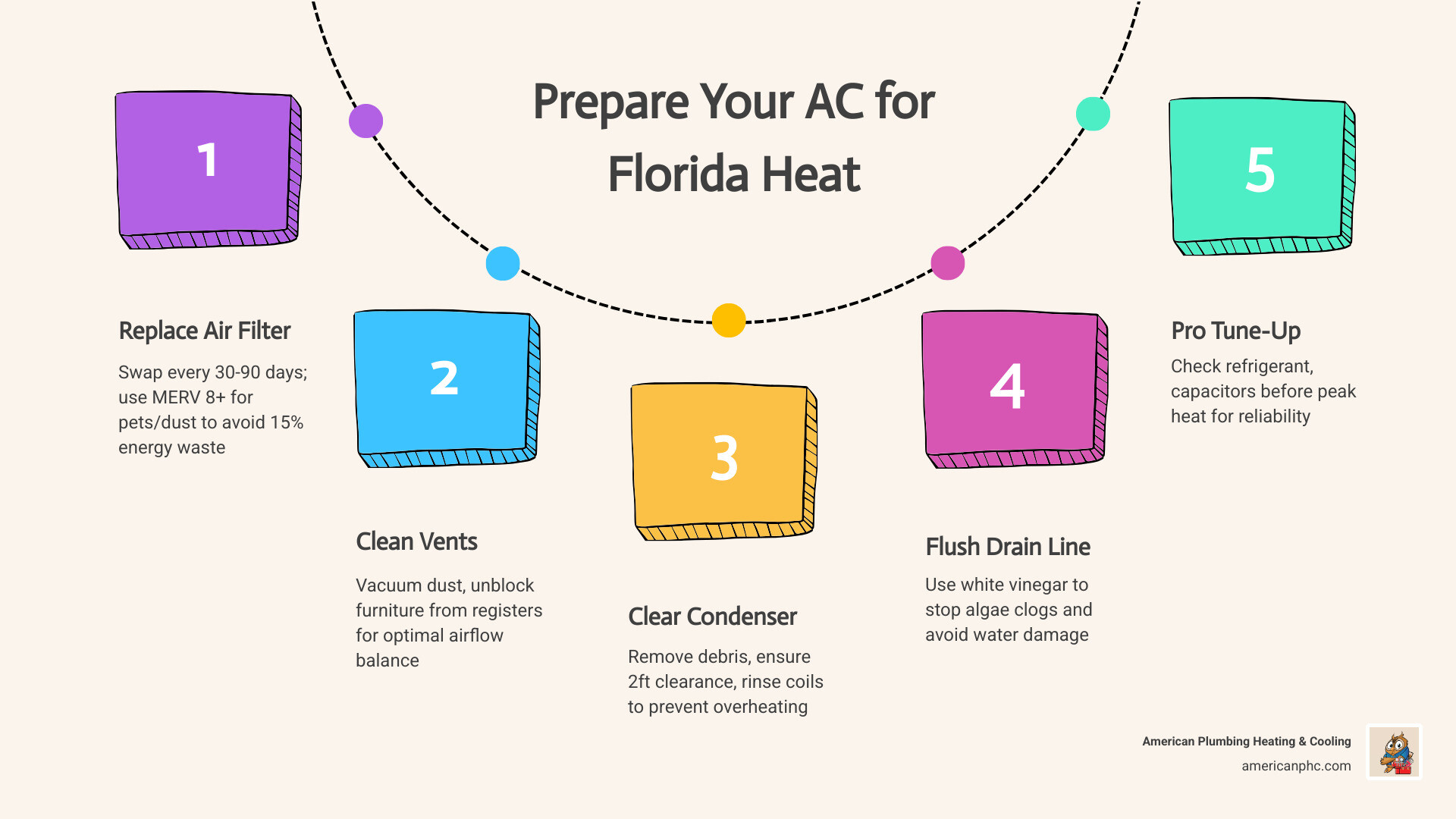
Here is a quick overview of the 7 steps to get your AC ready:
- Replace your air filter every 30 to 90 days (more often with pets or high MERV ratings)
- Clean vents and registers to remove dust and unblock airflow
- Clear the outdoor condenser unit and maintain at least 2 feet of clearance
- Flush the condensate drain line with white vinegar to prevent algae clogs
- Check attic insulation meets the Florida Building Code minimum of R-30
- Set your thermostat to 78°F and consider upgrading to a smart thermostat
- Schedule a professional AC tune-up before peak season begins
An unmaintained system can waste up to 20% more electricity than a clean, well-serviced one. A clogged filter alone can push energy consumption up by 5 to 15 percent — and in Florida, where your AC may run 12 to 16 hours a day during peak heat, that adds up fast. Skipping prep work does not just raise your energy bill. It can lead to frozen coils, mold growth, and full system breakdowns on the hottest days of the year — exactly when HVAC technicians are busiest.
The good news? Most of the steps are straightforward, and a little effort in April 2026 can keep your home cool and your system running strong all the way through September.
Why Preparing AC for Florida Heat is Essential for Homeowners
In regions like Sarasota, Cape Coral, and Pensacola, the air conditioner is not just a luxury; it is a vital piece of home safety equipment. When we talk about Preparing AC for Florida Heat, we are really talking about humidity control. Florida’s air is thick with moisture, and your Air Conditioning system has a dual job: it must lower the temperature while simultaneously pulling gallons of water out of the air.
If your system is neglected, it struggles to do either effectively. Research shows that unmaintained cooling systems waste up to 20% more electricity than clean systems. Over a long Florida summer, that is a significant amount of money literally vanishing into thin air. Furthermore, high humidity levels inside a home can lead to mold and mildew growth, which can damage your property and affect your health.
By taking the time to Survive the Florida Heat with Professional AC Installation or maintenance, you are extending the lifespan of your unit. A system that doesn't have to fight against dirt and clogs will last years longer than one that is constantly red-lining just to keep the living room at 75 degrees.
Step 1: Master Your Airflow and Filtration
Airflow is the lifeblood of your HVAC system. When airflow is restricted, your AC has to work twice as hard to move half as much cool air. This leads to higher bills and "hot spots" in your home where the air feels stagnant and heavy. To Keep Your Cool with Professional AC Maintenance in Bradenton, FL, the very first thing you should check is your air filter.
In Florida, we recommend replacing or cleaning your air filters every 30 to 90 days. However, during the peak of summer (which is essentially now in April 2026), you should check them every single month. If you have pets that shed or family members with allergies, you may need to swap them out even more frequently.
Choosing the Right Filter for Preparing AC for Florida Heat
Not all filters are created equal. You will often see a "MERV" (Minimum Efficiency Reporting Value) rating on the packaging. For most Florida homes, a MERV 8 filter is the "sweet spot." It is efficient enough to catch dust, pollen, and pet dander without being so thick that it chokes your system's motor.
Be careful with very high MERV ratings (13 and above) unless your system is specifically designed for them. While they catch more particles, they can act like a wall, causing your system to overheat. If you are considering an upgrade to improve air quality, it might be the right time to Beat the Florida Heat with a New AC Unit Installation that can handle modern filtration technology.
Cleaning Vents and Registers
Don't stop at the filter. Walk through your home and look at your supply and return vents. Are they covered in a fuzzy layer of gray dust? Use a vacuum with a brush attachment to clean them off. Also, check that your furniture hasn't migrated over the vents. A sofa or a heavy rug blocking a return vent can throw the entire airflow balance of your home out of whack, forcing the AC to run longer cycles.
Step 2: Clean the Condenser and Drain Line
The outdoor portion of your AC, known as the condenser, is where the heat from your home is actually released into the outside air. In Florida, our aggressive vegetation growth can quickly turn your condenser into a jungle. To follow a proper Navarre AC Repair Guide for Hot Florida Days, you must ensure that the outdoor unit can "breathe."
Maintaining the Exterior Unit for Preparing AC for Florida Heat
We recommend maintaining at least a two-foot (ideally three-foot) clearance around the entire unit. Trim back shrubs, remove tall weeds, and clear away any fallen branches or leaves. If the metal fins on the unit are clogged with dirt or salt spray (a common issue in coastal areas like Siesta Key or Venice), you can gently rinse them with a garden hose.
Pro Tip: Use low pressure. A pressure washer will bend the delicate aluminum fins, which ruins airflow. If the fins are already bent, you can use a "fin comb" to carefully straighten them out. Also, avoid the common mistake of trying to "shade" the unit with a cover or a tight fence. This often backfires by recycling the hot air back into the system, making it run even hotter.
Clearing the Condensate Drain
Because Florida is so humid, your AC produces a lot of water. This water flows through a condensate drain line. Over time, algae and "sludge" can grow in this pipe, leading to a clog. When the line clogs, water backs up into your home—or, if you have a modern system, an emergency float switch will trigger and shut your AC off entirely.
To prevent this, find the access point (usually a T-shaped pipe near the indoor unit) and pour about a cup of white vinegar down the line. This helps kill algae before it becomes a problem. If you already have a clog, a shop vac can sometimes be used on the outside end of the pipe to suck the blockage out.
Step 3: Optimize Your Home’s Cooling Environment
Preparing the machine is only half the battle; you also need to prepare the "envelope" of your home. If your house is leaking cool air like a sieve, even a brand-new AC will struggle. For Budget-Friendly Cooling Solutions for Lakewood Ranch Homeowners, start with insulation and settings.
Improving Attic Insulation and Sealing
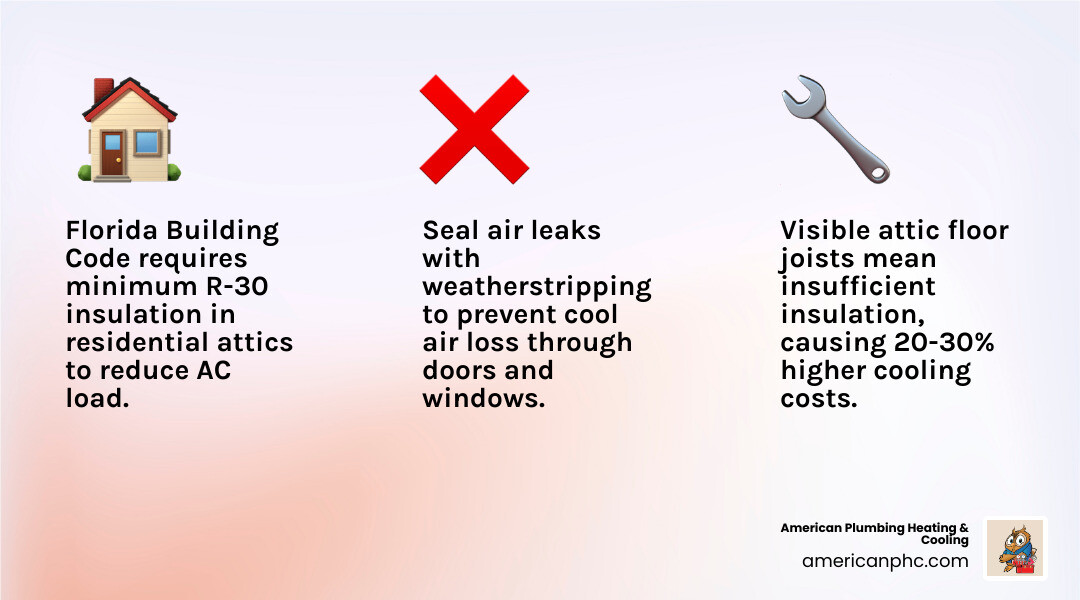
The Florida Building Code requires a minimum of R-30 insulation in residential attics. If you haven't looked in your attic lately, check the levels. If you can see the wooden floor joists, you likely need more insulation. Adding insulation is one of the best ways to reduce the load on your AC. Additionally, check the weatherstripping around your doors and windows. If you can see daylight through the cracks, you are paying to cool the entire neighborhood.
Utilizing Ceiling Fans
Ceiling fans do not actually lower the temperature of a room, but they create a "wind-chill effect" on your skin. This allows you to set your thermostat 4 to 6 degrees higher without losing comfort. In the summer, make sure your fans are rotating counter-clockwise to push a cool breeze downward. Just remember: fans cool people, not rooms. Turn them off when you leave to save even more on your energy bill.
Step 4: Professional Maintenance and Storm Readiness
While DIY tasks are great, there are parts of Preparing AC for Florida Heat that require a professional touch.
| Task | DIY-Friendly? | Professional Recommended? | Why? |
|---|---|---|---|
| Replace Air Filters | Yes | No | Simple and frequent task. |
| Clear Outdoor Debris | Yes | No | Requires basic yard tools. |
| Check Refrigerant | No | Yes | Requires specialized gauges and licensing. |
| Test Electrical Parts | No | Yes | High voltage risk; requires multimeter. |
| Deep Coil Cleaning | No | Yes | Requires chemical cleaners and disassembly. |
To understand Why Your Milton Home Needs Regular AC Maintenance to Survive the Heat, you have to look at the components you can't see.
Scheduling a Professional Tune-Up
A professional tune-up involves more than just a quick look. We check the refrigerant levels (too little or too much can kill a compressor), tighten all electrical connections that may have loosened from vibration, and test the "start capacitor." In Florida’s heat, capacitors are often the first thing to fail. Catching a weak capacitor in April is much better than having it pop on a Sunday afternoon in July.
Preparing for Florida Storm Season
As we approach the summer months, we also approach storm season. Power surges from lightning or grid fluctuations can fry your AC's sensitive control board in an instant. We highly recommend installing a dedicated surge protector on your outdoor unit. Additionally, ensure your outdoor unit is properly anchored to its pad to meet local hurricane codes, especially if you live in high-wind areas like Navarre or Cape Coral.
Frequently Asked Questions about Florida AC Care
How long should my AC run during a Florida summer?
In a healthy, well-maintained system, a cooling cycle should last about 15 to 20 minutes. However, when the Florida sun is beating down and the temperature hits 95°F, it is normal for your system to run much longer. The goal is for the system to reach the set temperature and then take a break. If your system runs 24/7 without ever reaching the temperature on the thermostat, that is a sign of a problem—usually low refrigerant or a very dirty coil.
What are the warning signs that my AC needs immediate repair?
Keep an ear out for strange noises like grinding, squealing, or loud banging. These often indicate a failing motor or a loose belt. Other red flags include weak airflow from the vents, a sudden spike in your energy bill that isn't explained by a heatwave, or a home that feels "sticky" and humid even when the air is blowing. If you notice ice forming on the copper lines or the indoor unit, turn the system off immediately and call us—this usually means the coils are frozen due to a lack of airflow or a leak.
Should I shade my outdoor AC unit to improve efficiency?
This is a common myth. While it seems logical to keep the unit out of the sun, most DIY shading attempts (like building a small roof over it) actually restrict the airflow the unit needs to dump heat. If the hot air can't rise and escape, the unit will suck that same hot air back in, making it work significantly harder. The best "shade" is simply keeping the unit clean and clear of debris so it can breathe freely.
Conclusion
Preparing AC for Florida Heat is the best investment you can make in your home's comfort this year. By following these seven steps—from simple filter changes to scheduling a professional tune-up—you can ensure your system is ready for whatever April 2026 and the following months throw at it.
At American Plumbing Heating and Cooling, we have over 100 years of combined experience helping homeowners in Sarasota, Bradenton, Cape Coral, and across Florida stay cool. Whether you need a quick pre-summer check-up or an emergency repair in the middle of a heatwave, our certified pros are here to help with honest, upfront pricing.
Don't wait for the first 100-degree day to find out your AC isn't up to the task. Take action now and enjoy a cool, worry-free summer. For More info about HVAC services, reach out to our team today!
{"@context": "https://schema.org", "@graph": [{"@type": "Article", "headline": "Preparing AC for Florida Heat | American Plumbing HVAC", "description": "Preparing AC for Florida Heat? Follow 7 easy steps to boost efficiency, prevent breakdowns, and stay cool. Read the guide today.", "author": {"@type": "Person", "name": "American Plumbing Heating and Cooling"}, "publisher": {"@type": "Organization", "name": "American Plumbing Heating and Cooling", "logo": {"@type": "ImageObject", "url": "https://firebasestorage.googleapis.com/v0/b/ai-templates.appspot.com/o/bot%2FiTB8FxoyvSplQzS7StV8%2Flogo%2FScreenshot%202026-03-16%20at%2012.43.20%E2%80%AFPM.png?alt=media&token=4ae5e171-7bb5-4a27-91f4-47e969b91c80"}}, "datePublished": "2026-04-23T02:48:19+00:00", "dateModified": "2026-04-23T02:48:23.386832", "mainEntityOfPage": {"@type": "WebPage", "@id": "https://pms.ciwebgroup.com/americanphc/2026/04/23/how-to-prepare-ac-for-florida-heat-in-7-easy-steps/"}, "image": "https://images.pexels.com/photos/5177211/pexels-photo-5177211.jpeg?auto=compress&cs=tinysrgb&h=650&w=940"}, {"@type": "FAQPage", "mainEntity": [{"@type": "Question", "name": "Why is it important to prepare your AC for Florida heat before summer?", "acceptedAnswer": {"@type": "Answer", "text": "Florida summers regularly exceed 90°F with very high humidity, so air conditioners run for long periods and must cool the air while removing moisture. Preparing the system helps avoid higher energy bills, frozen coils, mold growth, and breakdowns during peak heat."}}, {"@type": "Question", "name": "How often should you replace your AC air filter in Florida?", "acceptedAnswer": {"@type": "Answer", "text": "The article recommends replacing your air filter every 30 to 90 days. You may need to change it more often if you have pets or use higher MERV-rated filters."}}, {"@type": "Question", "name": "What are the main steps to get an AC ready for Florida summer?", "acceptedAnswer": {"@type": "Answer", "text": "The article lists seven steps: replace the air filter, clean vents and registers, clear the outdoor condenser with at least 2 feet of clearance, flush the condensate drain line with white vinegar, check attic insulation meets the Florida minimum of R-30, set the thermostat to 78°F or upgrade to a smart thermostat, and schedule a professional AC tune-up. These steps help improve airflow, efficiency, and reliability before peak season."}}, {"@type": "Question", "name": "How much energy can a poorly maintained AC system waste?", "acceptedAnswer": {"@type": "Answer", "text": "According to the article, an unmaintained system can waste up to 20% more electricity than a clean, well-serviced one. A clogged filter alone can increase energy use by about 5 to 15 percent."}}, {"@type": "Question", "name": "What thermostat setting does the article recommend for Florida summer?", "acceptedAnswer": {"@type": "Answer", "text": "The article recommends setting your thermostat to 78°F. It also suggests considering a smart thermostat for better control and efficiency."}}]}]}Need HVAC Help?
Our certified technicians are ready to help with all your heating and cooling needs.
Request ServiceAbout the Author
American Plumbing Heating and Cooling Team
Licensed Florida contractors — HVAC CAC1821761 · Plumbing CFC1431919
More Articles
View All PostsRelated Articles


Ready to Get Started?
Whether you need a repair, maintenance, or a new system installation, our expert team is here to help.