
Everything You Need to Know About Benefits of Regular HVAC Maintenance in Tropical Coastal Florida
By the American Plumbing Heating and Cooling Team
Licensed Florida contractors — HVAC CAC1821761 · Plumbing CFC1431919

Discover the benefits of regular HVAC maintenance in tropical coastal Florida to boost efficiency, prevent breakdowns, and extend system life in humid, salty conditions.
Reviewed bythe American Plumbing Heating and Cooling Team — Licensed Florida contractors — HVAC CAC1821761 · Plumbing CFC1431919. Published June 12, 2026. About American Plumbing Heating and Cooling
Dealing with this problem right now? Call (941) 735-6616 and talk to our local team.
Request ServiceWhy the Benefits of Regular HVAC Maintenance in Tropical Coastal Florida Matter More Than You Think
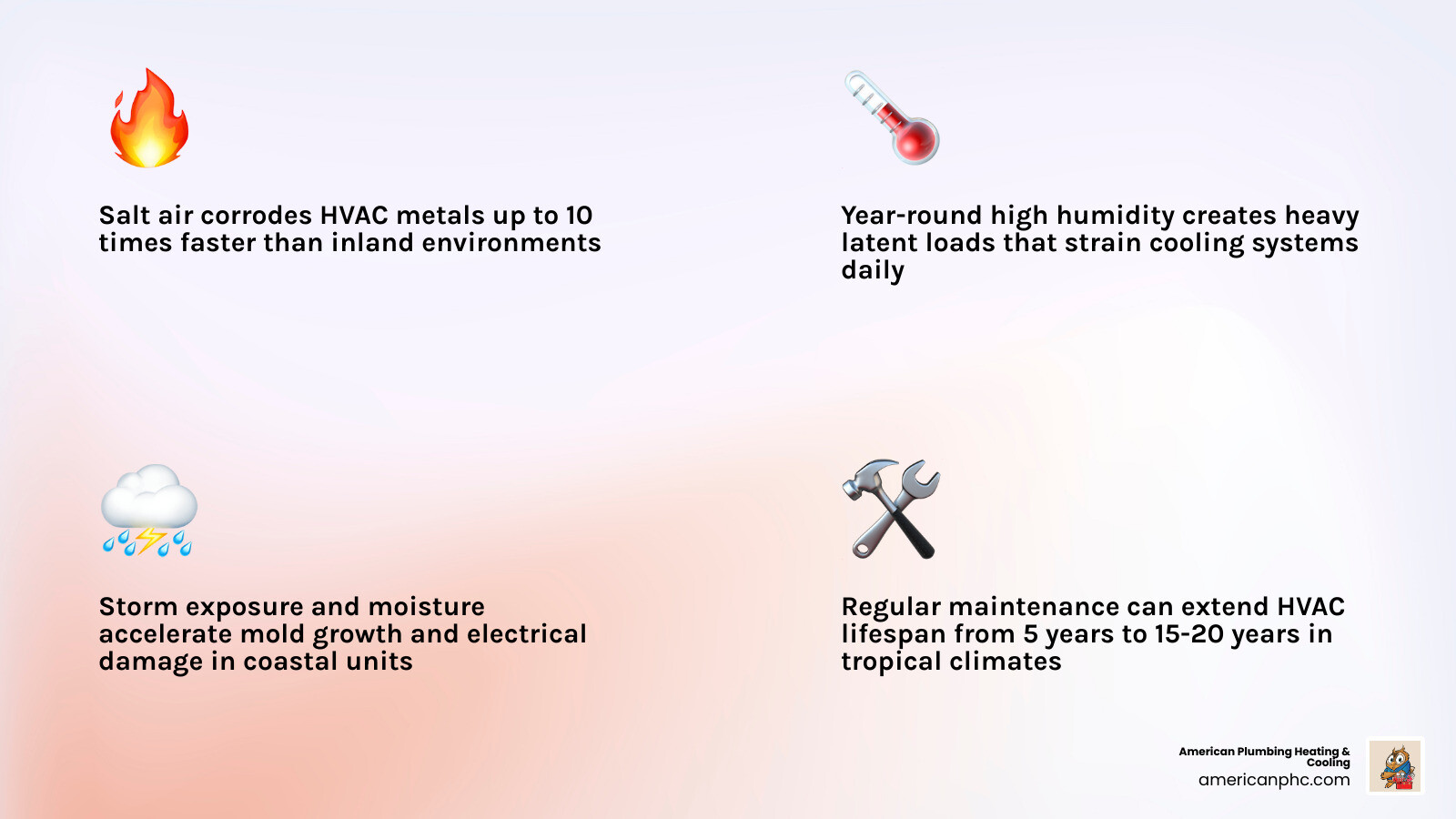
The benefits of regular HVAC maintenance in tropical coastal Florida go far beyond keeping your home cool - they can mean the difference between a system that lasts 15 to 20 years and one that fails in five. Florida's coastal climate hits HVAC systems from every angle: relentless heat, year-round humidity, salt-laden air, and storm season. Together, these forces wear down components faster than almost any other environment in the country.
Here's a quick look at what regular HVAC maintenance delivers for coastal Florida homeowners:
- Longer system life - Well-maintained units can last 15-20 years vs. as few as 5 years without care
- Fewer breakdowns - Routine service can reduce costly emergency failures by up to 95%
- Lower energy bills - Clean, tuned systems use significantly less electricity
- Better indoor air quality - Cleaner coils and filters mean less mold, dust, and allergens
- Corrosion control - Regular cleaning and protective coatings slow salt air damage
- Warranty protection - Most manufacturers require documented maintenance to honor claims
- Consistent comfort - Even cooling and proper humidity control throughout your home
Salt air is one of the most destructive forces an HVAC system can face. It forms a briny film on metal surfaces that acts like an electrolyte, speeding up rust and corrosion on coils, fan blades, wiring, and electrical contacts. Metals in coastal environments can corrode up to ten times faster than normal - and that damage doesn't stay outside. It works its way into your system and quietly raises your energy bills while shortening the life of your equipment.
In areas like Panama City, Navarre, and Sarasota, this isn't a worst-case scenario - it's just Tuesday.
The good news is that regular, professional HVAC maintenance directly addresses every one of these threats. This guide breaks down exactly what it does, how often you need it, and what to look for in a coastal Florida provider.
Why Coastal Florida Is Tougher on HVAC Systems Than Most Climates
Coastal Florida asks a lot from an HVAC system. Your equipment is not just cooling the house. It is also removing moisture, fighting corrosion, handling long run times, and recovering from stormy weather.
The biggest troublemakers are:
- High humidity that keeps systems running longer
- Salt drifting in from the coast, sometimes even miles inland
- Heavy moisture that encourages mold and algae growth
- Frequent summer storms, power fluctuations, and windblown debris
- Nearly year-round cooling demand in places like Sarasota, Cape Coral, Venice, Siesta Key, Navarre, and Pensacola
That combination creates extra wear on coils, motors, drain lines, controls, and compressors. In short, coastal HVAC systems do not get much of an offseason. They are marathon runners with no finish line.
How High Humidity Changes HVAC Performance
Humidity changes the job your AC has to do. Cooling the air is only part of it. Your system also has to pull water vapor out of the air, which adds what technicians call latent load.
That extra moisture load can lead to:
- Longer run cycles
- More condensate draining through the system
- Faster drain line clogs
- Extra strain on the blower and evaporator coil
- Reduced airflow if coils get dirty or start growing buildup
In Florida homes, humidity also affects comfort directly. A house can hit the thermostat setting and still feel sticky. That usually means the system is struggling with moisture removal, not just temperature.
How Salt Air Damages Outdoor and Indoor Components
Salt air is sneaky. It settles on outdoor units first, but it can affect more than just the condenser cabinet.
Common salt-related trouble spots include:
- Condenser coils
- Fan blades and fan guards
- Electrical contacts and wiring
- Fasteners and metal panels
- Refrigerant line connections
That salty film attracts moisture and speeds up electrochemical corrosion. Over time, coils pit, fins weaken, electrical parts rust, and heat transfer gets worse. Once heat transfer drops, the compressor has to work harder. That is often where small corrosion problems turn into big repair headaches.
Even homes a few miles inland can see this effect, especially after storms push salty air farther inland.

Benefits of Regular HVAC Maintenance in Tropical Coastal Florida
When homeowners ask us why maintenance matters so much here, the answer is simple: Florida's climate creates problems faster, so prevention matters more.
The main benefits include:
- Better energy efficiency
- Longer equipment life
- Fewer surprise breakdowns
- Stronger humidity control
- Cleaner indoor air
- Lower wear on the compressor and fan motors
- Documented service history for warranty support
- More reliable comfort during the hottest months
In coastal areas, maintenance is not a luxury add-on. It is basic survival for your HVAC system.
Lifespan, Reliability, and the Core Benefits of Regular HVAC Maintenance in Tropical Coastal Florida
One of the biggest reasons homeowners schedule tune-ups is lifespan. Research consistently shows a major difference between cared-for systems and neglected ones in salty environments. A unit exposed to coastal conditions without proper care may only last around 5 years. With regular maintenance, that same system may reach 15 to 20 years.
Why the big difference?
Because maintenance helps catch and correct the small things that destroy systems over time:
- Dirty coils that trap heat
- Corrosion starting on metal parts
- Weak capacitors
- Drain line restrictions
- Airflow loss from clogged filters
- Refrigerant issues that strain the compressor
The compressor is especially important. When coils are dirty or corroded, heat does not leave the system efficiently. That forces the compressor to work harder and run hotter. Once that happens long enough, the wear adds up fast.
Routine service lowers that risk and helps prevent emergency failures. If you want a deeper look at why preventive care matters, our guide on preventing HVAC emergencies with regular maintenance is a helpful next read.
Benefits of Regular HVAC Maintenance in Tropical Coastal Florida for Energy Bills and Daily Comfort
A clean, tuned HVAC system simply does less work to achieve the same result. That matters in Florida, where cooling often runs for much of the year and household electricity use is heavily tied to heating and cooling.
Maintenance improves efficiency by restoring the basics:
- Clean coils transfer heat better
- Proper refrigerant levels keep cooling stable
- Clean filters improve airflow
- Calibrated thermostats prevent overcooling
- Clean blower parts move air more effectively
- Clear drain lines prevent moisture backups
Research in Florida climates shows neglected systems can use up to 25% more energy, while regular maintenance can reduce energy consumption by roughly 5% to 20% depending on system condition. Smart thermostat services can also cut cooling costs by up to 15% when used properly.
That translates into more than lower utility use. It also means:
- Fewer hot spots
- More even cooling from room to room
- Less indoor stickiness
- Quieter operation
- Better sleep on those classic Florida nights when the air feels like soup
For more seasonal prep tips, see how to get your cooling system ready for hot weather.
The Most Important Maintenance Tasks for Humid, Salty Coastal Homes
Not all maintenance tasks matter equally in coastal Florida. The most important ones focus on corrosion control, moisture management, and airflow.
Top priorities include:
- Cleaning condenser and evaporator coils
- Replacing or checking filters regularly
- Flushing the condensate drain line
- Inspecting electrical connections and components
- Looking for salt damage and applying corrosion protection when appropriate
- Checking refrigerant levels and system pressures
- Calibrating thermostat settings
- Inspecting ductwork and airflow balance
- Cleaning the air handler area
What a Professional Maintenance Visit Should Include
A typical professional maintenance visit often takes about 60 to 90 minutes for a residential system, depending on condition and equipment type. In coastal Florida, that visit should be thorough, not rushed.
A strong tune-up usually includes:
- Full system inspection
- Coil cleaning or washing
- Air filter inspection or replacement
- Refrigerant check
- Capacitor and electrical testing
- Drain line flush
- Blower and air handler cleaning
- Thermostat calibration
- Humidity setting review
- Inspection for rust, pitting, and salt-related deterioration
Here is a simple breakdown:
| Homeowner tasks | Professional maintenance |
|---|---|
| Check filter monthly | Test electrical components |
| Rinse outdoor unit gently with fresh water | Verify refrigerant charge |
| Keep plants and debris away from unit | Deep-clean coils |
| Watch for odors, leaks, or noises | Flush drain lines and inspect for clogs |
| Monitor thermostat performance | Inspect corrosion, motors, capacitors, and controls |
What Homeowners Should Do Between Service Visits
Professional service matters, but homeowners can absolutely help between visits.
A smart monthly checklist includes:
- Check the air filter and replace it every 1 to 3 months as needed
- Gently rinse the outdoor unit with fresh water to remove salt residue
- Keep at least 2 feet of clearance around the condenser
- Watch for new noises, weak airflow, or uneven cooling
- Notice musty smells or signs of excess indoor humidity
- Make sure vents are open and not blocked
- Use reasonable thermostat settings instead of trying to turn the house into a freezer
In many Florida homes, setting the thermostat too low makes the system run harder without solving the root humidity issue. Comfortable and efficient usually beats arctic and overworked.
Common Florida Coastal HVAC Problems Maintenance Helps Prevent
Coastal weather creates a very predictable list of HVAC problems. The good news is that regular maintenance helps prevent many of them before they become full-blown breakdowns.
The most common issues include:
- Short cycling
- Frozen evaporator coils
- Clogged condensate drains
- Mold or mildew odors
- Weak airflow
- Corrosion-related failures
- Electrical shorts or contactor problems
- Refrigerant leaks
Many of these problems start quietly. That is why systems can seem "fine" right up until they are very much not fine.
Warning Signs Your System Needs Attention Before It Fails
Call for service sooner rather than later if you notice:
- Higher indoor humidity than usual
- Rising power bills without another explanation
- Warm rooms or uneven temperatures
- Musty or sour smells from vents
- Buzzing, rattling, or clicking noises
- Water around the indoor unit
- Ice on refrigerant lines or coils
- Breaker trips or intermittent shutdowns
These are often early warning signs of airflow issues, drain problems, electrical wear, or heat-transfer trouble.
Why Drain Lines, Coils, and Electrical Parts Fail Faster Near the Coast
Three parts tend to take a beating in coastal Florida:
Drain lines
Florida systems remove a lot of moisture. That means lots of condensate moving through the drain line. Algae, slime, and debris can clog that line surprisingly fast, and some research notes clogs can develop in as little as 60 days in high-moisture conditions.
Coils
Salt film and grime reduce heat transfer. Dirty or corroded coils force longer run times, reduce cooling output, and increase compressor strain. Regular cleanings can extend coil life by as much as 30% in coastal environments.
Electrical parts
Contactors, capacitors, and connections do not love heat, moisture, or salt. Corrosion increases resistance, weakens connections, and raises the chance of failure. Catching a weak component early can prevent much larger damage later.
How Often to Service HVAC in Coastal Florida and How to Choose the Right Provider
For coastal Florida homes, once-a-year service is the minimum. In practice, twice-yearly maintenance is usually the smarter schedule, especially for heat pumps and systems that run nearly all year.
That means:
- One visit in spring before the heaviest cooling demand
- One visit in fall to address summer wear and check heating operation if applicable
Older systems, homes very close to the beach, and homes with high indoor humidity often benefit from even closer monitoring.
How Often Coastal Homeowners Should Schedule HVAC Service
A good rule of thumb for our Florida service areas is:
- Professional service twice a year
- Filter checks every month
- Filter replacement every 1 to 3 months
- Gentle fresh-water condenser rinse monthly
- Drain line attention quarterly
- Extra inspection after major storms or salt-heavy weather events
If your system is aging, has had corrosion issues, or runs constantly, biannual service becomes even more important. For more scheduling insight, see The Magic Number for HVAC Maintenance Success.
What to Look for in a Coastal Florida HVAC Maintenance Provider
Not every maintenance visit is designed for coastal conditions. For homes in Sarasota, Bradenton, Cape Coral, Venice, Navarre, Milton, Pensacola, and nearby communities, homeowners should look for a provider that understands what salt and humidity actually do to equipment.
Look for:
- Experience with coastal corrosion issues
- Licensed and insured technicians
- Clear maintenance documentation
- Drain, coil, and electrical inspections as standard practice
- Knowledge of humidity control, not just temperature control
- Help protecting warranties with service records
- Emergency support when Florida weather decides to be dramatic
- Honest, upfront communication
At American Plumbing Heating and Cooling, we focus on exactly those needs across our Florida service areas. You can also read Don't Sweat It: A Local Guide to HVAC System Maintenance for more practical guidance.
Protective Upgrades and System Features That Make Sense Near the Coast
Maintenance is the foundation, but some homes benefit from extra protection too.
Helpful upgrades and features can include:
- Coastal-rated equipment
- Factory-coated coils
- Corrosion-resistant hardware
- Elevated equipment platforms
- Surge protection
- Variable-speed systems for better moisture removal
- Whole-home dehumidification in especially damp homes
- Better placement or shielding of the outdoor unit
Best Protective Measures for High-Salt, High-Humidity Locations
Some of the smartest protective steps near the coast are:
- Apply approved anti-corrosion coatings when appropriate
- Use equipment with coated coils or corrosion-resistant materials
- Keep the condenser in a sheltered but properly ventilated location
- Elevate outdoor equipment above standing water risk
- Use surge protection ahead of storm season
- Rinse salt residue off outdoor units regularly with fresh water
- Consider variable-speed systems that control humidity more effectively
Even simple details matter. Research suggests shaded condensers can improve efficiency, and proper placement can reduce direct salt exposure without restricting airflow.
When It May Be Time to Upgrade Instead of Repair
Maintenance extends life, but it does not make a badly corroded or aging system immortal. Sometimes replacement is the smarter move.
Signs it may be time to upgrade include:
- Repeated corrosion-related repairs
- Frequent breakdowns during peak cooling season
- Poor humidity control
- Uneven temperatures throughout the home
- Declining indoor air quality
- Aging equipment near or beyond expected service life
If your system is struggling year after year, it may be worth discussing whether continued repairs still make sense. Our article on Everything You Need to Know About AC Maintenance in Sarasota offers more Florida-specific context.
Frequently Asked Questions about Benefits of Regular HVAC Maintenance in Tropical Coastal Florida
Does regular HVAC maintenance really help reduce mold and allergens in Florida homes?
Yes. Maintenance helps by keeping filters clean, coils cleaner, drain lines flowing, and humidity under better control. In Florida, mold risk rises quickly when moisture builds up inside air handlers, ducts, or around clogged drains. Routine service reduces that risk and supports cleaner airflow.
Is once-a-year maintenance enough for homes near the beach?
Usually, no. Near the beach, HVAC systems face heavier salt exposure, higher moisture loads, and longer operating hours. Twice-yearly professional service is generally the better choice, with regular homeowner care in between. Older systems or homes very close to the water may need even closer attention.
Can maintenance help an HVAC system last longer in coastal Florida?
Absolutely. This is one of the clearest benefits. Regular maintenance slows corrosion, keeps coils cleaner, reduces compressor strain, and catches small issues before they damage major parts. In coastal Florida, proper care can help a system reach 15 to 20 years instead of failing much earlier.
Conclusion
The benefits of regular HVAC maintenance in tropical coastal Florida are hard to overstate. In our climate, maintenance means longer equipment life, healthier indoor air, more reliable comfort, fewer emergency breakdowns, and better protection against salt, moisture, and year-round wear.
For homeowners in Sarasota, Bradenton, Venice, Cape Coral, Navarre, Milton, Pensacola, and nearby Florida communities, the goal is simple: do not wait for your system to wave a white flag in the middle of summer.
If you want more reasons to stay ahead of problems, read 20 Reasons to Schedule Your HVAC Tune-Up Today. And if you are ready to make maintenance easier, learn more about maintenance plan services.
At American Plumbing Heating and Cooling, we help Florida homeowners protect their comfort with experienced service, honest communication, and support built for real coastal conditions.
Need HVAC Help?
Our certified technicians are ready to help with all your heating and cooling needs.
Request ServiceAbout the Author
American Plumbing Heating and Cooling Team
Licensed Florida contractors — HVAC CAC1821761 · Plumbing CFC1431919
More Articles
View All PostsRelated Articles


Ready to Get Started?
Whether you need a repair, maintenance, or a new system installation, our expert team is here to help.