
How Clean Ducts Improve Indoor Air Quality and Efficiency
By the American Plumbing Heating and Cooling Team
Licensed Florida contractors — HVAC CAC1821761 · Plumbing CFC1431919

Learn how clean ducts improve indoor air quality and efficiency to lower energy bills and breathe easier in your Florida home.
Reviewed bythe American Plumbing Heating and Cooling Team — Licensed Florida contractors — HVAC CAC1821761 · Plumbing CFC1431919. Published May 28, 2026 · Last updated July 29, 2026. About American Plumbing Heating and Cooling
Dealing with this problem right now? Call (941) 735-6616 and talk to our local team.
Request ServiceWhy Clean Ducts Matter for Your Florida Home's Air Quality and Efficiency
How clean ducts improve indoor air quality and efficiency is one of the most practical things a Florida homeowner can understand about their home. In short, clean ductwork means your HVAC system moves air more freely, delivers fewer airborne contaminants to your living spaces, and uses less energy doing it.
Here's a quick summary of the key benefits:
- Better air quality - Removing dust, mold spores, pollen, and pet dander from ducts means less of it circulating through your home
- Lower energy bills - Clear ducts reduce the strain on your system, so it runs more efficiently
- Longer equipment life - Less buildup means less wear on your blower motor and other components
- Fewer allergy and asthma triggers - Cleaner air means fewer irritants reaching your lungs
- Reduced odors - Mold, debris, and biological growth in ducts can cause musty smells throughout the home
Nearly half of all energy used in a typical American home goes toward heating and cooling. When your ductwork is clogged with debris, that energy is being wasted. In Florida's hot, humid climate, where your AC runs hard for most of the year, that adds up fast.
Think of your duct system as your home's lungs. When they're clean, everything breathes easier — your family and your HVAC system alike.
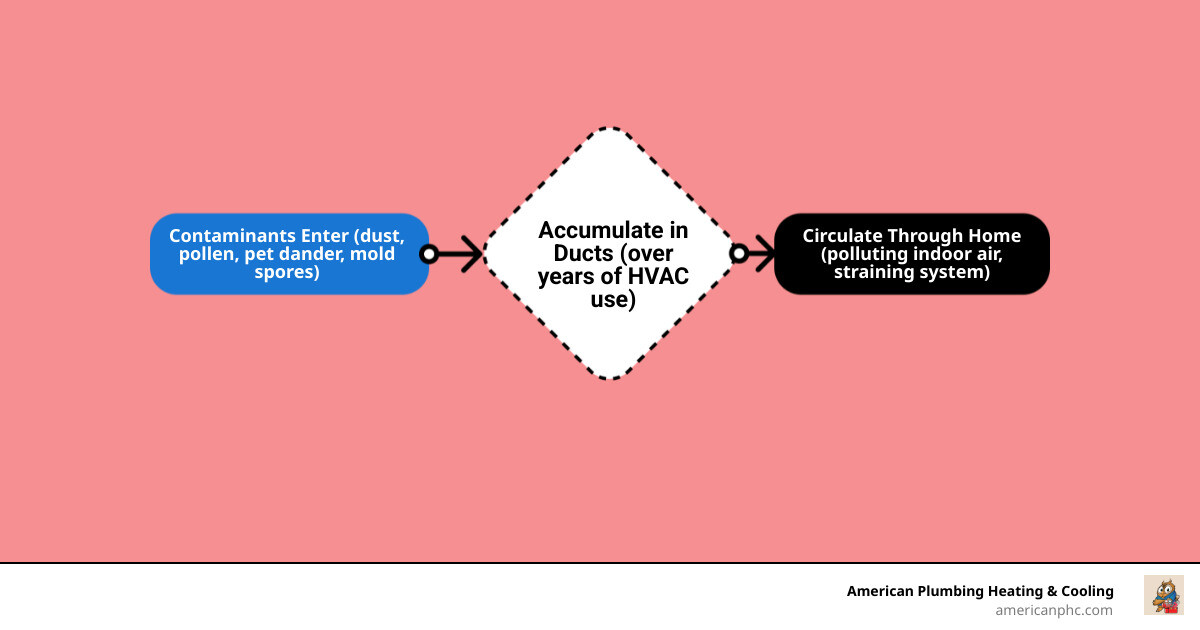
The Direct Link: How Clean Ducts Improve Indoor Air Quality and Efficiency
The connection between the cleanliness of your ductwork and the air you breathe is direct and undeniable. Every time your air conditioner kicks on in Sarasota or Cape Coral, it pulls air from your rooms, cools it, and pushes it back out through the ductwork. If those "highways" of air are lined with decades of dust, pet hair, and microbial growth, your system effectively becomes a delivery vehicle for pollutants.
Professional Indoor Air Quality Services focus on breaking this cycle of contamination. By removing the physical source of irritants, we ensure that the air being recirculated is as clean as possible. This is particularly vital in our region, where high humidity can turn a little bit of dust into a breeding ground for biological growth. Learning how to keep your Florida home mold-free and cool starts with ensuring the pathways for your air are sanitized and dry.
Understanding the impact of accumulated debris on airflow
When dust and debris accumulate in your ducts, they create "airflow resistance." Imagine trying to breathe through a straw that is half-clogged with sand; you’d have to work much harder to get the same amount of oxygen. In your HVAC system, this resistance increases "static pressure."
The blower motor in your air handler is designed to push air against a specific amount of resistance. When that resistance increases due to buildup, the motor has to work overtime. This leads to:
- Blower motor strain: The motor runs hotter and wears out faster.
- Uneven cooling: You might notice some rooms stay warm while others are freezing, a common issue we discuss in the great chill debate of ducted vs. ductless systems.
- Inconsistent temperatures: The system struggles to distribute air evenly across your home’s layout.
How clean ducts improve indoor air quality and efficiency by reducing system strain
When we clear away the obstructions, the "load" on your HVAC system drops significantly. A clean system doesn't have to run as long to reach the temperature set on your thermostat, leading to reduced cycling. This is a major win for your wallet and the environment.
| HVAC Condition | Airflow Efficiency | Energy Consumption | Estimated Lifespan |
|---|---|---|---|
| Clean Ducts | Optimal (100%) | Standard/Low | 15-20 Years |
| Obstructed Ducts | Restricted (70-80%) | High (15-20% increase) | 10-12 Years |
By maintaining clean ducts through an HVAC Maintenance Plan, you are effectively investing in the longevity of your equipment. Systems over 15 years old are especially prone to efficiency drops when neglected, but even a new system in a place like Fort Myers can lose its "factory-fresh" performance if dust is allowed to settle in the coils and ducts.
Identifying When Your Florida Home Needs Professional Cleaning
How do you know if it's time to call in the pros? Your home usually gives you a few hints. One of the most obvious signs is visible dust on your supply registers. If you wipe down your vents and they are covered in a thick, fuzzy layer of gray dust a week later, your ducts are likely full.
In Florida, musty odors are another major red flag. If you notice a "stale" or "damp" smell every time the AC turns on, there’s a high probability of biological growth or accumulated pet dander within the system. Other signs include:
- Post-renovation debris: Construction dust (drywall, sawdust) is notorious for getting sucked into return vents.
- Frequent filter clogging: If you find yourself needing to change your filter every two weeks because it’s black with soot or dust, the ducts are likely the source.
- Unexplained spikes in energy bills: When your behavior hasn't changed but your bill has, your system is likely working harder than it should.
Our local guide to HVAC system maintenance highlights that being proactive can prevent these issues from becoming emergency repairs.
How clean ducts improve indoor air quality and efficiency for allergy and asthma sufferers
For those with respiratory sensitivities, duct cleaning isn't just about efficiency—it's about health. Air ducts can act as a reservoir for pollen, dust mites, and chemical irritants. When these are removed, the "particulate load" in your home drops.
Many of our clients in Sarasota and Bradenton report significantly improved sleep quality and fewer morning allergy symptoms after a professional cleaning. By controlling biological contaminants and reducing the circulation of irritants, you create a sanctuary where your lungs can finally rest.
Professional Standards and the Cleaning Process
At American Plumbing Heating and Cooling, we don't just "blow out the dust." We follow rigorous industry standards, such as those set by the National Air Duct Cleaners Association (NADCA). The ACR Standard ensures a "source removal" process, meaning we physically remove the contaminants rather than just masking them.
A professional process involves:
- Inspection: Using cameras to see deep into the trunk lines.
- Negative Pressure: We use high-powered vacuum systems—rated between 3,000 and 10,000 CFM (cubic feet per minute)—to pull air out of the ducts while we clean.
- Agitation: Specialized brushes and "air whips" loosen the debris from the duct walls so the vacuum can whisk it away.
- Component Cleaning: This includes cleaning the coils, blower motor, and drain pans, often paired with an AC maintenance and tune-up.
The risks of DIY duct cleaning vs. certified experts
It might be tempting to stick a shop-vac hose down your vent, but DIY duct cleaning often does more harm than good. Standard household vacuums lack the "lift" (suction) required to remove heavy debris from long duct runs.
More importantly, DIY efforts can cause:
- Ductwork damage: Flex ducts are easily punctured by improper tools.
- Cross-contamination: Without a HEPA-filtered vacuum, you might just be pulling dust out of the duct and blowing it into your living room.
- Missed components: Professional equipment is needed to reach the heat exchangers and drip pans where mold often starts.
Sticking to a professional HVAC Maintenance Plan ensures the job is done safely and effectively.
Long-Term Maintenance and Prevention Strategies
Once your ducts are clean, the goal is to keep them that way. Prevention is always more cost-effective than remediation.
- Moisture Control: In Southwest Florida, keeping your indoor humidity below 50% is crucial. This prevents the moisture that mold needs to grow.
- High-Efficiency Filters: Use filters with an appropriate MERV rating for your system. Too low, and they let dust through; too high, and they can restrict airflow.
- Seal the Gaps: Ensure your duct joints are properly sealed with mastic or foil tape. This prevents "unconditioned" air from attics or crawlspaces (along with their dust and pests) from being sucked into your system.
- Dryer Vent Safety: Don't forget your dryer vent! A clogged dryer vent increases home humidity and is a major fire hazard.
Frequently Asked Questions about Duct Maintenance
How often should I have my air ducts professionally cleaned?
The general industry standard is every 3 to 5 years. However, in Florida, several factors can shorten this interval. If you have multiple pets, have recently completed a home renovation, or if someone in your home suffers from severe asthma, you might benefit from more frequent cleanings. Regular AC maintenance and tune-ups can help you monitor the buildup.
Under what conditions does the EPA recommend duct cleaning?
The EPA suggests duct cleaning is a necessary intervention under three specific conditions:
- Visible Mold: If there is substantial visible mold growth inside hard surface ducts or on other components of your heating and cooling system.
- Vermin Infestation: If ducts are infested with rodents or insects.
- Excessive Clogging: If ducts are clogged with excessive amounts of dust and debris and/or particles are actually released into the home from your supply registers.
Does dryer vent cleaning affect my home's air quality?
Yes, absolutely. While the primary reason for dryer vent cleaning is fire prevention, it also plays a role in IAQ. A clogged vent forces moist air back into the laundry room, which can lead to mold growth behind the dryer and in the wall cavity. Keeping it clear improves appliance efficiency and keeps your indoor humidity in check.
Conclusion
Understanding how clean ducts improve indoor air quality and efficiency is the first step toward a healthier, more comfortable home. By removing the hidden buildup of dust and contaminants, you're not just improving the air you breathe—you're also protecting your HVAC system from premature failure and keeping your monthly energy bills under control.
At American Plumbing Heating and Cooling, we bring over 100 years of combined experience to every home we service in Sarasota, Bradenton, and across Southwest Florida. We understand our local climate and the unique challenges it poses for your indoor air. Whether you're dealing with stubborn odors, rising energy costs, or just want the peace of mind that comes with a clean system, our certified pros are here to help.
Ready to breathe easier? Explore our Indoor Air Quality Services today and see how we can make your Florida home a cleaner, more efficient place to live.
{"@context": "https://schema.org", "@graph": [{"@type": "Article", "headline": "How Clean Ducts Improve Indoor Air Quality | American", "description": "Learn how clean ducts improve indoor air quality and efficiency, lower energy bills, and reduce allergens. Read more today.", "author": {"@type": "Person", "name": "American Plumbing Heating and Cooling"}, "publisher": {"@type": "Organization", "name": "American Plumbing Heating and Cooling", "logo": {"@type": "ImageObject", "url": "https://firebasestorage.googleapis.com/v0/b/ai-templates.appspot.com/o/bot%2FiTB8FxoyvSplQzS7StV8%2Flogo%2FScreenshot%202026-03-16%20at%2012.43.20%E2%80%AFPM.png?alt=media&token=4ae5e171-7bb5-4a27-91f4-47e969b91c80"}}, "datePublished": "2026-05-28T02:47:05+00:00", "dateModified": "2026-05-28T02:47:07.712608", "mainEntityOfPage": {"@type": "WebPage", "@id": "https://pms.ciwebgroup.com/americanphc/2026/05/28/how-clean-ducts-improve-indoor-air-quality-and-efficiency/"}, "image": "https://images.bannerbear.com/direct/4mGpW3zwpg0ZK0AxQw/requests/000/144/048/299/9BvRDJ724zWmv9pKQlAKNOd03/6ee5f75b37ba33785592fd534693b1cf6b88638a.jpg"}, {"@type": "FAQPage", "mainEntity": [{"@type": "Question", "name": "How do clean air ducts improve indoor air quality in a Florida home?", "acceptedAnswer": {"@type": "Answer", "text": "Clean ducts reduce the amount of dust, mold spores, pollen, pet dander, and other contaminants that get recirculated through your home. In Florida’s humid climate, keeping ducts clean and dry also helps limit biological growth that can worsen air quality."}}, {"@type": "Question", "name": "Can cleaning ductwork help lower energy bills and improve HVAC efficiency?", "acceptedAnswer": {"@type": "Answer", "text": "Yes. Clear ductwork allows air to move more freely, which reduces strain on the HVAC system and helps it run more efficiently, lowering wasted energy and potentially reducing energy bills."}}, {"@type": "Question", "name": "Does dirty ductwork affect allergies and asthma symptoms?", "acceptedAnswer": {"@type": "Answer", "text": "Yes. When ducts contain dust, debris, and microbial growth, the HVAC system can spread those irritants through the home, increasing allergy and asthma triggers. Cleaner ducts mean fewer airborne irritants reaching your lungs."}}, {"@type": "Question", "name": "Can dirty air ducts cause musty odors in the house?", "acceptedAnswer": {"@type": "Answer", "text": "Yes. Mold, debris, and biological growth inside ductwork can create musty smells that spread throughout the home when the HVAC system runs. Cleaning the ducts helps remove these odor sources."}}, {"@type": "Question", "name": "Why is duct cleaning especially important in Florida?", "acceptedAnswer": {"@type": "Answer", "text": "Florida’s hot, humid climate makes HVAC systems run hard for much of the year, so clogged ducts can waste significant energy and put more wear on equipment. High humidity can also turn dust buildup into a breeding ground for biological growth, making clean ducts especially important."}}]}]}Need HVAC Help?
Our certified technicians are ready to help with all your heating and cooling needs.
Request ServiceAbout the Author
American Plumbing Heating and Cooling Team
Licensed Florida contractors — HVAC CAC1821761 · Plumbing CFC1431919
More Articles
View All PostsRelated Articles


Ready to Get Started?
Whether you need a repair, maintenance, or a new system installation, our expert team is here to help.