
How to Prepare AC for Dry Season: Fall AC Maintenance
By the American Plumbing Heating and Cooling Team
Licensed Florida contractors — HVAC CAC1821761 · Plumbing CFC1431919

Prepare your system with fall AC maintenance before the dry season to boost efficiency and prevent costly issues.
Reviewed bythe American Plumbing Heating and Cooling Team — Licensed Florida contractors — HVAC CAC1821761 · Plumbing CFC1431919. Published July 11, 2026 · Last updated July 29, 2026. About American Plumbing Heating and Cooling
Dealing with this problem right now? Call (941) 735-6616 and talk to our local team.
Request ServiceWhy You Should Handle Fall AC Maintenance Before the Dry Season
Fall AC maintenance before the dry season is one of the smartest things a Florida homeowner can do to protect their system, lower energy bills, and avoid costly breakdowns when cooling season returns.
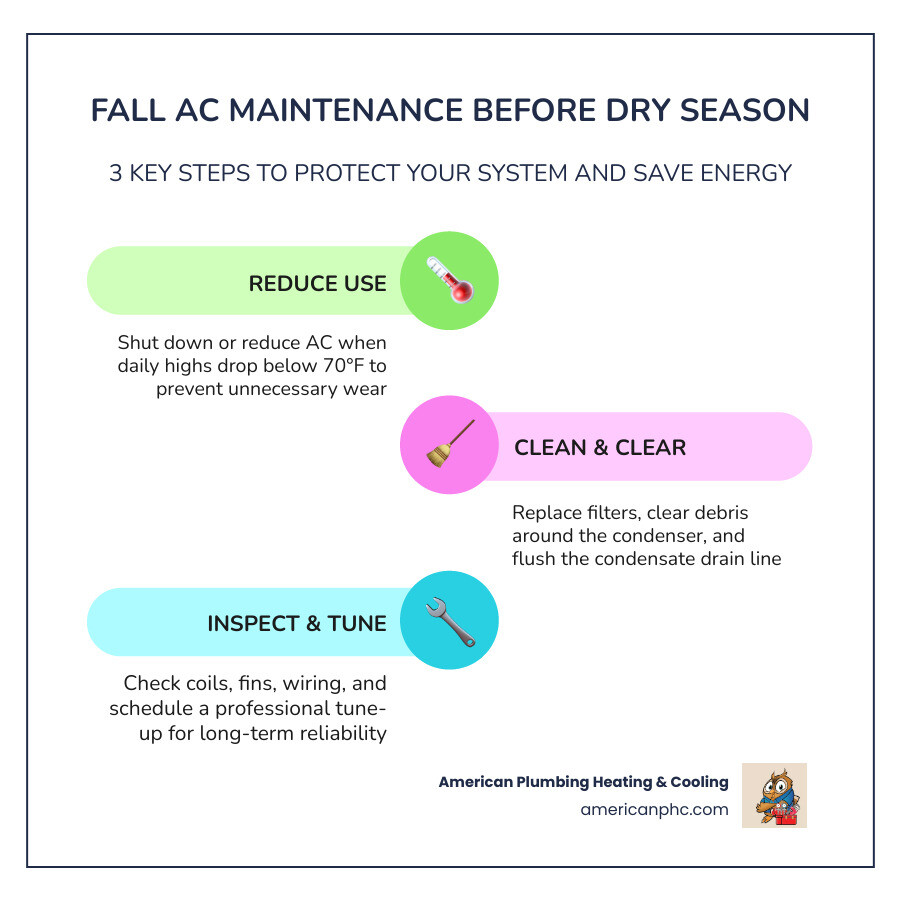
Here's a quick overview of the key fall AC maintenance steps:
- Shut down or reduce AC use when daily highs consistently drop below 70°F
- Replace or clean air filters to maintain airflow and efficiency
- Clear debris from around the outdoor condenser unit (keep a 2-foot clearance)
- Flush the condensate drain line to prevent algae buildup and clogs
- Inspect coils and fins for dirt, damage, or bending
- Check for leaks, rust, or loose wiring on the outdoor unit
- Consider a professional tune-up before the system sits idle
After a long Florida summer of near-constant operation, your AC has taken a beating. Heat, humidity, and heavy use all add up. Research consistently shows that well-maintained systems last 18 to 22 years on average, while neglected ones give out in as little as 11 to 14 years. That's a difference of nearly a decade — just from keeping up with seasonal care.
Skipping fall prep doesn't just shorten your system's life. It also means higher energy bills, reduced airflow, and a much higher chance of an emergency breakdown the next time you need your AC most.
This guide walks you through everything you need to know to get your system ready for the cooler, drier months ahead.
Why Fall AC Maintenance Before the Dry Season is Essential
As we transition into the second half of 2026, many homeowners in Southwest and Northwest Florida look forward to the relief of the cooler, drier months. However, simply turning down your thermostat or ignoring your system during this transition is a recipe for future trouble.
During our intense, humid summers, your air conditioning system works overtime. This continuous operation leads to significant wear and tear on electrical components, fan motors, and compressors. When the rainy season ends and the dry season begins, the shift in weather introduces new challenges, such as airborne dust, falling foliage, and pollen, which can quickly clog a neglected system.
Failing to address these issues before the dry season can result in:
- Shortened System Lifespan: While a well-maintained system easily lasts 15 to 20 years, a neglected unit often fails after just 10 to 12 years. Proactive care preserves your investment.
- Decreased Energy Efficiency: Dirty coils can reduce AC efficiency by 20% to 30%, which is the equivalent of losing nearly a third of your system's cooling power. This forces your unit to run longer and work harder, driving up your utility bills.
- Ice and Moisture Damage: If airflow is restricted by a dirty filter or clogged coil when temperatures dip, the evaporator coil can freeze over, causing ice damage and water leaks inside your home.
- Debris Accumulation: Falling leaves, twigs, and dirt can collect inside the outdoor condenser unit. When mixed with winter moisture, this debris creates a corrosive environment that rusts metal components and damages delicate fan blades.
By taking the time to perform routine maintenance now, you can keep your system running optimally and avoid unexpected failures. For a deeper look at keeping your system in peak condition year-round, check out Don't Sweat It: A Local Guide to HVAC System Maintenance.
Well-Maintained vs. Neglected AC Systems
| Feature | Well-Maintained AC System | Neglected AC System |
|---|---|---|
| Average Lifespan | 18–22 years | 11–14 years |
| Operating Efficiency | High (Coils stay clean and efficient) | Low (Dirty coils reduce efficiency by 20–30%) |
| Airflow Quality | Clean, consistent, and healthy | Restricted, dusty, and prone to mold |
| Risk of Breakdown | Minimal (Potential issues caught early) | High (Clogged drains and worn parts cause failures) |
| Ductwork Integrity | Clean and sealed (Saves up to 30% of air) | Leaky and dusty (Loses 20–30% of conditioned air) |
Step-by-Step Guide to Preparing Your AC for the Cooler Months
Preparing your air conditioner for the dry season does not have to be overwhelming. By breaking the process down into manageable steps, you can safely inspect, clean, and protect your system.
Step 1: Safely Shutting Down or Reducing AC Use
Depending on where you live, the way you transition your system for the cooler months will vary. For example, in northern climates like West Chester, PA, homeowners completely shut off their AC units at the electrical disconnect box when daily high temperatures stay consistently below 70°F. This prevents the system from accidentally turning on during an unseasonably warm autumn day, which can cause the coils to freeze and damage the compressor.
Here in Florida—whether you are in Sarasota, Cape Coral, or Navarre—we rarely shut our systems down completely. Instead, we transition from heavy cooling to lighter use, or even occasional heating.
To safely manage this transition:
- Adjust Your Thermostat: Set your thermostat to 78°F when you are home, and consider raising it slightly when you are away. Using a programmable or smart thermostat can reduce cooling costs by 10% to 12% annually.
- Set the Fan to "Auto": Avoid leaving your thermostat fan setting on "On." Keeping it on "Auto" ensures the fan only runs during a cooling cycle, which prevents moisture on the coils from being blown back into your home.
- Know Your Schedule: To understand how often your system needs professional attention during these transitions, read How Often Schedule Maintenance.
Step 2: Routine Fall AC Maintenance Before the Dry Season Tasks
Before the dry season arrives, perform these routine maintenance tasks to ensure your system is clean and clear:
- Replace the Air Filter: Replacing or cleaning air filters regularly is crucial. Dirty, clogged filters reduce airflow and system efficiency. When airflow is obstructed, dirt can bypass the filter and accumulate on the evaporator coil, reducing its heat-absorbing capacity. Change your filter every 30 to 90 days depending on whether you have pets or allergies.
- Clean the Condenser Coils: Turn off the power to your outdoor unit at the breaker or disconnect box. Use a low-pressure garden hose to gently rinse dirt and grass clippings from the outdoor coils. Never use a pressure washer, as it will bend the delicate aluminum fins.
- Clear the Condensate Drain: Algae, mold, and dust can build up in your drain line during the humid summer. Pour a cup of distilled white vinegar down your condensate drain line cleanout to kill algae and prevent clogs that could cause indoor water damage.
- Straighten Coil Fins: Inspect the exterior fins of your condenser. If they are bent, use a specialized fin comb to gently straighten them and restore proper airflow.
If you prefer to leave these technical tasks to the professionals, our teams are ready to assist. You can schedule an expert AC Maintenance Tune-Up Sarasota FL or an AC Maintenance Tune-Up Cape Coral FL to ensure your system is perfectly prepped.
Step 3: Inspecting for Wear, Leaks, and Damage
A thorough visual inspection can help you catch minor issues before they turn into costly repairs:
- Check for Refrigerant Leaks: Look around the base of the outdoor unit and along the copper refrigerant lines for signs of oil spots, which often indicate a refrigerant leak.
- Examine Electrical Connections: Inspect the outdoor electrical conduit for signs of wear, cracking, or damage from lawn equipment or pests.
- Check the Ductwork: Up to 30% of conditioned air can be lost through gaps and leaks in ductwork, making ductwork inspection and sealing a critical maintenance task. Look for visible gaps or loose tape on any accessible ducts in your attic or utility spaces.
To learn more about what a professional technician looks for during this process, read The No Sweat Guide to What Your AC Technician Should Check.
Protecting Your Outdoor Condenser: To Cover or Not to Cover?
One of the most common questions homeowners ask during the fall is whether they should cover their outdoor AC condenser unit. The short answer is: usually, no—and never with plastic.
Modern outdoor condenser units are engineered to withstand harsh weather conditions, including heavy rain, wind, and temperature fluctuations. Covering your unit completely with a non-breathable material like a plastic tarp or vinyl cover does far more harm than good:
- Trapped Moisture: Plastic covers trap humidity and condensation inside the unit. This trapped moisture quickly leads to rust on metal components, corrosion of electrical connections, and mold growth on the coils.
- Pest Infestations: A fully covered AC unit provides a warm, dark, and dry shelter for rodents and insects. Mice can nest inside the unit and chew through critical electrical wiring, leading to expensive repairs when you turn the system back on.
- Warranty Issues: Some manufacturers will void your warranty if they find that damage was caused by using an improper, non-breathable cover.
What is Recommended?
If your outdoor unit sits directly under a tree that drops a large volume of leaves, pine needles, or seeds, you may want to protect it from debris. In this case, the best solution is to place a piece of plywood over the top of the unit and secure it with a brick or strap. This keeps falling debris out of the fan assembly while allowing the sides of the unit to remain open, ensuring moisture can escape naturally. Alternatively, you can purchase a specialty, highly breathable mesh cover designed specifically for AC condensers.
Avoiding Common Mistakes During Fall AC Maintenance Before the Dry Season
To keep your system running safely, avoid these common fall maintenance pitfalls:
- Skipping Filter Changes: Many homeowners assume that because they are using the AC less, they don't need to change the filter. However, dust still accumulates, and a clogged filter will restrict airflow when you run your system.
- Using Plastic Covers: As mentioned, wrapping your unit in plastic traps moisture and invites pests.
- Blocking Return Vents: Ensure that indoor furniture, curtains, or storage boxes are not blocking your return air grilles. Blocked returns restrict airflow, putting immense strain on your blower motor.
- Ignoring the Condensate Drain: Skipping the fall drain line flush can allow summer algae buildup to solidify during the dry season, leading to a major clog and water overflow when you start using the AC heavily again.
To discover how regular, proactive care prevents these costly mistakes, read about Preventing HVAC Emergencies with Regular Maintenance.
Professional vs. DIY Fall AC Maintenance
While homeowners can easily handle basic tasks like swapping air filters, clearing leaves from around the condenser, and flushing the drain line with vinegar, a comprehensive fall tune-up requires professional tools and training.
A certified HVAC technician has the expertise to perform critical safety and performance diagnostics that go far beyond DIY capabilities, including:
- Testing Electrical Components: Checking capacitors, contactors, and relays for wear, and measuring amperage draw on the compressor and fan motors.
- Verifying Refrigerant Levels: Ensuring the system has the correct refrigerant charge and testing for microscopic leaks using electronic leak detectors.
- Deep Cleaning Coils: Cleaning the indoor evaporator coil and chemically treating the outdoor condenser coil to remove stubborn dirt and oxidation.
- Calibrating the Thermostat: Ensuring your thermostat reads temperatures accurately so your system does not run longer than necessary.
Investing in a professional tune-up pays for itself by preventing unexpected breakdowns, keeping your utility bills low, and satisfying manufacturer warranty requirements. To understand why regular professional visits are so valuable, read The Magic Number for HVAC Maintenance Success.
If you want to get your system ready for the seasonal transition while saving money, check out our Fall Maintenance Special.
Frequently Asked Questions About Fall AC Prep
When is the best time to shut off or reduce AC use in West Chester, PA?
In northern climates like West Chester, PA, the best time to shut off or reduce AC use is in the early autumn, typically when daily high temperatures stay consistently below 70°F. Turning off the power at the outdoor disconnect box at this point prevents the system from running on occasional warm days, protecting the unit from freezing and saving energy during the winter.
Should I cover my outdoor AC unit for the winter?
Generally, you do not need to cover your outdoor AC unit. Modern units are designed to withstand the elements. If you want to protect the unit from falling leaves, pine needles, or seeds, place a piece of plywood over the top of the unit or use a specialized, breathable mesh cover. Never wrap the unit in plastic or vinyl, as this traps destructive moisture and attracts rodents.
When should I schedule a professional fall AC tune-up?
The ideal time to schedule your fall AC tune-up is in the early autumn, specifically during September and October. Scheduling during this transition period ensures your system is thoroughly cleaned and inspected after the heavy summer load, and guarantees it is ready to run efficiently during the drier winter months. If you are in the Bradenton area, you can easily book your seasonal checkup by visiting AC Maintenance Tune-Up Bradenton FL.
Keep Your Home Comfortable with American Plumbing Heating and Cooling
Taking the time to complete your fall ac maintenance before the dry season is the best way to ensure your home remains comfortable, your energy bills stay low, and your air conditioning system lasts for years to come. From replacing air filters to clearing away summer debris, these simple steps provide incredible peace of mind.
At American Plumbing Heating and Cooling, we have been helping Florida homeowners keep their systems in peak condition since 2014. With over 100 years of combined team experience, our fully licensed and certified professionals deliver honest, upfront pricing and quality workmanship backed by a 100% satisfaction guarantee.
Whether you need a seasonal tune-up, a quick repair, or a complete system replacement, we are here to help. We serve Sarasota, Bradenton, Cape Coral, Milton, Navarre, Pensacola, Lakewood Ranch, and the surrounding areas.
Ready to schedule your fall service? Explore our professional services at https://americanphc.com/air-conditioning or contact us today to book your appointment!
{"@context": "https://schema.org", "@graph": [{"@type": "Article", "headline": "Fall AC Maintenance | American Plumbing Heating and Cooling", "description": "Learn why fall AC maintenance before the dry season protects your system, cuts energy costs, and prevents breakdowns. Schedule service today!", "author": {"@type": "Person", "name": "American Plumbing Heating and Cooling"}, "publisher": {"@type": "Organization", "name": "American Plumbing Heating and Cooling", "logo": {"@type": "ImageObject", "url": "https://firebasestorage.googleapis.com/v0/b/ai-templates.appspot.com/o/bot%2FiTB8FxoyvSplQzS7StV8%2Flogo%2FScreenshot%202026-03-16%20at%2012.43.20%E2%80%AFPM.png?alt=media&token=4ae5e171-7bb5-4a27-91f4-47e969b91c80"}}, "datePublished": "2026-07-11T02:47:28+00:00", "dateModified": "2026-07-11T02:47:58.615968", "mainEntityOfPage": {"@type": "WebPage", "@id": "https://pms.ciwebgroup.com/americanphc/2026/07/11/how-to-prepare-ac-for-dry-season-fall-ac-maintenance/"}, "image": "https://images.unsplash.com/photo-1745745593296-28fd43a6ebba?crop=entropy&cs=tinysrgb&fit=max&fm=jpg&ixid=M3w2MTMxNjF8MHwxfHNlYXJjaHw5fHxmYWxsJTIwQUMlMjBtYWludGVuYW5jZSUyMGJlZm9yZSUyMHRoZSUyMGRyeXxlbnwwfDB8fHwxNzgwMjgyMTg3fDA&ixlib=rb-4.1.0&q=80&w=1080"}, {"@type": "FAQPage", "mainEntity": [{"@type": "Question", "name": "How should I prepare my AC for the dry season in Florida?", "acceptedAnswer": {"@type": "Answer", "text": "Prepare your AC by reducing or shutting down use when daily highs consistently drop below 70°F, replacing or cleaning air filters, clearing debris around the outdoor condenser, flushing the condensate drain line, inspecting coils and fins, and checking for leaks, rust, or loose wiring."}}, {"@type": "Question", "name": "Why is fall AC maintenance important before the dry season?", "acceptedAnswer": {"@type": "Answer", "text": "Fall AC maintenance helps protect your system after heavy summer use, lowers energy bills, maintains airflow, and reduces the chance of costly breakdowns when cooling season returns."}}, {"@type": "Question", "name": "How long does a well-maintained AC system last compared with a neglected one?", "acceptedAnswer": {"@type": "Answer", "text": "The article states that well-maintained AC systems typically last 18 to 22 years on average, while neglected systems may fail in as little as 11 to 14 years. It also notes that proactive care can help preserve a system for 15 to 20 years, compared with 10 to 12 years for neglected units."}}, {"@type": "Question", "name": "What happens if I skip fall AC maintenance?", "acceptedAnswer": {"@type": "Answer", "text": "Skipping fall maintenance can shorten your AC system’s lifespan, increase energy bills, reduce airflow, and raise the risk of an emergency breakdown the next time you need cooling."}}, {"@type": "Question", "name": "Why does the dry season create new problems for an AC system?", "acceptedAnswer": {"@type": "Answer", "text": "When Florida’s rainy season ends and the dry season begins, airborne dust, falling foliage, and pollen can clog a neglected AC system. These issues add to the wear already caused by intense summer heat, humidity, and continuous operation."}}]}]}Need HVAC Help?
Our certified technicians are ready to help with all your heating and cooling needs.
Request ServiceAbout the Author
American Plumbing Heating and Cooling Team
Licensed Florida contractors — HVAC CAC1821761 · Plumbing CFC1431919
More Articles
View All PostsRelated Articles


Ready to Get Started?
Whether you need a repair, maintenance, or a new system installation, our expert team is here to help.