
The Ultimate Guide to How High Efficiency Systems Reduce Summer Costs
By the American Plumbing Heating and Cooling Team
Licensed Florida contractors — HVAC CAC1821761 · Plumbing CFC1431919

Discover how high efficiency systems reduce summer costs with expert AC installation and smart cooling upgrades from American Plumbing Heating and Cooling in Sarasota, Bradenton, and Pensacola.
Reviewed bythe American Plumbing Heating and Cooling Team — Licensed Florida contractors — HVAC CAC1821761 · Plumbing CFC1431919. Published May 25, 2026. About American Plumbing Heating and Cooling
Dealing with this problem right now? Call (941) 735-6616 and talk to our local team.
Request ServiceHow Can a High Efficiency AC System Help Lower My Summer Energy Use in Sarasota?
How high efficiency systems reduce summer costs comes down to a few key factors: better technology, smarter controls, and less energy wasted on every cooling cycle. Here is a quick breakdown:
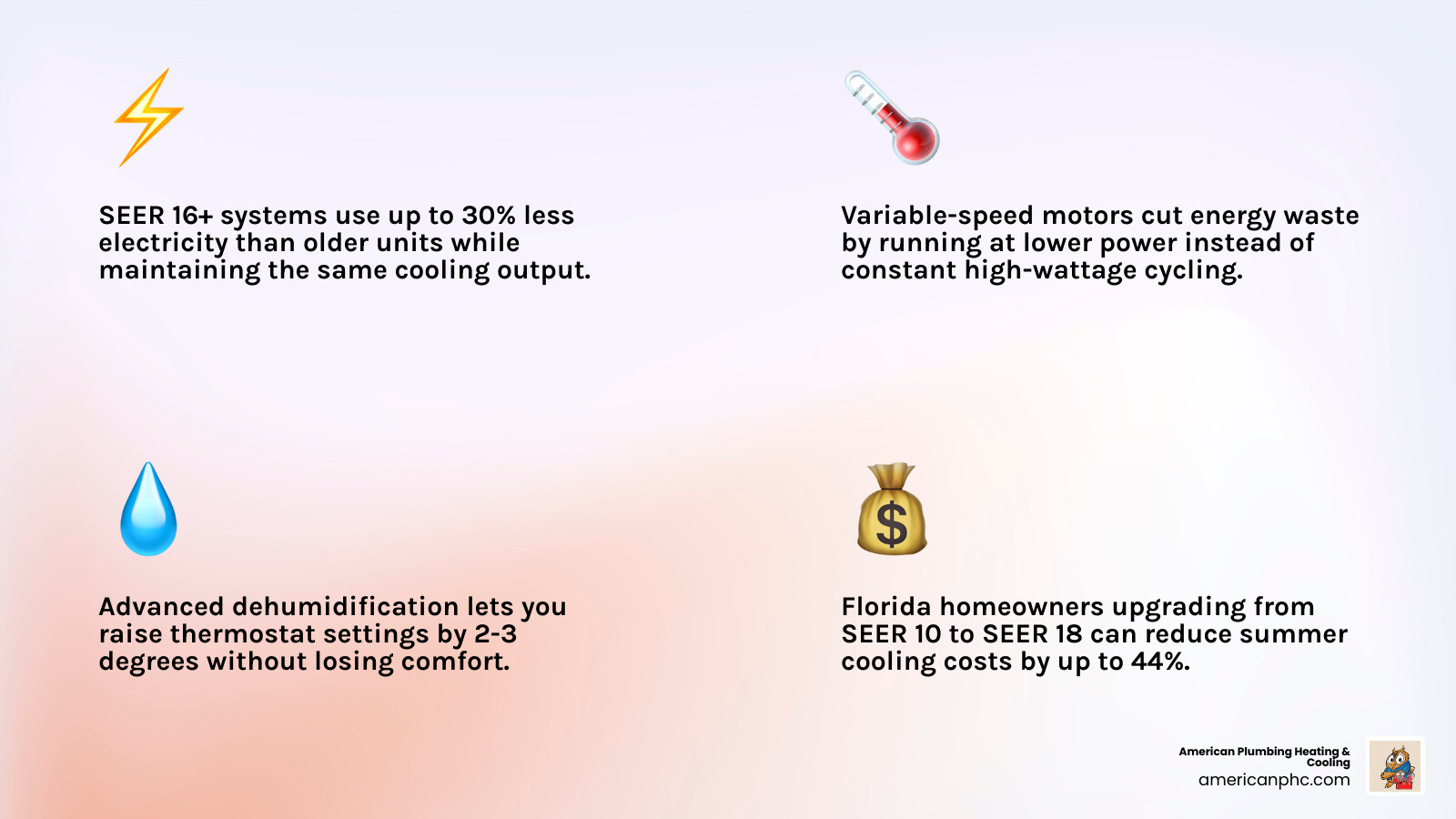
- Higher SEER ratings, often 16 and above, use less electricity to produce the same amount of cooling as older units
- Variable-speed compressors run at lower power levels instead of blasting on and off, cutting energy waste
- Better dehumidification lets you set the thermostat a few degrees higher without feeling uncomfortable
- Reduced cycling means fewer high-wattage startup surges throughout the day
- Smart thermostat integration automatically adjusts cooling based on when you are home
Most Florida homeowners upgrading from an older system, especially one rated SEER 10 or below, can expect to use substantially less energy during peak cooling season.
If your summer electric bills have been climbing year after year, you are not imagining it. Air conditioning accounts for a large share of a household's electricity use during Florida's hottest months. If your system is more than 10 to 15 years old, it is likely working harder than it needs to.
Older AC units were not built with today's efficiency standards in mind. A unit manufactured before 2006 is likely running at SEER 10 or lower. Today's high-efficiency systems can reach SEER 18, 20, or beyond, meaning they can deliver the same comfort while using far less electricity.
This guide walks you through exactly how those savings happen, what to look for when upgrading, and how to make the most of available rebates and incentives in Florida.
Simple how high efficiency systems reduce summer costs word guide:
- air conditioning repair
- how to lower ac use during summer
Understanding the Technology: How High Efficiency Systems Reduce Summer Costs

High-efficiency cooling systems save energy because they do a better job matching cooling output to what your home actually needs. Older systems tend to run like a light switch: fully on or fully off. Newer systems are more like a dimmer switch. They can ramp up, slow down, and maintain comfort with far less waste.
That difference matters in Florida, where AC systems often run for long stretches and humidity control is just as important as temperature.
Modern equipment improves efficiency through:
- Higher SEER2 performance ratings
- Variable-speed or inverter-driven compressors
- Variable-speed blower motors
- Improved coil design and refrigerant management
- Better communicating controls
- Smarter thermostat compatibility
- Improved filtration and moisture removal
In plain English, that means less stop-and-start operation, fewer energy spikes, steadier temperatures, and better comfort.
It also means the published efficiency number is only part of the story. Proper installation, correct sizing, and good airflow are what turn a high-efficiency system into real energy savings.
If you are comparing systems, it also helps to work with professionals who understand advanced equipment and setup. For more on that side of the decision, see Benefits of Choosing a Daikin Elite Dealer Since 2014.
How high efficiency systems reduce summer costs through SEER 16+ ratings
SEER stands for Seasonal Energy Efficiency Ratio. In 2026, you will also see SEER2, which uses updated testing standards that better reflect real-world operating conditions. The short version: higher numbers generally mean lower energy use for the same cooling output.
For Florida homeowners, a SEER2 rating equivalent to roughly 16 SEER or higher is often a strong point for meaningful savings. Research consistently shows that moving from an old SEER 10 unit to a modern high-efficiency model can reduce cooling-related energy use significantly.
Here is a simple comparison:
| System efficiency | Relative cooling efficiency | Typical impact on summer performance |
|---|---|---|
| SEER 10 | Baseline older system | Highest energy use |
| SEER 14 | Moderate improvement | Noticeable reduction in energy demand |
| SEER 16+ | High efficiency | Strong savings potential |
| SEER 18 to 20+ | Premium efficiency | Excellent performance in long cooling seasons |
Why the savings happen:
- The system uses less electricity per unit of cooling
- Startup surges are reduced
- Runtime becomes steadier and more efficient
- Humidity control improves, so homeowners often stay comfortable at slightly higher thermostat settings
Actual results vary by insulation, duct condition, thermostat habits, shade, and utility rates, but the direction is clear: old low-efficiency systems use more energy to deliver the same comfort.
Advanced humidity control and indoor air quality
In Florida, dry and comfortable indoor air is the goal. Temperature is only half the battle. If your home feels cool but clammy, your AC may be oversized, outdated, or simply not controlling moisture well.
High-efficiency systems often remove humidity better because they run longer at lower speeds. That longer, gentler operation allows the indoor coil to pull more moisture from the air instead of just dropping the temperature quickly and shutting off.
That leads to several real benefits:
- More even temperatures from room to room
- Less sticky indoor air
- Better comfort at higher thermostat settings
- Reduced risk of excess indoor moisture that can contribute to mold concerns
- Quieter operation
- Improved air filtration in many system designs
Better dehumidification can also reduce energy use in an important way. When humidity is under control, many homeowners feel comfortable setting the thermostat a degree or two higher. Research suggests every degree raised can reduce cooling energy use by roughly 3% to 5%.
Maximizing Performance with Smart Controls and Home Sealing
Buying efficient equipment is a strong first step, but it is not the whole solution. To get the savings you expect, the system has to work with the house, not against it.
That means pairing the AC with smart controls and reducing the amount of cooled air escaping through leaks, poor insulation, or duct problems.
If you are exploring efficiency upgrades in Florida, The Floridians Guide to High Efficiency Cooling Incentives is a useful next read.
Smart thermostats help by:
- Adjusting temperatures automatically based on schedule
- Using occupancy sensing or geofencing
- Preventing unnecessary cooling when no one is home
- Providing usage reports that help you spot waste
- Making it easier to maintain consistent settings instead of dramatic temperature swings
A common myth is that cranking the thermostat much lower cools the house faster. It does not. It only makes the system run longer and can increase unnecessary energy use. A steady, realistic setting is usually the money-saving move.
How high efficiency systems reduce summer costs with variable-speed motors
Variable-speed technology is one of the biggest reasons newer systems outperform older models.
Traditional single-stage systems turn on at full blast, then shut off, then repeat the cycle. Every startup draws a lot of power. Variable-speed compressors and blower motors can start softly and run at lower levels for longer periods.
That saves energy in a few ways:
- Lower startup wattage
- Fewer full-power cycles
- Better airflow precision
- More stable indoor temperatures
- Better humidity removal
While every home is different, the principle holds: a system that avoids repeated high-power surges usually uses less energy to maintain comfort.
Variable-speed motors also reduce wear and tear. Because the equipment is not constantly slamming on and off, parts often experience less stress over time. That can mean fewer breakdowns and a longer service life.
The impact of duct sealing and attic insulation
Even the best AC system cannot win a fight against a leaky house.
In many homes, duct leaks can waste up to 20% of cooled air before it ever reaches the rooms you want to cool. Add attic heat gain, window leaks, and poor insulation, and your new efficient system can end up working like an old one.
Home sealing matters because it:
- Keeps cooled air inside
- Reduces heat gain from outside
- Improves airflow delivery
- Helps rooms cool more evenly
- Reduces system runtime
Key areas to check include:
- Duct connections and joints
- Attic insulation levels
- Gaps around doors and windows
- Recessed lights and attic penetrations
- Return-air leaks
If your home has hot spots, weak airflow, or rooms that never seem comfortable, a home energy assessment can help identify where efficiency is being lost. Sometimes the best results come from combining a high-efficiency system with duct sealing and insulation improvements, not from equipment alone.
Strategic Upgrades for Florida Homeowners
The best time to upgrade is usually before your old system forces the issue on the hottest week of the year. In Florida, spring is ideal because it gives you time to evaluate options, schedule installation before the peak-season rush, and head into summer with a system that is ready to perform.
April is often a smart month for upgrades, but in May 2026 there is still strong value in acting before deeper summer demand hits.
A proper upgrade should include more than just swapping boxes. It should include:
- Load calculations for correct sizing
- Airflow evaluation
- Ductwork inspection
- Thermostat compatibility review
- Drainage and humidity considerations
- Installation commissioning and performance checks
Correct sizing is a big deal. Bigger is not better. An oversized system can short cycle, waste energy, and leave the house cool but damp. An undersized system may run constantly and still struggle. The goal is a system sized for your actual home, not just your square footage or whatever was there before.
For more on available upgrade opportunities, see How to Get Paid for Upgrading Your Florida Home.
Why timing your upgrade matters in May 2026
Timing affects comfort, installation availability, and long-term value.
Here is why upgrading before peak summer is smart:
- You avoid the busiest emergency season
- You reduce the chance of being stuck with a failing unit during extreme heat
- You can compare options more calmly instead of making a rushed decision
- Your system gets a full season of improved performance sooner
- You have more time to pursue rebates, incentives, and financing options
May 2026 is also a practical time to think about aging systems because older equipment can become harder to maintain as parts availability changes and older refrigerants continue to become less convenient to support.
When should you seriously consider replacement?
- Your system is 10 to 15 years old or older
- Repairs are becoming more frequent
- Energy bills keep rising without better comfort
- The home has uneven cooling or humidity issues
- The system runs loudly or constantly
- Your current unit is very low efficiency
A high-efficiency replacement can also improve resale appeal. Buyers in Florida pay attention to cooling performance, especially when utility use and indoor comfort are top concerns.
Financial Incentives and Local Rebates
Upfront investment is one reason some homeowners wait too long to upgrade. Rebates, utility incentives, manufacturer promotions, financing options, and federal tax credits can help support the decision.
These programs change over time, so the best strategy is to verify what is currently available in your area before you buy. For homeowners on the Gulf Coast and across American Plumbing Heating and Cooling's Florida service areas, local utility programs may play an important role.
Helpful resources include:
- Maximize Your Utility Rebates on the Florida Gulf Coast
- How to Apply for Energy Rebates in Florida Without the Headache
How high efficiency systems reduce summer costs with local utility rebates
Rebates do not reduce your monthly energy use directly, but they can make a better system more accessible and improve the overall value of your upgrade.
Depending on utility territory and current program rules, Florida homeowners may find incentives tied to:
- High-efficiency AC or heat pump installations
- Smart thermostat upgrades
- Duct sealing or insulation improvements
- Whole-home efficiency improvements
- ENERGY STAR qualified equipment
In parts of Florida served by major utilities such as FPL or Duke Energy, incentive programs may be available from time to time for qualifying efficiency improvements. Requirements vary, and paperwork can be the least fun part of homeownership after stepping on a Lego.
The key is to check eligibility early. Some programs require:
- Specific efficiency ratings
- Approved equipment types
- Installation by qualified professionals
- Application within a certain time window
- Supporting documentation
Stacking incentives can make a real difference. In many cases, homeowners combine utility rebates with federal tax credits and financing to make the timing of an upgrade much easier.
Frequently Asked Questions about High-Efficiency Cooling
How much can I realistically save by upgrading to a high-efficiency AC?
For many Florida homeowners, upgrading from an older low-efficiency unit to a modern high-efficiency system can meaningfully lower cooling-related energy use. In favorable situations, especially when moving from very old equipment to SEER 16+ or better, the reduction in energy consumption can be substantial.
Real savings depend on:
- Your current system efficiency
- Home size
- Insulation and duct condition
- Indoor temperature settings
- Humidity levels
- Local utility rates
- How well the new system is installed and maintained
If your current unit is SEER 10 or lower, the savings potential is usually significant.
What is the difference between SEER and SEER2 ratings in 2026?
SEER is the older seasonal efficiency rating. SEER2 is the updated standard used under newer testing methods that better reflect real-world static pressure and operating conditions.
For homeowners, the practical takeaway is simple:
- SEER2 is the current rating language you will commonly see
- Higher SEER2 numbers generally mean better efficiency
- Comparing old SEER to new SEER2 is not always apples to apples
- It is best to compare systems using the same rating standard
If you are shopping in 2026, ask us to explain both the rating and the expected real-world performance for your Florida home.
Does a high-efficiency system require more maintenance than a standard unit?
Not usually more frequent maintenance, but proper maintenance matters just as much, if not more.
Most high-efficiency systems still need:
- Annual professional tune-ups
- Regular filter changes, often every 1 to 3 months depending on the home
- Clean outdoor coils and clear airflow around the unit
- Drain line inspection
- Refrigerant and airflow checks
Neglected AC systems can lose substantial efficiency over time. Some research shows poor maintenance can lead to meaningful yearly performance loss. So while high-efficiency equipment is advanced, it does not ask for exotic care. It asks for consistent care.
And yes, changing the filter really does matter. It is one of the smallest jobs with one of the biggest payoffs.
Conclusion
When we look at how high efficiency systems reduce summer costs, the answer is pretty straightforward: they cool more precisely, waste less electricity, control humidity better, and work smarter with your home.
For homeowners in Sarasota, Bradenton, Cape Coral, Lakewood Ranch, North Port, Sun City Center, Milton, Navarre, Pensacola, and surrounding Florida communities, that can mean lower summer energy use, better indoor comfort, quieter operation, cleaner indoor air, and fewer headaches from aging equipment.
At American Plumbing Heating and Cooling, we help homeowners choose properly sized high-efficiency systems, improve performance with smart controls and sealing strategies, and navigate the rebate process with less stress. With over 100 years of combined experience, honest upfront pricing, and service across Florida, we are here to help you make a smart long-term upgrade.
Ready to take the next step? Schedule your high-efficiency system consultation today.
Need HVAC Help?
Our certified technicians are ready to help with all your heating and cooling needs.
Request ServiceAbout the Author
American Plumbing Heating and Cooling Team
Licensed Florida contractors — HVAC CAC1821761 · Plumbing CFC1431919
More Articles
View All PostsRelated Articles


Ready to Get Started?
Whether you need a repair, maintenance, or a new system installation, our expert team is here to help.