
Ultimate Guide to Protecting Your Home From Salt Air in Florida
By the American Plumbing Heating and Cooling Team
Licensed Florida contractors — HVAC CAC1821761 · Plumbing CFC1431919

Protect your Florida home from salt air and hurricane season damage with expert HVAC maintenance and coastal protection tips.
Reviewed bythe American Plumbing Heating and Cooling Team — Licensed Florida contractors — HVAC CAC1821761 · Plumbing CFC1431919. Published June 5, 2026. About American Plumbing Heating and Cooling
Dealing with this problem right now? Call (941) 735-6616 and talk to our local team.
Request ServiceWhy Salt Air and Hurricane Season Are Your Florida Home's Biggest Threats
Understanding how salt air and hurricane season affect your home is one of the most important things you can do as a Florida homeowner. The ocean breeze feels refreshing, but it carries microscopic sodium chloride particles that land on every surface of your home — and silently start breaking things down. Add hurricane-force winds and storm surge into the mix, and the damage can accelerate dramatically, affecting everything from your roof and siding to your HVAC system and plumbing.
Here is a quick overview of the main ways salt air and hurricane season damage Florida homes:
| Area of Your Home | Salt Air Impact | Hurricane Season Impact |
|---|---|---|
| Roof and Fasteners | Corrosion, rust, brittle shingles | Storm surge deposits, wind-driven spray |
| Siding and Paint | Peeling, cracking, fading | Salt-laden rain, impact damage |
| HVAC System | Coil corrosion, reduced efficiency, shorter lifespan | Debris, flooding, surge exposure |
| Windows and Doors | Seal failure, track buildup, fogging | Impact stress, water intrusion |
| Wood and Decking | Warping, rot, swelling | Accelerated moisture penetration |
| Electrical and Plumbing | Corrosion on metal components | Salt water flooding, shorts, wiring damage |
| Indoor Air Quality | Mold growth, humidity imbalance | Post-storm moisture and contamination |
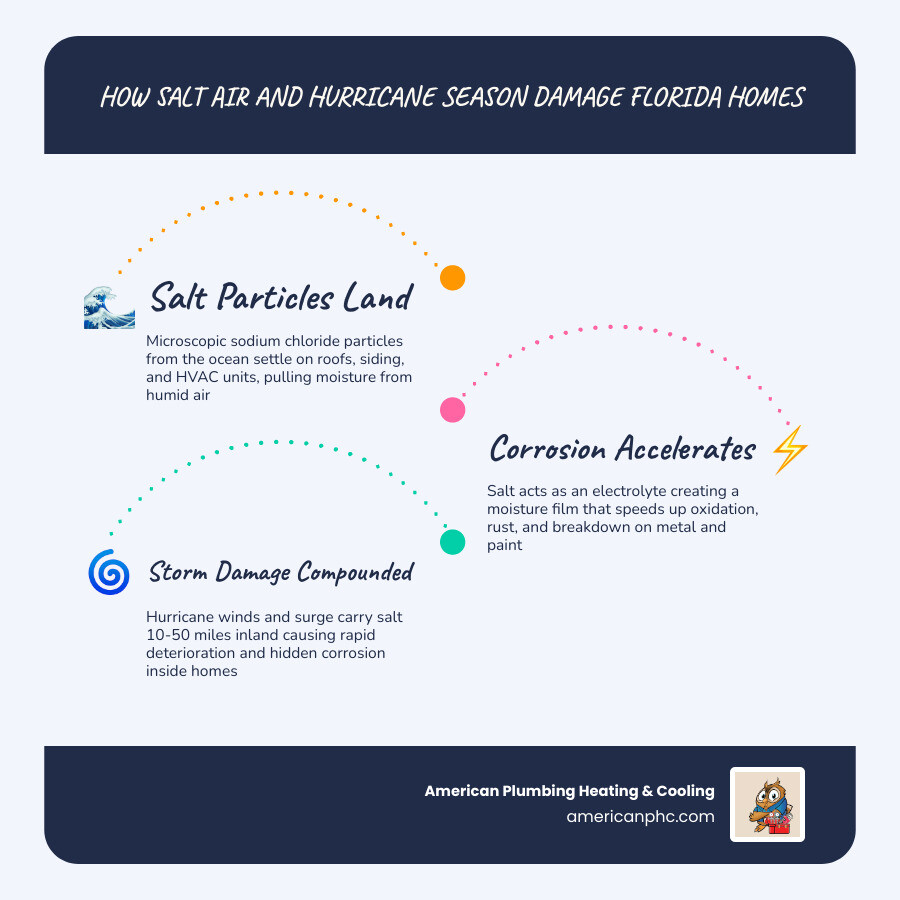
Homes within three miles of the Florida coast face the most aggressive corrosion, but salt particles can travel 10 to 20 miles inland under normal conditions — and up to 50 miles during a major storm. That means even if you are not on the waterfront in Sarasota, Cape Coral, or Pensacola, your home is still at risk.
Salt is hygroscopic, meaning it pulls moisture from the air and holds it against whatever surface it settles on. It also acts as an electrolyte, speeding up the electrochemical reactions that cause rust and material breakdown. This is not the same as ordinary rain or humidity — it is a continuous, compounding process that works against your home 24 hours a day, every day of the year. Research shows that salt-laden coastal air can accelerate roof deterioration by up to 40% compared to inland properties, and standard HVAC units in high-exposure areas may fail in as little as five years.
In this guide, the team at American Plumbing Heating and Cooling breaks down exactly what is happening to your home, which systems are most vulnerable, and what you can do to protect them before the next storm season hits.
How Salt Air and Hurricane Season Affect Your Home in Florida
When we talk about the Florida lifestyle, we often focus on the sunshine and the Gulf. But for your home's structure, the combination of salt air and hurricane season creates a "perfect storm" of corrosive elements. Salt air isn't just a smell; it's a physical substance made of tiny sodium chloride particles launched into the air by breaking waves.
Why salt air damages homes faster than normal humidity
In places like Sarasota or Cape Coral, the humidity is already high, but salt adds a dangerous chemical layer to that moisture. Salt is an electrolyte. When it settles on a metal surface and mixes with our humid air, it creates a moisture film that conducts electricity. This triggers electrochemical corrosion, which is essentially rust on steroids.
While normal oxidation happens slowly, salt air breaks down protective coatings and attacks the underlying metal. This leads to "pitting"—deep, localized holes in metal that can compromise the structural integrity of your home's fasteners or HVAC coils. Combined with high UV exposure from the Florida sun, which bakes these salt crystals into your paint and sealants, the breakdown happens at an exponential rate.
How far inland how salt air and hurricane season affect your home
A common myth we hear is that if you can't see the beach from your porch, you're safe. Unfortunately, that’s not the case. Under normal conditions, the "critical zone" is within the first 3,000 feet of the shoreline. However, onshore winds regularly carry salt spray 1 to 3 miles inland.
During hurricane season, the rules change entirely. Storm bands and high-velocity winds can carry marine aerosols up to 50 miles inland. We have seen homes in Milton or interior parts of Sarasota County covered in a fine white salt residue after a major tropical event. Hurricane-force winds also create a "salt mist" that penetrates deep into attic vents and wall cavities, reaching areas that are normally protected from the elements.
How Salt Air and Hurricane Season Affect Your Home’s Exterior Materials
Your home’s exterior is its first line of defense, but salt air is a relentless attacker. In Florida, the lifespan of exterior materials is significantly shorter than in landlocked states. For example, a metal roof that might last 30 years in the Midwest may only last 15 to 20 years in a coastal Florida environment.
Metal, roofing, and fasteners: where corrosion starts first
The most vulnerable parts of your roof aren't always the shingles themselves, but the metal components holding everything together.
- Fasteners and Screws: Standard steel nails or screws will rust through quickly, leading to loose shingles or panels that fly off during a hurricane.
- Flashing and Gutters: These are often the first to show "orange rust" or white salt deposits.
- Galvanic Corrosion: This occurs when two different metals (like a copper pipe and a steel bracket) touch in the presence of salt water, acting like a slow-motion battery that eats away the metal.
For coastal homes, we always recommend using marine-grade 316 stainless steel or hot-dipped galvanized fasteners to ensure your roof stays attached when the winds pick up.
Wood, siding, paint, and windows under constant salt exposure
Salt doesn't just eat metal; it destroys finishes.
- Paint and Stucco: Salt crystals expand as they dry, which can cause paint to bubble and peel. On stucco, salt can lead to "efflorescence," where white powdery deposits weaken the surface.
- Windows: Beyond the glass getting "foggy" from salt buildup, the real danger is in the tracks and seals. Salt buildup can corrode window balances and locks, making them impossible to open during an emergency.
- Wood Rot: Salt pulls moisture into wood fibers, leading to warping and accelerated rot in decks and door frames.
Salt Water vs. Fresh Water Damage After Hurricanes
Understanding the difference between fresh water and salt water flooding is critical for your recovery efforts. While any flood is a nightmare, salt water is significantly more destructive.
Why salt water is more destructive than fresh water
Salt water is highly conductive. If storm surge enters your home, it doesn't just get things wet; it creates immediate electrical hazards. Salt water can bridge electrical connections, causing shorts and fires even after the water has receded. Furthermore, salt is incredibly difficult to remove. Once the water evaporates, the salt stays behind, continuing to pull moisture from the air and corroding your home's internal wiring, plumbing, and framing from the inside out.
| Feature | Fresh Water Damage | Salt Water Damage |
|---|---|---|
| Electrical | May work after drying | Usually requires total replacement |
| Corrosion | Slow/Minimal | Immediate and aggressive |
| Residue | Mud/Silt | Permanent hygroscopic salt crystals |
| Conductivity | Low | High (Extreme fire/shock risk) |
| Cleanup | Standard drying | Requires fresh-water flushing |
Immediate steps after salt water flooding to limit permanent damage
If your home in Cape Coral or Pensacola experiences salt water intrusion, you must act fast. Salt can cause permanent damage in just a few days.
- Shut off the power: Never enter a flooded home until the electricity is confirmed off.
- Fresh-water flush: This sounds counterintuitive, but you must rinse away salt deposits with fresh water before they dry.
- Professional Inspection: Call a pro to check your electrical and HVAC systems. Salt in your wiring is a ticking time bomb.
If you find yourself in this situation, knowing what to expect during an emergency HVAC service call can help lower your stress during a chaotic time.
HVAC, Humidity, and Indoor Air Quality Risks in Coastal Homes
Your HVAC system is perhaps the most expensive victim of salt air. Because your outdoor condenser unit pulls massive amounts of air through its delicate metal fins to dissipate heat, it acts like a giant salt magnet.
How salt air and hurricane season affect your home HVAC system
The aluminum fins and copper tubing in your AC unit are highly susceptible to corrosion. When salt builds up on these coils, it creates an insulating layer that prevents heat exchange. This makes your system work harder, driving up your utility bills and reducing its lifespan from 15 years down to as little as 5 to 7 years.
Common issues include:
- Refrigerant Leaks: Corroded coils eventually develop microscopic holes.
- Fan Motor Failure: Salt air eats away at the motor's bearings and electrical terminals.
- Efficiency Loss: A salt-clogged system can lose 30% of its cooling efficiency in just a few seasons.
Regular maintenance is the only way to fight back. We recommend preventing HVAC emergencies with regular maintenance and following a local guide to HVAC system maintenance specifically designed for the Florida climate. You can also learn more about how hurricane season affects your HVAC and plumbing systems to stay ahead of the storm.
How salt air and high humidity affect mold growth and indoor air quality
Salt air indirectly promotes mold. Because salt is hygroscopic, it keeps surfaces damp longer than usual. If salt-laden dust makes its way into your ductwork, it can hold onto moisture and become a breeding ground for microbial growth. This is why many coastal homeowners notice a "musty" smell even when the AC is running. Maintaining indoor humidity between 45-55% is essential. For more tips, check out the ultimate guide to improving your home's air quality.
The Best Materials, Coatings, and Maintenance Plan for Florida Coastal Homes
If you are building, renovating, or just trying to maintain your home in Southwest Florida, material choice is everything. You want materials that meet "Marine Grade" standards.
Best salt-resistant materials and coatings for long-term durability
- Metals: Choose 316-grade stainless steel or anodized aluminum. Avoid standard 304 stainless, as it will still "tea stain" and pit in Florida.
- Siding: Fiber cement (like Hardie Board) is excellent because it doesn't rot or warp like wood and holds paint better against salt.
- HVAC: Look for units with "E-coated" or "Blygold" treated coils. These are specialized epoxy coatings that protect the metal from salt air.
- Roofing: Clay or concrete tiles are naturally resistant to salt. If you prefer metal, ensure it is aluminum with a high-quality Kynar finish.
Maintenance habits that prevent salt air damage year-round
Consistency is your best friend. A "little and often" approach can add years to your home's life.
- Monthly Fresh-Water Rinse: Use a standard garden hose (not a pressure washer!) to gently rinse your siding, windows, and the outdoor AC unit. This washes away the salt before it can bond to the surface.
- Quarterly Lubrication: Use non-corrosive lubricants on door hinges, locks, and window tracks.
- Biannual Inspections: Have a professional check your roof and HVAC system before and after hurricane season.
Knowing how to stay safe during a heating or cooling emergency is also a vital part of your seasonal planning.
Warning Signs to Watch For and When to Call for Help
Don't wait for a system failure to take action. Keep an eye out for these coastal "red flags":
- Orange or Red Stains: This indicates active rust on fasteners or flashing.
- White, Crusty Deposits: This is accumulated salt that is currently eating away at your finishes.
- Green "Verdigris": This is corrosion on copper pipes or outdoor lighting fixtures.
- Weak Airflow or Rising Bills: This often means your AC coils are clogged with salt and debris.
- Bubbling Paint: This usually means salt and moisture have gotten behind the seal.
What homeowners should check during seasonal and post-storm inspections
After a storm, or at least twice a year, walk around your home and check:
- Roof Edges and Soffits: Look for loose metal or rust.
- AC Condenser Fins: Check if they look "dusty" or are starting to flake away.
- Window Seals: Ensure the caulking isn't cracked or peeling.
- Outdoor Plumbing: Check for signs of pitting on exposed pipes or hose bibs.
When professional service helps extend the life of your home systems
While rinsing your home is a great DIY task, some things require a pro. At American Plumbing Heating and Cooling, we have over 100 years of combined experience dealing with the unique challenges of the Florida coast. From Sarasota to Pensacola, we help homeowners identify hidden corrosion before it turns into a midnight emergency.
Whether you need an emergency plumber in Bradenton or a specialized HVAC tune-up in Cape Coral, our certified pros provide honest, upfront pricing to keep your home running smoothly despite the salt air.
Conclusion
Living on the Florida coast is a dream, but it requires a proactive defense. By understanding how salt air and hurricane season affect your home, you can take the necessary steps to protect your investment. From choosing the right marine-grade materials to maintaining a strict rinsing schedule, your efforts will pay off in a longer-lasting roof, a more efficient HVAC system, and a safer indoor environment for your family.
Don't let the "silent" threat of salt air catch you off guard. Whether you're preparing for the next hurricane season or dealing with the aftermath of a storm, American Plumbing Heating and Cooling is here to help. Explore our full range of services to see how we can help you safeguard your home today.
Need HVAC Help?
Our certified technicians are ready to help with all your heating and cooling needs.
Request ServiceAbout the Author
American Plumbing Heating and Cooling Team
Licensed Florida contractors — HVAC CAC1821761 · Plumbing CFC1431919
More Articles
View All Posts


Ready to Get Started?
Whether you need a repair, maintenance, or a new system installation, our expert team is here to help.