
How to Stay Safe During a Heating or Cooling Emergency
By the American Plumbing Heating and Cooling Team
Licensed Florida contractors — HVAC CAC1821761 · Plumbing CFC1431919

Learn what to do when your HVAC breaks down unexpectedly: safety steps, troubleshooting, emergency signs and Florida heat tips. Stay safe now!
Reviewed bythe American Plumbing Heating and Cooling Team — Licensed Florida contractors — HVAC CAC1821761 · Plumbing CFC1431919. Published April 24, 2026 · Last updated July 29, 2026. About American Plumbing Heating and Cooling
Dealing with this problem right now? Call (941) 735-6616 and talk to our local team.
Request ServiceWhat to Do When Your HVAC Breaks Down Unexpectedly in Florida
Knowing what to do when your HVAC breaks down unexpectedly can mean the difference between a stressful few hours and a genuinely dangerous situation — especially during a Florida summer when temperatures can push well past 90°F.
Here's a quick overview of the most important steps to take right away:
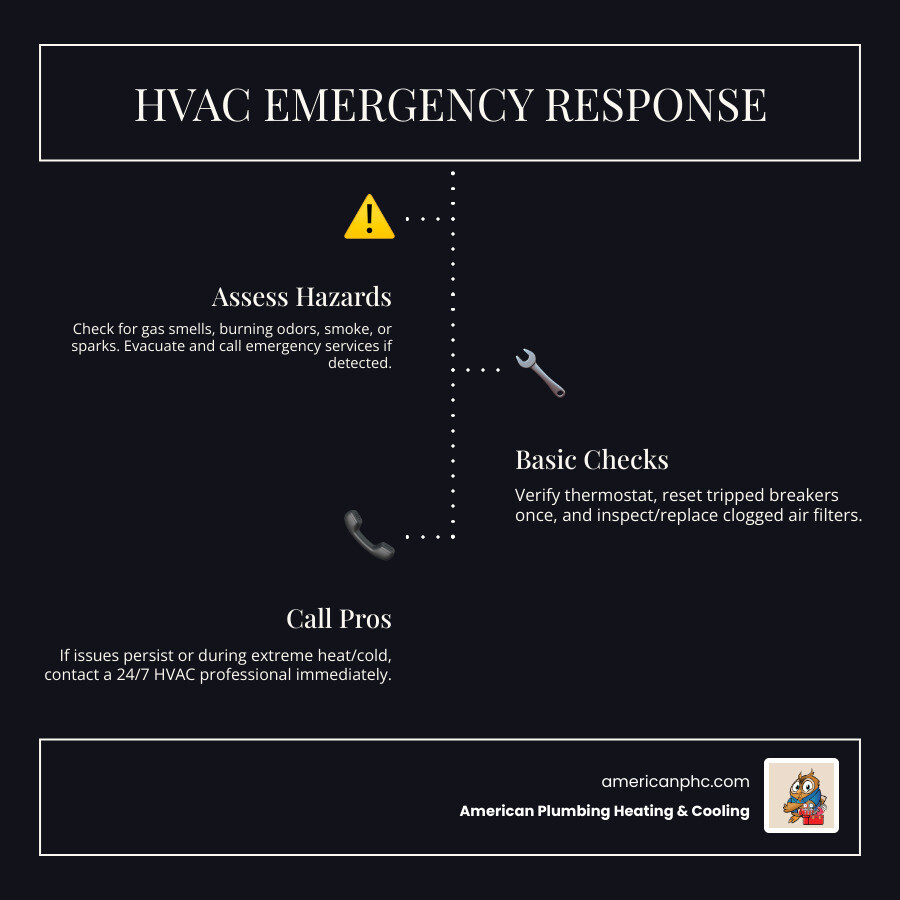
- Stay calm and assess the situation — Check if the system is completely off or just not heating/cooling properly. Note any unusual noises, smells, or visible leaks.
- Check your thermostat — Make sure it's set to the correct mode, the temperature is set properly, and the batteries aren't dead.
- Inspect your circuit breaker — Look for any tripped breakers and reset once if needed. If it trips again immediately, stop and call a pro.
- Check your air filter — A severely clogged filter can cause your system to shut down completely. Replace it if it's dirty.
- Identify any safety hazards — If you smell gas, burning, or see smoke, turn off the system, leave the home, and call emergency services before anything else.
- Use temporary comfort measures — Close blinds, use fans, stay hydrated, and move to the coolest room while you wait for help.
- Call a licensed 24/7 HVAC professional — If basic checks don't fix the issue, especially during extreme heat or cold, don't wait.
About 70% of homeowners experience an HVAC breakdown during peak seasons — exactly when they need their systems most. In Florida, that's not just uncomfortable. It can become a health risk fast, particularly for children, elderly family members, or anyone with a medical condition.
The good news is that many HVAC failures start with something simple — a tripped breaker, a dead thermostat battery, or a clogged filter. Knowing what to check first gives you a real head start while you wait for a technician to arrive.
This guide walks you through every step: from the first moment your system stops working, to staying safe in the heat, to getting the right professional on the phone fast.
What to Do When Your HVAC Breaks Down Unexpectedly: Immediate Safety and Troubleshooting
When the air suddenly stops moving in your Sarasota or Cape Coral home, your first instinct might be to panic. However, the most effective response is a systematic assessment of the situation. Before you start poking around the internal components of your unit, you need to ensure there are no immediate hazards.
Safety is our absolute priority. If you detect a rotten egg smell, that is a classic sign of a natural gas leak. In this scenario, do not touch any light switches or phones inside the house. Evacuate everyone immediately and call your gas provider from a safe distance outside. Similarly, if you notice a burning plastic smell, see sparks, or detect smoke coming from your vents or the unit itself, shut off the power at the main electrical panel immediately.
If there are no smells or smoke, begin a basic system assessment. Is the outdoor unit humming but the indoor fan isn't blowing? Is the system completely silent? These details are vital when you call for AC Repair in Sarasota or AC Repair in Cape Coral.
Troubleshooting Your Thermostat When Your HVAC Breaks Down Unexpectedly
It might sound too simple to be true, but roughly 40% of HVAC "emergencies" actually start with a thermostat malfunction. Before assuming your compressor has given up the ghost, take a close look at your control center.
First, check the display. If it’s blank, your batteries are likely dead. Even if the screen is faint, low batteries can prevent the thermostat from sending a signal to your AC or furnace. Replace them with fresh alkalines. Next, verify the settings. We often see systems that were accidentally switched from "Cool" to "Heat" or "Off" during routine dusting. Ensure the set temperature is at least five degrees lower than the current room temperature to trigger a cooling cycle.
If you are comfortable doing so, you can gently pop the thermostat off its wall plate to check for loose or corroded wires. However, if the wiring looks complex or you see charred marks, it's time to call the experts for AC Repair in Lakewood Ranch. For more deep-dive tips, check out our guide on Everything You Need to Know About AC Repair in Sarasota FL.
Checking Power and Filters When Your HVAC Breaks Down Unexpectedly
If the thermostat is fine, the next stop is your electrical panel. HVAC systems draw a significant amount of power, especially during a Florida heatwave. A power surge or a hard start can easily trip a circuit breaker. Locate the breaker labeled "AC" or "HVAC." If it has flipped to the middle position, flip it all the way to "Off" and then back to "On." Crucial Note: If the breaker trips again immediately, do not try a third time. This indicates a serious electrical fault or a grounded compressor that requires professional AC Repair in Milton.
Beyond power, airflow is the lifeblood of your system. A severely clogged air filter is one of the leading causes of unexpected breakdowns. When air can't pass through the filter, the system overworks, overheats, and eventually triggers a safety shutdown. In our humid climate, we recommend checking your filter every 30 days. If you can't see light through the filter when holding it up to a lamp, it needs to be replaced immediately to restore airflow and prevent further damage. This is a common fix we see when performing AC Repair in Navarre.
Identifying a True HVAC Emergency in the Florida Heat
Not every HVAC hiccup requires a midnight service call, but in Florida, the line between "inconvenient" and "emergency" is thin. We define a true HVAC emergency as any situation that threatens the health of your family or the integrity of your property.
In April 2026, as we look at current climate trends, the "95°F Rule" is a standard benchmark. If the outdoor temperature exceeds 95°F and your indoor temperature is climbing rapidly, this is an emergency—especially if you have infants, elderly residents, or pets in the home. Conversely, during our rare winter cold snaps, if the temperature drops below 50°F and your heating fails, you risk more than just shivering; you risk frozen pipes and health complications for vulnerable loved ones.
Other red flags that demand immediate attention include:
- Ice Buildup: If you see ice on the copper refrigerant lines or the outdoor coils, your system is likely low on refrigerant or has a major airflow blockage. Turn the system off to let it thaw and call for AC Repair in Bradenton.
- Unusual Noises: Screeching, grinding, or loud banging sounds often indicate a failed motor or a broken fan blade. Running the system in this state can turn a simple repair into a total system replacement.
- Major Leaks: A clogged condensate drain line can cause water to back up into your home, leading to thousands of dollars in water damage and mold growth.
If you notice these signs, don't hesitate to contact us for AC Repair in Venice.
Temporary Comfort Measures While Waiting for Professional Service
Once you’ve determined that you need a technician, the goal shifts to "stabilizing the environment." Depending on the time of day and peak season demand, it may take a few hours for a pro to arrive.
In the heat:
- Block the Sun: Close all curtains and blinds, especially on sun-facing windows. This can reduce the "greenhouse effect" in your living room significantly.
- Hydrate and Dress Down: Drink plenty of water and wear lightweight, breathable clothing.
- Create a "Cool Zone": Gather the family in the lowest level of the home or the room with the fewest windows. Use portable fans to keep air moving.
- Avoid Heat-Producing Activities: Don't run the dishwasher, oven, or clothes dryer, as these add significant heat and humidity to your home.
In the rare event of a heating failure in North Florida, you might need Furnace Repair in Milton or Furnace Repair in Bradenton. While waiting, layer your clothing, use heavy blankets, and keep your faucets at a tiny trickle to prevent pipes from freezing.
Emergency Supply Checklist:
- Battery-operated fans
- Flashlights with extra batteries
- A gallon of water per person
- A list of emergency contacts (including American Plumbing Heating and Cooling!)
Preventing Future HVAC Failures with Regular Maintenance
The best way to handle an HVAC emergency is to prevent it from ever happening. Statistics show that homeowners who invest in regular maintenance are 50% less likely to face an unexpected breakdown. Furthermore, a well-maintained system can operate 15-20% more efficiently, which translates directly to lower monthly energy bills.
A professional tune-up isn't just a quick inspection. Our technicians perform a comprehensive multi-point check, including:
- Cleaning Condenser Coils: Dust and salt air in Florida can coat your coils, forcing the system to work harder.
- Clearing Drain Lines: We flush the condensate drain to prevent those dreaded water leaks and system shutdowns.
- Testing Electrical Components: We check capacitors and contactors for wear, replacing them before they fail on a 100-degree day.
- Refrigerant Check: Ensuring your levels are correct prevents the compressor from overworking.
Whether you need AC Maintenance in Sarasota or AC Maintenance in Bradenton, scheduling these visits twice a year (spring and fall) is the smartest move a Florida homeowner can make. For total peace of mind, consider joining our Maintenance Plan to ensure you never miss a tune-up.
Frequently Asked Questions about HVAC Emergencies
What counts as a true HVAC emergency?
A true emergency involves risks to health, safety, or property. This includes a total loss of cooling when outdoor temperatures exceed 95°F, a loss of heat when temperatures are below 50°F, gas leaks, burning smells, or significant water leaks that could cause structural damage.
How can I tell if my system is frozen?
Check the outdoor unit and the indoor evaporator coil (if accessible). If you see white frost or solid ice on the copper pipes or the coils themselves, your system is frozen. Turn the system to "Off" but keep the fan on "Manual" or "On" to help circulate air and melt the ice. Do not try to scrape the ice off, as you could puncture the refrigerant lines.
What information should I have ready for the technician?
To speed up the repair process, tell the technician:
- Exactly what symptoms you noticed (noises, smells, no airflow).
- Any troubleshooting steps you already tried (resetting the breaker, changing the filter).
- The approximate age of the system.
- Any error codes displayed on your smart thermostat.
Conclusion
What to do when your hvac breaks down unexpectedly doesn't have to be a mystery. By following these steps—assessing safety, performing basic troubleshooting, and knowing when to call for help—you can protect your home and your family from the worst of the Florida elements.
At American Plumbing Heating and Cooling, we’ve seen it all in our 100+ years of combined experience. We are locally owned and operated, providing honest, upfront pricing and 24/7 emergency availability across Sarasota, Bradenton, Cape Coral, and beyond. Whether it’s a simple capacitor fix or a complex system replacement, our certified pros are ready to restore your comfort.
Don't wait for the heat to become unbearable. If your system is acting up, explore our full range of HVAC Services or give us a call today. We're here to keep your Florida home cool, safe, and comfortable, no matter what the weather brings.
{"@context": "https://schema.org", "@graph": [{"@type": "Article", "headline": "What to Do When Your HVAC Breaks Down | American PHC", "description": "What to do when your HVAC breaks down unexpectedly: safety steps, quick checks, and when to call a 24/7 HVAC pro. Read now.", "author": {"@type": "Person", "name": "American Plumbing Heating and Cooling"}, "publisher": {"@type": "Organization", "name": "American Plumbing Heating and Cooling", "logo": {"@type": "ImageObject", "url": "https://firebasestorage.googleapis.com/v0/b/ai-templates.appspot.com/o/bot%2FiTB8FxoyvSplQzS7StV8%2Flogo%2FScreenshot%202026-03-16%20at%2012.43.20%E2%80%AFPM.png?alt=media&token=4ae5e171-7bb5-4a27-91f4-47e969b91c80"}}, "datePublished": "2026-04-24T02:47:34+00:00", "dateModified": "2026-04-24T02:47:38.481834", "mainEntityOfPage": {"@type": "WebPage", "@id": "https://pms.ciwebgroup.com/americanphc/2026/04/24/how-to-stay-safe-during-a-heating-or-cooling-emergency/"}, "image": "https://images.unsplash.com/photo-1774876549246-dfa8eae5d9f5?crop=entropy&cs=tinysrgb&fit=max&fm=jpg&ixid=M3w2MTMxNjF8MHwxfHNlYXJjaHwyfHxob21lb3duZXIlMjBjaGVja2luZyUyMGElMjBub24tcmVzcG9uc2l2ZSUyMHRoZXJtb3N0YXQlMjBkdXJpbmd8ZW58MHwwfHx8MTc3NjM0MDIxN3ww&ixlib=rb-4.1.0&q=80&w=1080"}, {"@type": "FAQPage", "mainEntity": [{"@type": "Question", "name": "What should I do first when my HVAC breaks down unexpectedly in Florida?", "acceptedAnswer": {"@type": "Answer", "text": "Stay calm and assess whether the system is completely off or just not heating or cooling properly. Check for unusual noises, smells, or visible leaks before doing any basic troubleshooting."}}, {"@type": "Question", "name": "How can I troubleshoot an HVAC system before calling a professional?", "acceptedAnswer": {"@type": "Answer", "text": "Check that the thermostat is set correctly, the temperature is properly adjusted, and the batteries are not dead. Then inspect the circuit breaker for a trip and reset it once if needed, and check whether the air filter is severely clogged and needs replacement."}}, {"@type": "Question", "name": "When is an HVAC breakdown a safety emergency?", "acceptedAnswer": {"@type": "Answer", "text": "If you smell gas, burning, or see smoke, turn off the system, leave the home, and call emergency services immediately. The article stresses that safety comes first before any further inspection or troubleshooting."}}, {"@type": "Question", "name": "How can I stay safe and comfortable while waiting for HVAC repair in extreme heat?", "acceptedAnswer": {"@type": "Answer", "text": "Use temporary comfort measures such as closing blinds, using fans, staying hydrated, and moving to the coolest room in the home. In Florida heat, this is especially important because an HVAC outage can quickly become a health risk for children, elderly people, and anyone with a medical condition."}}, {"@type": "Question", "name": "When should I call a 24/7 licensed HVAC professional?", "acceptedAnswer": {"@type": "Answer", "text": "Call a licensed 24/7 HVAC professional if the basic checks do not solve the problem, especially during extreme heat or cold. You should also stop troubleshooting and call a pro if a breaker trips again immediately after being reset."}}]}]}Need HVAC Help?
Our certified technicians are ready to help with all your heating and cooling needs.
Request ServiceAbout the Author
American Plumbing Heating and Cooling Team
Licensed Florida contractors — HVAC CAC1821761 · Plumbing CFC1431919
More Articles
View All PostsRelated Articles


Ready to Get Started?
Whether you need a repair, maintenance, or a new system installation, our expert team is here to help.