
When Your HVAC Failure Is a True Emergency
By the American Plumbing Heating and Cooling Team
Licensed Florida contractors — HVAC CAC1821761 · Plumbing CFC1431919

Learn when an HVAC failure is a true emergency: spot gas leaks, sparks, health risks and more. Get safety steps + 24/7 repair tips now!
Reviewed bythe American Plumbing Heating and Cooling Team — Licensed Florida contractors — HVAC CAC1821761 · Plumbing CFC1431919. Published April 23, 2026 · Last updated July 29, 2026. About American Plumbing Heating and Cooling
Dealing with this problem right now? Call (941) 735-6616 and talk to our local team.
Request ServiceIs Your HVAC Problem a True Emergency? Here's How to Tell
When an HVAC failure is a true emergency depends on one simple question: does the problem put your health, your home, or your family at risk right now?
Not every breakdown qualifies. Some issues can wait until morning. Others cannot wait even an hour.
Here's a quick way to know which situation you're in:
An HVAC failure is a true emergency when you have:
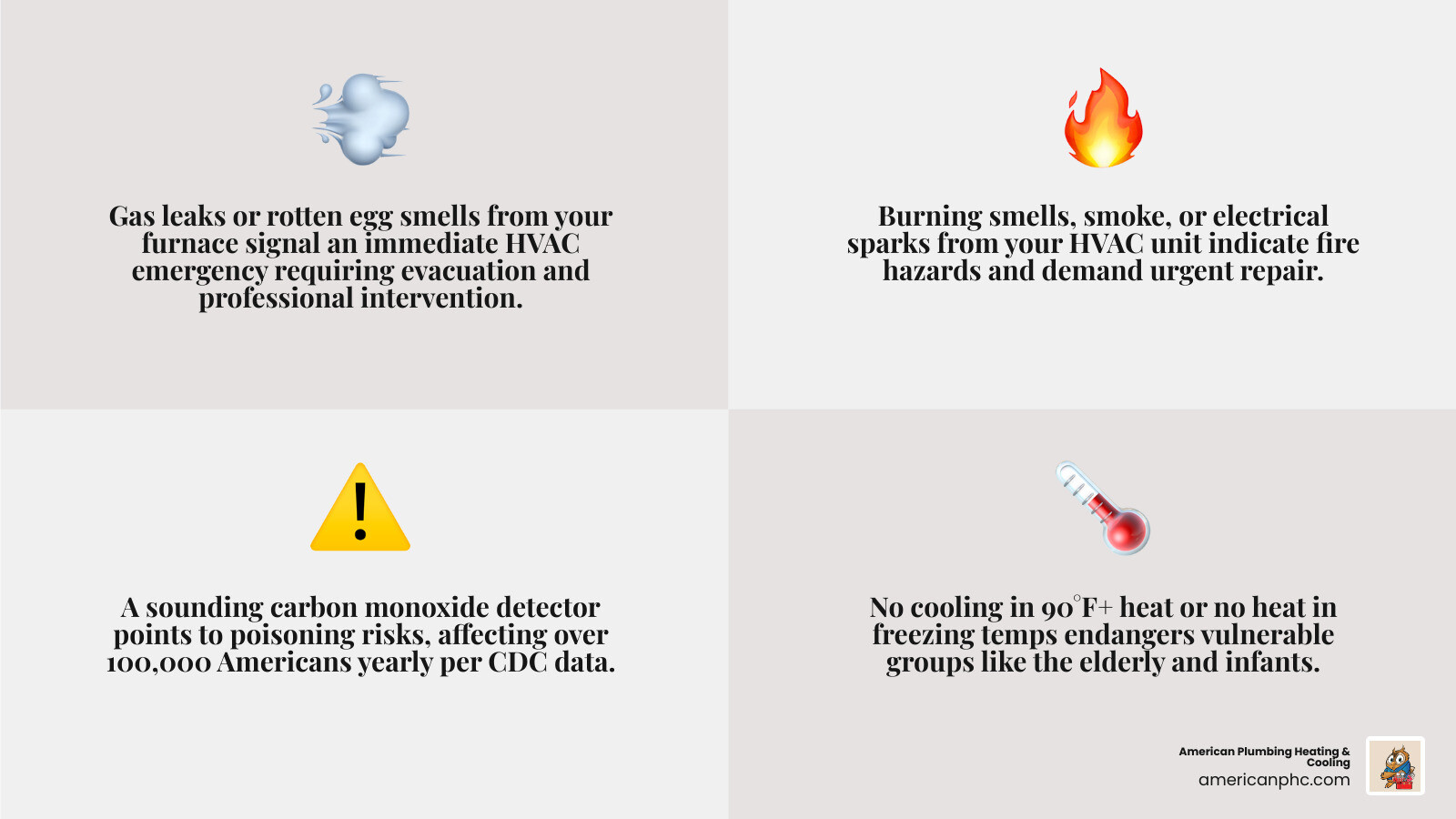
- A gas leak or rotten egg smell near your furnace
- Smoke, burning smells, or visible sparks from the unit
- A carbon monoxide detector going off
- No cooling during a Florida heat wave above 90°F
- No heat when outdoor temps drop to dangerous levels
- Major water leaks causing active flooding or property damage
- A completely unresponsive system with vulnerable people in the home (elderly, infants, or those with medical conditions)
It is likely NOT an emergency when:
- Temperatures outside are mild and your family is comfortable
- You notice a slight drop in airflow or uneven cooling
- The system is making a minor noise but still running
- The issue appears to be a dirty filter or thermostat setting
In Florida, where summer heat is relentless and 70% of homeowners experience HVAC breakdowns during peak seasons, knowing the difference between an inconvenience and a genuine emergency can protect your family and your home. According to the CDC, unintentional carbon monoxide poisoning sends over 100,000 Americans to emergency departments every year — and a faulty HVAC system is one of the leading causes.
The sections below walk you through every red flag to watch for, what to do right now, and how to avoid ending up in this situation again.
Identifying Red Flags: When an HVAC failure is a true emergency
Recognizing the early warning signs of a system in distress can save you from a catastrophic failure. While some issues start as a small annoyance, others are immediate indicators that your safety is at risk. If you are currently experiencing any of the following, you are likely facing a situation when an HVAC failure is a true emergency.
Gas Leaks and Odors
If you use a gas furnace and smell "rotten eggs," this is a critical emergency. This scent is added to natural gas to alert you to a leak. In this scenario, do not turn on any lights, do not use your phone inside, and evacuate immediately. Similarly, a faint smell of "dirty socks" can indicate biological growth, but a sharp, ether-like smell often points to a refrigerant leak. Refrigerant leaks are not just bad for the environment; they can cause your compressor to fail entirely, leading to a much more expensive replacement.
Burning Smells and Electrical Sparks
An electrical burning smell—often described as ozone or burning plastic—is a major red flag. This usually indicates that wiring is overheating or a motor has seized. If you see sparks or if your circuit breaker keeps tripping, do not keep resetting it. This is your home's way of preventing an electrical fire. For those in Southwest Florida, Everything You Need to Know About AC Repair in Sarasota, FL covers how these electrical components can be pushed to their limit during our humid summers.
Loud or Unusual Noises
While a hum is normal, certain sounds demand immediate attention:
- Screeching or Squealing: Often a sign of a failed blower motor or a damaged belt.
- Banging or Clanging: Usually means a part has come loose and is physically hitting other components.
- Hissing: This is a classic sign of a high-pressure refrigerant leak or a leaking internal valve.

Safety First: When an HVAC failure is a true emergency due to health risks
In April 2026, as we look at the rising temperatures across Florida, the health risks associated with HVAC failure cannot be overstated. A broken air conditioner in Sarasota or Milton isn't just about comfort; it's about survival during a heat wave.
Carbon Monoxide: The Silent Killer Faulty furnaces can leak carbon monoxide (CO), a colorless, odorless gas. If your CO detector goes off, or if family members suddenly experience unexplained headaches, dizziness, or nausea, treat it as a life-threatening emergency. Evacuate the premises and call for help immediately.
Extreme Heat and Vulnerable Populations When outdoor temperatures climb above 90°F with high humidity, the indoors can quickly become a kiln. This is especially dangerous for:
- Infants and Young Children: They cannot regulate body temperature as efficiently as adults.
- The Elderly: Seniors are at a much higher risk for heatstroke and dehydration.
- Those with Medical Conditions: Respiratory issues like asthma can be severely aggravated by high indoor humidity (above 70%) and heat.
If you have vulnerable family members and your system fails during a Florida scorcher, it is a true emergency. For residents in the Panhandle, our AC Repair in Milton, FL for People Who Hate Sweating guide explains why fast response times are vital when the mercury rises.
Property Protection: When an HVAC failure is a true emergency for your home
Sometimes the emergency isn't about the air temperature, but the physical integrity of your house. HVAC systems move a lot of water (in the form of condensate) and, in some cases, heat that prevents structural damage.
Water Leaks and Flooding A clogged condensate drain line can back up, sending gallons of water into your ceilings, walls, or floors. This leads to rapid mold growth and structural rot. If you see water pooling around your indoor unit or dripping from a ceiling, shut the system off immediately to stop the flow.
Frozen Pipes While rare in much of Florida, our neighbors in Milton and Navarre do occasionally face freezing nights. If your heating fails during a "hard freeze," your plumbing is at risk. Frozen pipes that burst can cause tens of thousands of dollars in water damage in a matter of hours. For more on this, see our guide Beyond the Freeze: A Comprehensive Guide to Preventing Burst Pipes.
Immediate Troubleshooting and Safety Steps
Before you panic and call for 24/7 service, there are a few safe "sanity checks" you can perform. About 40% of HVAC emergencies actually start with simple thermostat malfunctions.
- Check the Thermostat: Are the batteries dead? Is it set to "Cool" (or "Heat") and "Auto"? Sometimes a simple setting change or a fresh pair of AA batteries is all it takes.
- Inspect the Circuit Breaker: Check your electrical panel. If the HVAC breaker has tripped, flip it back once. If it trips again immediately, stop. Do not flip it a second time, as this indicates a serious electrical short.
- Look at the Air Filter: A completely clogged filter can cause the system to overheat and shut down (or cause the coils to freeze). If the filter looks like a wool blanket, replace it.
- Clear the Outdoor Unit: Ensure no tall grass, debris, or trash bags are blocking the airflow of your outdoor condenser.
Safety Protocol: If you smell gas, see smoke, or hear loud electrical buzzing, skip the troubleshooting. Shut off the power at the main breaker if it is safe to do so, evacuate the home, and call us. For more tips on navigating a sudden breakdown, check out The Ultimate Cape Coral AC Repair Survival Guide.
How to Stay Comfortable While Waiting for Repair
If you've determined that your situation is an emergency and help is on the way, your next priority is maintaining a safe environment.
- In Extreme Heat: Close all curtains and blinds, especially on the east and west sides of the house. Use ceiling fans to create a wind-chill effect. Stay hydrated and avoid using the oven or stove, which adds unnecessary heat to the home. If it becomes unbearable, consider heading to a public library or a neighbor's house.
- In Extreme Cold: Dress in layers and gather the family into one central room to preserve body heat. Use portable space heaters safely—keep them at least three feet away from curtains or furniture, and never leave them unattended.
- Seal the Gaps: Use towels to block drafts under doors or around windows to keep the conditioned air you have left inside for as long as possible.
Residents in the Panhandle can find more localized advice in the Navarre AC Repair Guide for Hot Florida Days.
Preventing Future Emergencies with Regular Maintenance
The best emergency is the one that never happens. Statistics show that homeowners who invest in regular maintenance are 50% less likely to experience a total system breakdown. Considering that over 60% of HVAC emergencies happen during the peak of summer or winter when systems are working their hardest, a little prevention goes a long way.
A professional tune-up includes:
- Cleaning Coils: Dirty coils force the system to run longer and hotter, leading to premature failure.
- Checking Refrigerant Levels: Low refrigerant strains the compressor, which is the "heart" of your AC.
- Inspecting Electrical Connections: Tightening loose wires prevents those scary burning smells and fire risks.
- Clearing Drain Lines: We flush the condensate lines to ensure you don't end up with a flooded hallway.
A well-maintained system doesn't just stay reliable; it operates 15-20% more efficiently, which lowers your monthly energy bills. To get started on a proactive plan, read our Local Guide to HVAC System Maintenance or learn more about Everything You Need to Know About AC Maintenance in Sarasota.
Frequently Asked Questions about HVAC Emergencies
What temperature qualifies as an HVAC emergency?
Generally, if the outdoor temperature is above 90°F or below 40°F, a total loss of climate control is considered an emergency. In Florida, high humidity often makes a 90°F day feel much worse, increasing the risk of heat exhaustion. If you have infants or elderly residents, even milder temperatures can become dangerous quickly.
When should I call 911 instead of an HVAC company?
You should call 911 immediately if you see active flames, smell a strong gas leak, or if someone in the home is showing signs of carbon monoxide poisoning (confusion, vomiting, or loss of consciousness). Call the fire department first to secure the scene, then call us to repair the system once it is safe to re-enter.
Can a thermostat malfunction cause a true emergency?
Yes. While it sounds minor, a thermostat failure can prevent a furnace from turning on during a freeze, leading to burst pipes. In the summer, a broken thermostat might keep the AC running constantly until the coils freeze solid and the compressor burns out. If your thermostat is blank and your home is reaching extreme temperatures, treat it as an urgent matter.
Conclusion
At American Plumbing Heating and Cooling, we know that an HVAC failure never happens at a "convenient" time. Whether it's a holiday weekend in Cape Coral or a sweltering Tuesday night in Bradenton, we are here to help. With over 100 years of combined experience and a commitment to honest, upfront pricing, we provide the peace of mind you need when things go wrong.
Don't wait for a small noise to become a total system failure. If you suspect your system is on the fritz, or if you are currently facing a situation when an HVAC failure is a true emergency, give us a call. We offer 24/7 emergency services across Sarasota, Pensacola, and throughout Southwest Florida to keep your family safe and comfortable.
{"@context": "https://schema.org", "@graph": [{"@type": "Article", "headline": "When an HVAC Failure Is a True Emergency | APHC", "description": "Learn when an HVAC failure is a true emergency, from gas leaks to no cooling in extreme heat. Protect your home—get help fast.", "author": {"@type": "Person", "name": "American Plumbing Heating and Cooling"}, "publisher": {"@type": "Organization", "name": "American Plumbing Heating and Cooling", "logo": {"@type": "ImageObject", "url": "https://firebasestorage.googleapis.com/v0/b/ai-templates.appspot.com/o/bot%2FiTB8FxoyvSplQzS7StV8%2Flogo%2FScreenshot%202026-03-16%20at%2012.43.20%E2%80%AFPM.png?alt=media&token=4ae5e171-7bb5-4a27-91f4-47e969b91c80"}}, "datePublished": "2026-04-23T02:48:20+00:00", "dateModified": "2026-04-23T02:48:23.015950", "mainEntityOfPage": {"@type": "WebPage", "@id": "https://pms.ciwebgroup.com/americanphc/2026/04/23/when-your-hvac-failure-is-a-true-emergency/"}, "image": "https://images.unsplash.com/photo-1758598497429-6eb3895d5bfa?crop=entropy&cs=tinysrgb&fit=max&fm=jpg&ixid=M3w2MTMxNjF8MHwxfHNlYXJjaHwxMHx8aG9tZW93bmVyJTIwbG9va2luZyUyMHN0cmVzc2VkJTIwbmV4dCUyMHRvJTIwYXxlbnwwfDB8fHwxNzc2MzQwMzk5fDA&ixlib=rb-4.1.0&q=80&w=1080"}, {"@type": "FAQPage", "mainEntity": [{"@type": "Question", "name": "When is an HVAC failure considered a true emergency?", "acceptedAnswer": {"@type": "Answer", "text": "An HVAC failure is a true emergency when it puts your health, home, or family at immediate risk. Examples include a gas leak, smoke or sparks from the unit, a carbon monoxide detector going off, no cooling during a Florida heat wave above 90°F, no heat in dangerous cold, major water leaks, or a total system failure affecting vulnerable people."}}, {"@type": "Question", "name": "What HVAC problems are usually not emergencies?", "acceptedAnswer": {"@type": "Answer", "text": "It is likely not an emergency when outdoor temperatures are mild and your family is comfortable, airflow is only slightly reduced, cooling is uneven, the system makes a minor noise but still runs, or the issue seems related to a dirty filter or thermostat setting. These problems can often wait until normal service hours."}}, {"@type": "Question", "name": "What should I do if I smell rotten eggs near my furnace?", "acceptedAnswer": {"@type": "Answer", "text": "A rotten egg smell near a gas furnace signals a possible natural gas leak and is a critical emergency. Do not turn on lights, do not use your phone inside the home, and evacuate immediately."}}, {"@type": "Question", "name": "What does it mean if my carbon monoxide detector goes off and my HVAC system is acting up?", "acceptedAnswer": {"@type": "Answer", "text": "A carbon monoxide alarm going off is an HVAC emergency because faulty HVAC systems are a leading cause of carbon monoxide exposure. The article notes that unintentional carbon monoxide poisoning sends over 100,000 Americans to emergency departments each year."}}, {"@type": "Question", "name": "What smells from an HVAC system can indicate serious problems?", "acceptedAnswer": {"@type": "Answer", "text": "A rotten egg smell can indicate a gas leak, while a sharp, ether-like smell can point to a refrigerant leak. The article also notes that a faint dirty-socks smell may indicate biological growth rather than an immediate emergency."}}]}]}Need HVAC Help?
Our certified technicians are ready to help with all your heating and cooling needs.
Request ServiceAbout the Author
American Plumbing Heating and Cooling Team
Licensed Florida contractors — HVAC CAC1821761 · Plumbing CFC1431919
More Articles
View All PostsRelated Articles


Ready to Get Started?
Whether you need a repair, maintenance, or a new system installation, our expert team is here to help.