
A – Z Guide to How Clean Air Improves Your Health and Comfort
By the American Plumbing Heating and Cooling Team
Licensed Florida contractors — HVAC CAC1821761 · Plumbing CFC1431919

Discover how clean air improves your health and comfort in your Florida home with better HVAC filtration and humidity control.
Reviewed bythe American Plumbing Heating and Cooling Team — Licensed Florida contractors — HVAC CAC1821761 · Plumbing CFC1431919. Published July 21, 2026. About American Plumbing Heating and Cooling
Dealing with this problem right now? Call (941) 735-6616 and talk to our local team.
Request ServiceWhy Clean Air in Your Home Matters More Than You Think
How clean air improves your health and comfort is something most Florida homeowners don't think about until something feels off — a nagging headache that won't quit, restless sleep, or a stuffy feeling that follows you from room to room.
Here's a quick look at the key ways clean indoor air benefits you:
- Easier breathing — fewer respiratory symptoms and irritation
- Better sleep — cleaner air reduces nighttime disruptions and supports deeper rest
- Sharper focus — lower CO2 and pollutant levels help your brain work better
- Fewer allergy and asthma flare-ups — less pollen, dust, and pet dander in the air
- Stronger heart health — reduced fine particle exposure lowers inflammation and blood pressure
- Lower long-term disease risk — limiting exposure to radon, VOCs, and mold protects you over time
The numbers tell a clear story. According to the EPA, indoor air can be 2 to 5 times more polluted than outdoor air — and in some cases up to 100 times worse. That's a striking figure when you consider that most people spend around 90% of their time indoors.
Your home may look clean. But the air inside it can hold invisible pollutants — from dust and mold spores to gases released by furniture and cleaning products. These contaminants can cause immediate effects like eye irritation, headaches, dizziness, and fatigue. Over time, the risks grow more serious.
In Florida's warm, humid climate, the challenge is even greater. Sealed homes that run air conditioning year-round can trap pollutants inside, making indoor air quality a real everyday concern — not just a seasonal one.
Understanding Indoor Air Quality (IAQ) and Common Pollutants
To understand how clean air improves your health and comfort, we first need to look at what is actually floating around in our indoor air. Indoor Air Quality (IAQ) refers to the condition of the air inside and around your home, specifically how it affects your health, comfort, and physical well-being.
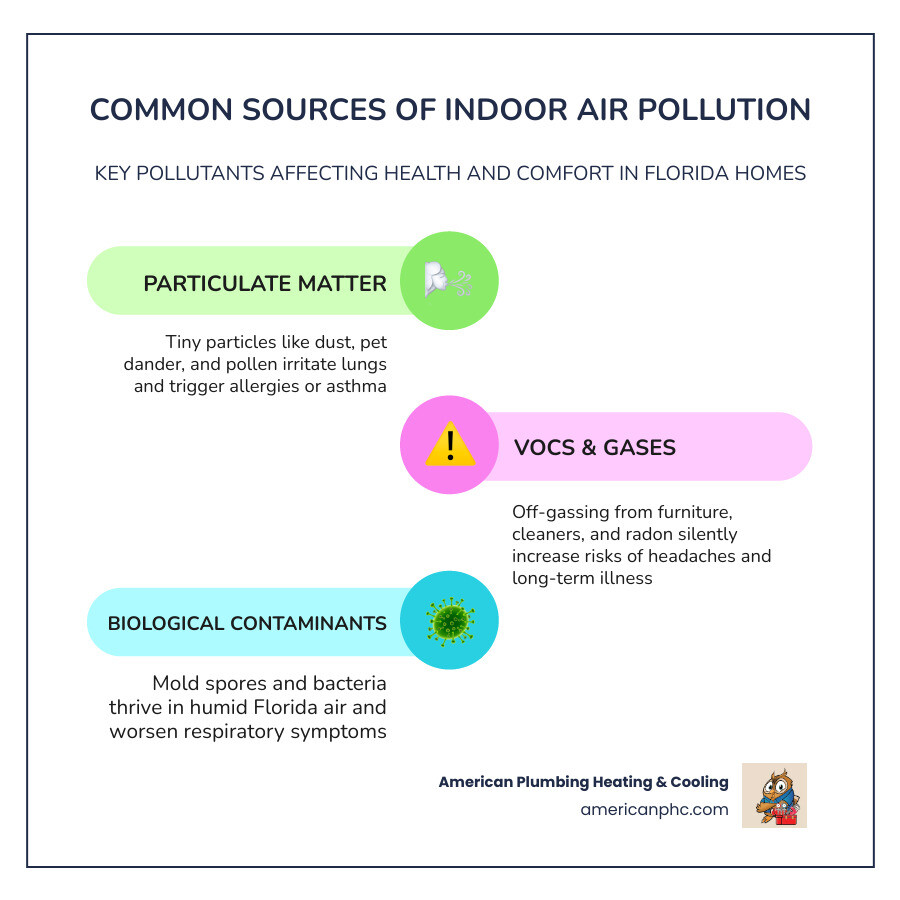
When we seal our homes in Southwest and Northwest Florida to keep the cool AC inside, we also trap a variety of invisible threats. Here are the most common culprits lurking in indoor air:
- Particulate Matter (PM2.5): These are microscopic particles smaller than 2.5 microns—about 30 times thinner than a human hair. Because they are so small, they bypass your body's natural respiratory defenses, traveling deep into your lungs and even entering your bloodstream.
- Volatile Organic Compounds (VOCs): These are toxic gases emitted from everyday household items like paints, chemical cleaners, aerosol sprays, and even new carpets or furniture. This process, known as VOCs off-gassing, can silently continue in your home for up to five years after a product is introduced.
- Radon Gas: An odorless, colorless radioactive gas that enters homes through foundation cracks. Radon is the second leading cause of lung cancer overall and claims approximately 58 lives every day in the U.S.
- Carbon Monoxide (CO): A highly toxic, odorless gas produced by fuel-burning appliances. Without proper ventilation and operational CO detectors, it can quickly become lethal.
- Mold Spores and Biological Contaminants: In damp climates like Sarasota, Bradenton, and Cape Coral, mold is a constant threat. High indoor humidity allows mold spores, dust mites, bacteria, and viruses to thrive and circulate through your ductwork.
When your cooling system isn't operating correctly, it can worsen these issues. If you notice unusual odors, excess humidity, or sudden health symptoms, check out our guide on Diagnosing Plumbing HVAC Symptoms Florida to help pinpoint the source of the trouble.
How Clean Air Improves Your Health and Comfort

When you clean up your indoor air, the physical benefits go far beyond simply stopping a sneeze. Clean air acts as a shield for your entire body, reducing systemic inflammation and taking a massive load off your immune system.
When you breathe in fine particulate matter (PM2.5), your body treats those tiny particles as foreign invaders, triggering an inflammatory immune response. Over time, this constant state of alert strains your cardiovascular health. In fact, scientific studies have shown that using a portable HEPA filter for just one month can lower systolic blood pressure by an average of three points in individuals living near busy roads.
By removing these airborne irritants, you lower your heart rate, support healthy blood vessel flexibility, and provide vital long-term disease prevention.
How Clean Air Improves Your Health and Comfort by Enhancing Sleep and Focus
Have you ever woken up feeling exhausted despite getting a full eight hours of sleep? Or felt a wave of afternoon brain fog that coffee just can't cure? The culprit might be your home's carbon dioxide (CO2) levels and airborne pollutants.
When bedrooms are closed off at night, CO2 levels can easily rise above 1,000 ppm, leading to restless sleep, morning headaches, and increased snoring. High levels of particulate matter and VOCs also cause micro-arousals—tiny, unnoticed wake-ups that disrupt your deep REM sleep.
In a study where individuals used an air purifier in their bedrooms for just two weeks, participants reported significantly better sleep quality, including longer sleep duration and more time spent in restorative deep sleep phases.
With cleaner air, you wake up refreshed, experience sharper cognitive function, enjoy better moods, and see a noticeable boost in daily productivity.
How Clean Air Improves Your Health and Comfort for Allergy and Asthma Sufferers
For the millions of people who deal with respiratory conditions, clean air isn't just about comfort—it is a necessity. Standard indoor air is often packed with asthma triggers and common allergens like pet dander, outdoor pollen that hitches a ride inside, and dust mites.
When these particles are inhaled, they irritate the sensitive linings of the airways, leading to:
- Wheezing, coughing, and shortness of breath
- Itchy, watery eyes and runny noses
- Frequent asthma flare-ups and heavy reliance on rescue inhalers
By implementing high-efficiency air filtration, you achieve immediate respiratory relief. Removing these physical triggers allows the lungs and bronchial tubes to heal, drastically reducing the frequency and severity of allergy and asthma symptoms.
The Role of HVAC Systems, Filtration, and Humidity Control
Your heating and cooling system is the heart of your home, and it plays a massive role in managing your indoor air quality. However, standard air filters are only designed to protect the HVAC equipment from large dust bunnies—they do very little to clean the air you actually breathe.
To achieve true purification, you need to look at mechanical ventilation, advanced filtration, and humidity control.
Upgrading to a high-efficiency filter, such as a MERV 13 filter or a HEPA filtration system, is one of the most effective steps you can take. HEPA filters are the gold standard, capable of capturing 99.97% of particles as small as 0.3 microns.
To see how different filters stack up, refer to the table below:
| Filter Type / Rating | Particle Capture Efficiency (0.3 to 1.0 Microns) | Common Target Pollutants | Best Use Case |
|---|---|---|---|
| MERV 1-4 (Standard) | < 20% (Very Low) | Large dust, lint, carpet fibers | Basic HVAC equipment protection only |
| MERV 8 (Medium) | ~20% | Dust mites, pollen, mold spores | Standard residential homes without pets |
| MERV 11 (High) | ~35% - 50% | Pet dander, auto emissions, fine dust | Homes with pets or mild allergy sufferers |
| MERV 13 (Premium) | > 50% | Bacteria, smoke, microscopic allergens | Ideal balance of IAQ and system performance |
| HEPA (Maximum) | 99.97% | Viruses, ultra-fine PM2.5, tobacco smoke | Severe allergies, asthma, or medical needs |
That high-efficiency filters can only clean the air if your ductwork is clean and sealed. Over time, dust, pet dander, and moisture can accumulate inside your air ducts, turning them into breeding grounds for biological contaminants. Learn more about how keeping your ductwork clean boosts both your health and your system's performance in our guide on How Clean Ducts Improve Indoor Air Quality and Efficiency.
Furthermore, in coastal Florida, managing moisture is half the battle. If your air conditioner is struggling to dehumidify, mold will quickly take over. Discover how to handle excess AC condensation and keep spores out of your home by reading Stop the Sweat to Stop the Spores.
Practical Steps to Optimize Your Florida Home's Air Quality
Improving your home's air quality doesn't have to happen all at once. By focusing on three main strategies—source control, ventilation, and filtration—you can build a healthier, more comfortable indoor environment.
Here are some highly effective, practical steps you can take to optimize your home:
- Practice Source Control: The most cost-effective way to improve your air is to stop pollutants from entering in the first place. Swap out harsh chemical cleaners for low-VOC, natural alternatives. Avoid smoking indoors, limit the use of scented candles or incense, and store paints and solvents in an outdoor shed rather than your garage or utility closet.
- Control Indoor Humidity: Keep your indoor relative humidity strictly between 30% and 50%. This range is recommended by the EPA to prevent mold growth and keep dust mite populations from exploding.
- Establish a Regular Cleaning Routine: Vacuum your carpets and upholstery weekly using a vacuum equipped with a HEPA filter. Dust your surfaces with a damp microfiber cloth to trap particles instead of kicking them back into the air, and wash your bedding weekly in hot water to eliminate dust mites.
- Ventilate Strategically: Use exhaust fans in your kitchen while cooking (especially on gas stoves) and in your bathrooms during and after showers. When the outdoor weather is mild, open windows to let fresh air circulate, but keep them closed during high-pollen seasons or humid summer days.
For a deeper dive into creating a healthier home environment, read through The Ultimate Guide to Improving Your Home's Air Quality. And if you are struggling with the unique demands of our local climate, be sure to check out our local tips on How to Keep Your Florida Home Mold-Free and Cool.
Frequently Asked Questions About Indoor Air Quality
How often should I replace my home's HVAC air filters?
For standard 1-inch pleated filters, we recommend replacing them every 30 to 90 days. If you have pets, live in a high-pollen area, or have family members with asthma, you should check them monthly and replace them closer to the 30-day mark. Thicker 4-inch media filters have a much larger surface area and typically last anywhere from 6 to 12 months before needing a replacement.
Can a whole-home air purifier completely eliminate winter allergies?
While no system can promise 100% elimination of all airborne particles, a whole-home air purifier can drastically reduce winter allergens. During the cooler months, we tend to keep our windows shut, which traps dust mites, pet dander, and mold spores inside. A whole-home system continuously cleans your entire air supply, keeping these triggers to an absolute minimum.
What is the ideal indoor humidity level for health and comfort?
According to EPA guidelines, the ideal indoor relative humidity level is between 30% and 50%. Keeping your humidity below 50% is essential for preventing mold growth and controlling dust mite populations. However, letting it drop below 30% can dry out your nasal passages, throat, and skin, making you more susceptible to respiratory infections.
Conclusion
At the end of the day, understanding how clean air improves your health and comfort allows you to make smart, proactive choices for your household. Investing in clean indoor air is a direct investment in your long-term wellness, offering benefits like deeper sleep, sharper focus, respiratory relief, and protection against cardiovascular strain.
At American Plumbing Heating and Cooling, we have spent years helping homeowners across Southwest and Northwest Florida breathe easier. Whether you need assistance in Sarasota, Bradenton, Cape Coral, or our other service areas, our certified pros are ready to help you find the perfect air quality solutions for your home.
Ready to transform your home into a clean air sanctuary? Schedule professional indoor air quality services with us today!
Need HVAC Help?
Our certified technicians are ready to help with all your heating and cooling needs.
Request ServiceAbout the Author
American Plumbing Heating and Cooling Team
Licensed Florida contractors — HVAC CAC1821761 · Plumbing CFC1431919
More Articles
View All PostsRelated Articles


Ready to Get Started?
Whether you need a repair, maintenance, or a new system installation, our expert team is here to help.