
The Complete Guide to Smart Thermostat Features
By the American Plumbing Heating and Cooling Team
Licensed Florida contractors — HVAC CAC1821761 · Plumbing CFC1431919

Discover the features that make smart thermostats better for comfort, control, and energy savings in your Florida home.
Reviewed bythe American Plumbing Heating and Cooling Team — Licensed Florida contractors — HVAC CAC1821761 · Plumbing CFC1431919. Published July 3, 2026. About American Plumbing Heating and Cooling
Dealing with this problem right now? Call (941) 735-6616 and talk to our local team.
Request ServiceWhy the Features That Make Smart Thermostats Better Are Worth Knowing About
The features that make smart thermostats better than traditional models go well beyond simple temperature control - and for Florida homeowners dealing with year-round heat, those differences can make a noticeable impact on comfort and system performance.
Here's a quick look at the key features that set smart thermostats apart:
| Feature | What It Does |
|---|---|
| Learning algorithms | Builds a schedule based on your habits automatically |
| Geofencing | Adjusts temperature when you leave or return home |
| Remote app control | Change settings from anywhere via smartphone |
| Energy usage reports | Shows heating and cooling patterns to reduce waste |
| Room sensors | Balances temperatures across multiple rooms |
| Weather-based adjustments | Pre-heats or pre-cools based on forecasts |
| Maintenance alerts | Notifies you of filter changes or HVAC issues |
| Voice assistant integration | Works with Google, Alexa, and similar platforms |
| Smart home integration | Coordinates with lights, blinds, and security systems |
For many households, heating and cooling account for a large share of annual energy use, according to the EPA. That is why many homeowners look for ways to reduce unnecessary runtime and get better control over how their HVAC system operates.
Smart thermostats help by adapting to your routine, responding to your location, and flagging potential HVAC issues early. The sections below break down each major feature so you can understand exactly what to look for - and what it means for your home's comfort and efficiency.
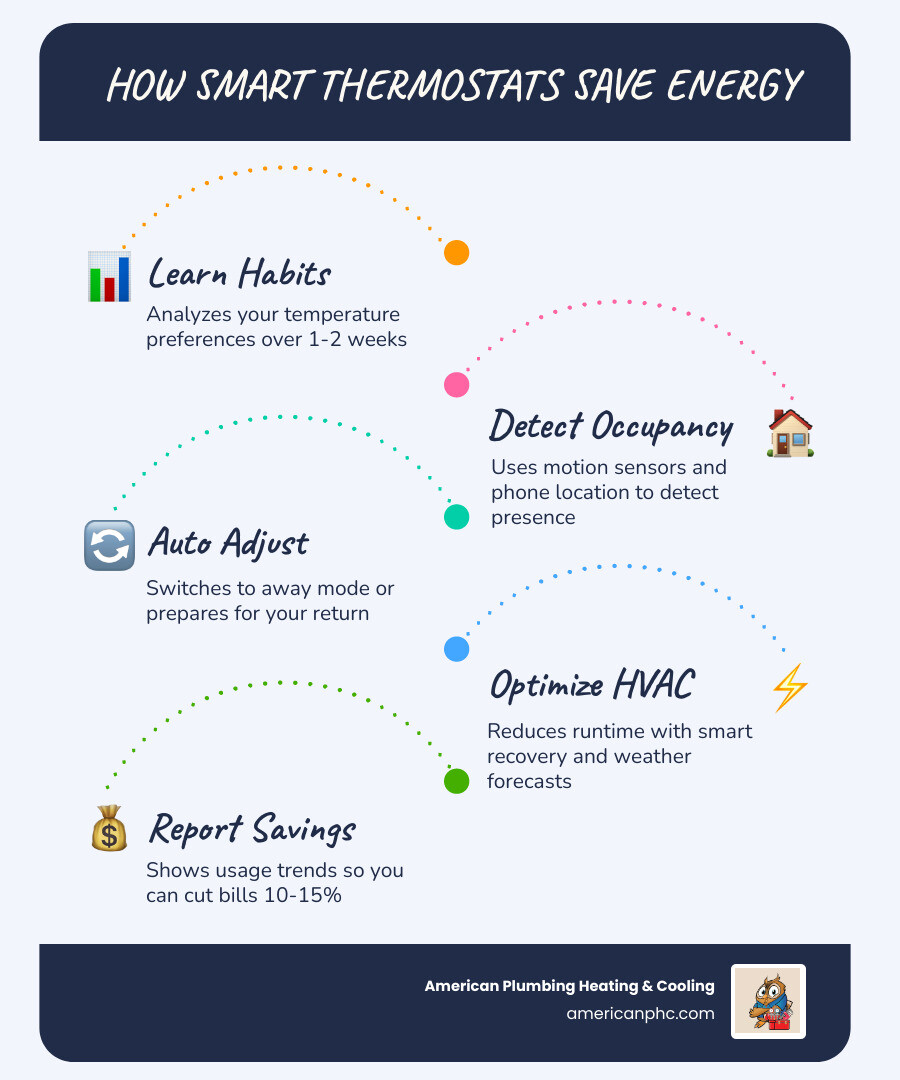
1. Features That Make Smart Thermostats Better Than Traditional Models
If you are still using a manual slider or a basic programmable unit, you are likely doing more of the work yourself to keep your home comfortable. Traditional models require you to guess when you will be home and how outdoor conditions may affect indoor comfort.
The features that make smart thermostats better start with the shift from static programming to active automation. While many homeowners never fully use a programmable thermostat schedule, smart models handle much of that work for you. They connect to your Wi-Fi, allow real-time adjustments, and use data to help your HVAC system respond more efficiently.
Why the features that make smart thermostats better matter for daily comfort
In Florida, comfort is not just about the temperature. It is also about consistency. Many homeowners have experienced waking up too warm because the AC did not start cooling early enough to offset the morning heat. Smart thermostats help solve this through smart recovery, calculating when to start cooling so your home reaches the target temperature on time.
This kind of precision helps create a more stable indoor environment throughout the day and night. When your home stays comfortable without frequent manual changes, it can make sleep and everyday routines easier. To understand more about this, check out Why Your Thermostat Is the Secret to a Better Night's Sleep.
The top features that make smart thermostats better for convenience and control
Convenience is one of the biggest reasons homeowners upgrade. With a smart thermostat, your phone becomes a remote control for your HVAC system. Whether you are commuting home to Sarasota or away for the weekend, you can adjust your home's climate with a few taps.
- Remote Access: Check settings and make changes from almost anywhere.
- Voice Integration: Adjust the temperature hands-free when you are busy.
- Multi-User Control: Give household members app access while keeping control over limits and schedules.
If thermostat settings are a common source of disagreement at home, read How to Set Your Thermostat Without Starting a Family Feud.
2. Learning, Geofencing, and Automation That Save Energy
One of the most impressive features that make smart thermostats better is their ability to automate comfort based on how you live. More homeowners are relying on adaptive features to manage energy use with less day-to-day effort.

How learning algorithms turn habits into smarter heating and cooling
Learning algorithms act as the "brains" of the thermostat. Instead of relying only on manual programming, the device tracks patterns such as when you wake up, when you leave, and what temperatures you prefer at different times of day.
After the first week or two, many models can build a schedule that reflects those habits. If you regularly lower the temperature at night, the thermostat may begin doing that automatically. This reduces the chances of forgotten adjustments and can help cut unnecessary HVAC runtime.
How geofencing works and why it is one of the features that make smart thermostats better
Geofencing uses your smartphone's location to create a virtual boundary around your home, often within a radius of a few hundred feet to a couple of miles. When you leave that area, the thermostat can switch to Away Mode to reduce energy use.
As you head back toward your house in Bradenton or Milton, the system can detect your return and start cooling in advance so the home feels comfortable when you arrive. This helps prevent your system from running at full comfort settings while nobody is home. For more tips on adjusting your thermostat when you are away, see Leaving the Nest: Don't Forget to Adjust Your Thermostat.
3. Energy Reports, Weather Adjustments, and Smart Integrations
Knowledge is useful when it comes to managing your utility use. Smart thermostats provide visibility that traditional models cannot offer.
How energy monitoring helps homeowners cut utility waste
Most homeowners only think about their HVAC system when the bill arrives or the house feels uncomfortable. Smart thermostats can provide daily, weekly, and monthly energy reports showing how long the system ran and what may have affected that runtime.
Did a sudden heatwave in Cape Coral increase cooling demand? Or did frequent door and window use affect indoor temperatures? By reviewing these reports, you can identify patterns and make small changes, such as adjusting your target temperature slightly or refining your schedule, to reduce waste. If you want more ways to save during hot weather, see Stop Burning Cash Just to Stay Cool This Summer.
Weather-based adjustments and connected-home automations that improve performance
Modern smart thermostats do not just monitor indoor temperature. They can also use local weather data to respond to outdoor conditions. If a very hot afternoon is expected in Fort Myers, the thermostat may begin cooling earlier when outdoor temperatures are milder and the system can work more efficiently.
Some models can also connect with compatible smart home devices. For example, you might create a routine that closes smart blinds when afternoon sun starts heating up the living room, helping reduce the load on your AC.
4. Room Sensors, Zoning, and Better Comfort in Every Space
One of the biggest complaints we hear from homeowners in multi-story houses is that the upstairs is a sauna while the downstairs is an icebox. This is usually because the thermostat is located in a hallway that doesn't represent the temperature of the bedrooms.
How room sensors solve uneven temperatures upstairs, downstairs, and beyond
Wireless room sensors are among the features that make smart thermostats better for larger Florida homes. These small devices can be placed in frequently used areas like a master bedroom or a home office.
The thermostat can then "follow" you. If the sensor in your bedroom says it's 78 degrees, but the main unit in the hallway says it's 72, the system will keep running until the bedroom reaches your desired comfort level. This eliminates hot and cold spots and ensures you aren't paying for comfort you aren't actually feeling.
When zoning and multi-room control make the biggest difference
Zoning takes this a step further by using dampers in your ductwork to direct air only to the rooms that need it.
| Solution | Best For | Benefit |
|---|---|---|
| Room Sensors | Standard homes with uneven spots | Averages temperatures or prioritizes specific rooms |
| Full Zoning | Large, multi-story, or sprawling homes | Independent temperature control for different "zones" |
In a home with a guest wing or a rarely used formal dining room, zoning allows you to stop wasting energy on unoccupied spaces while keeping your living areas perfectly chilled.
5. Maintenance Alerts, Savings Potential, and Installation Basics
Beyond comfort and efficiency, smart thermostats can act like a check-engine light for your HVAC system. They monitor performance and may alert you to issues before they become bigger problems.
Smart notifications that help protect your HVAC system
A clogged air filter can increase energy use and put extra strain on system components. Smart thermostats track how long your system has run and can send a notification when it is time to check or replace the filter.
Some models can also flag unusual cooling patterns, such as longer-than-normal runtimes, which may point to airflow issues or a component that needs attention. Catching these signs early can help support system performance and reduce wear over time. To stay on top of system care, remember The Magic Number for HVAC Maintenance Success.
What to check before buying: HVAC compatibility and setup considerations
While many smart thermostats are designed for DIY installation, Florida homes can have more complex HVAC setups, especially with heat pumps or multi-stage cooling systems.
- The C-Wire: Many smart models require a common wire, or C-wire, for constant power. Some older homes in areas like Sarasota or Milton may not have one, which can require a power extender kit or professional wiring.
- Wi-Fi Strength: Make sure your router provides a strong signal at the thermostat location. Weak connectivity can lead to offline errors.
- System Type: Confirm that your HVAC system is compatible. Most smart thermostats are designed for standard 24-volt systems, while high-voltage or proprietary systems may need a specific model.
What kind of savings homeowners typically see
For many households, a smart thermostat can reduce unnecessary heating and cooling runtime by improving scheduling, using away settings, and helping homeowners spot inefficient habits.
- ENERGY STAR models: These are often associated with measurable household energy savings.
- Manual-to-smart upgrades: Homes switching from a manual thermostat may see more noticeable reductions in wasted runtime.
- Best results: Savings usually depend on the home's schedule, HVAC condition, insulation, and how consistently smart features are used.
Frequently Asked Questions About Smart Thermostat Features
Do smart thermostats still work if the internet goes down?
Yes. Your smart thermostat will continue to function as a traditional thermostat using the last schedule it downloaded. You can still adjust the temperature manually at the wall unit. However, you will lose remote access, voice control, and weather-based updates until the Wi-Fi is restored.
Are smart thermostats worth it in homes with busy or unpredictable schedules?
Absolutely—in fact, these homes benefit the most. Features like geofencing and occupancy sensors ensure that if you stay late at work or leave unexpectedly, the thermostat adjusts automatically. You don't have to worry about "wasting" a programmed schedule.
Can one app control multiple thermostats in the same home?
Yes. Most major brands allow you to name your devices (e.g., "Upstairs" and "Downstairs") and control them all from a single dashboard in the app. You can even grant access to multiple family members so everyone can manage their own comfort.
Conclusion: Which Smart Thermostat Features Matter Most for Your Home?
Choosing the right features that make smart thermostats better depends on your home and your routine. If you live in a two-story house in Lakewood Ranch, room sensors may matter most. If you travel often from your home in Navarre, geofencing and remote access may be the features you use most.
At American Plumbing Heating and Cooling, our team helps Florida homeowners choose thermostat options that work with their HVAC systems and comfort goals. With over 100 years of combined experience, our certified pros can help you work through compatibility concerns and make sure your thermostat is set up correctly for the Florida climate.
Ready to improve comfort and get more control over your HVAC system? Whether you need help with a C-wire setup or want guidance on a larger HVAC upgrade, our team is here to help. Explore our full range of HVAC services to learn more.
Need HVAC Help?
Our certified technicians are ready to help with all your heating and cooling needs.
Request ServiceAbout the Author
American Plumbing Heating and Cooling Team
Licensed Florida contractors — HVAC CAC1821761 · Plumbing CFC1431919
More Articles
View All PostsRelated Articles


Ready to Get Started?
Whether you need a repair, maintenance, or a new system installation, our expert team is here to help.