
Spring AC and HVAC Maintenance for the Gulf Coast
By the American Plumbing Heating and Cooling Team
Licensed Florida contractors — HVAC CAC1821761 · Plumbing CFC1431919

Discover spring AC and HVAC maintenance for the Gulf Coast: Combat salt air, boost efficiency and prevent breakdowns before summer heat hits!
Reviewed bythe American Plumbing Heating and Cooling Team — Licensed Florida contractors — HVAC CAC1821761 · Plumbing CFC1431919. Published May 26, 2026. About American Plumbing Heating and Cooling
Dealing with this problem right now? Call (941) 735-6616 and talk to our local team.
Request ServiceWhy Gulf Coast Homeowners Can't Afford to Skip Spring HVAC Maintenance
Spring AC and HVAC maintenance for the Gulf Coast is one of the most important things Florida homeowners can do before summer arrives. Here in Southwest and Northwest Florida, your air conditioner isn't a seasonal appliance — it's a year-round lifeline running 8 to 12 months a year, battling heat that regularly exceeds 95°F, humidity levels between 75% and 85%, and salt air that quietly corrodes outdoor equipment.
That combination is brutal on HVAC systems. Neglected units can use up to 30% more energy than well-maintained ones, and skipping spring maintenance often turns a minor fix into an expensive emergency repair in the middle of July — when every technician in Florida is already booked solid.
The good news? A proper spring tune-up can save around 15% on energy costs and add 3 to 5 years to your system's lifespan. Here's what Gulf Coast homeowners need to know:
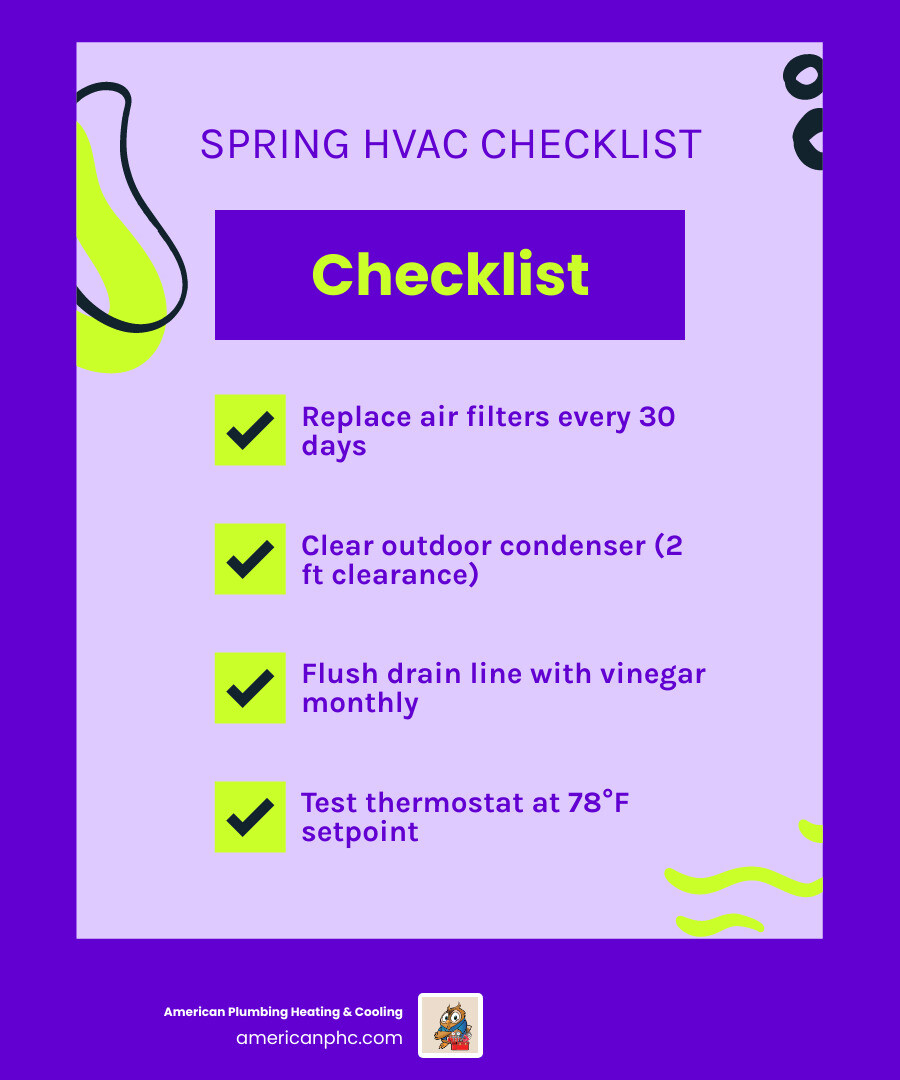
Quick-start spring HVAC maintenance checklist for the Gulf Coast:
- Replace air filters — every 30 days during peak season (coastal salt and humidity clog filters faster)
- Clear the outdoor condenser unit — remove debris and maintain at least 2 feet of clearance
- Flush the condensate drain line — use distilled white vinegar monthly to prevent algae clogs
- Test your thermostat — set to 78°F for optimal comfort and cost savings
- Rinse condenser coils — gently with a garden hose to remove salt buildup (never a pressure washer)
- Inspect ductwork — look for leaks that can waste up to 30% of cooled air
- Schedule a professional tune-up — refrigerant check, capacitor testing, electrical inspection, and coil cleaning before the summer rush
The best time to act is late February through April — before heat waves hit and before technician schedules fill up completely.
Why Spring AC and HVAC Maintenance for the Gulf Coast is Essential
In May 2026, as we look toward another sweltering Florida summer, the importance of a proactive approach cannot be overstated. Along the Gulf Coast, our systems face "heat stress" benchmarks that most northern units never encounter. When temperatures consistently exceed 95°F, your AC isn't just cooling the air; it's fighting a war against "latent heat."
Latent heat refers to the energy required to remove moisture from the air. In our 8 to 12-month cooling season, your AC acts as a massive dehumidifier. If the system is sluggish due to a lack of maintenance, it fails to pull that moisture out, leaving your home feeling "clammy" even if the thermometer says it's 72 degrees. Learning how to get your cooling system ready for hot weather is the first step in ensuring your home remains a sanctuary rather than a sauna.
Furthermore, preventing hvac emergencies with regular maintenance is a matter of safety. In the extreme heat of Sarasota or Milton, a system failure isn't just an inconvenience—it can be a health risk for seniors and pets. Spring maintenance allows us to catch a weak capacitor or a tiny refrigerant leak before it becomes a total system shutdown in July.
Combating Salt Air and Humidity in Florida
If you live in Cape Coral, Siesta Key, or any of our coastal communities, salt air is your HVAC system's silent enemy. Salt spray is highly corrosive; it settles on the delicate aluminum fins of your outdoor condenser and eats away at the metal. This leads to coil degradation, which reduces the unit's ability to release heat, forcing it to run longer and hotter.
To combat this, we recommend identifying the best hvac and plumbing setups to beat the coastal heat, which often include corrosion-resistant coatings. Additionally, our 75-85% humidity levels create a "breeding ground" in your condensate drain lines. Algae and mold love the dark, damp environment of your AC's drainage system. Without a spring flush, this "slime" can clog the line, leading to water backing up into your home and causing thousands of dollars in drywall damage.
DIY Steps for Spring AC and HVAC Maintenance for the Gulf Coast
While some tasks require a pro, there is plenty you can do to help. Start with your thermostat. We recommend a "test run" in early spring. Switch to cooling mode and ensure the air coming from the vents is significantly cooler than the ambient room air. For the best balance of comfort and savings, the Department of Energy suggests a 78°F setpoint when you are home.
Following a guide on how to prepare ac for florida heat in 7 easy steps can simplify your weekend chores. One of the most effective DIY tasks is flushing your condensate drain line. Pouring a cup of distilled white vinegar down the drain line (usually located near the indoor air handler) once a month can kill algae before it forms a clog.
Also, don't forget your vents! Dust and pet hair love to cling to registers in humid weather. A quick vacuuming of all supply and return vents is one simple way to spring ac maintenance before florida heat that improves both airflow and indoor air quality.
Your Essential Spring AC Maintenance Checklist
To stay organized, use this checklist to ensure you are doing how to spring maintenance the right way:
- Filter Replacement: In Florida, the "standard" 3-month rule doesn't apply. Check your filters every 30 days. High humidity makes dust "sticky," clogging filters faster and straining your blower motor.
- Condenser Clearance: Check the outdoor unit. Plants, weeds, and wind-blown debris can choke the system. Follow the "2-foot rule"—ensure there is at least two feet of clear space around the unit and five feet of clearance above it.
- Fin Cleaning: Use a garden hose to gently rinse the outdoor coils. This removes salt residue and pollen. Warning: Never use a pressure washer, as the high-pressure stream will flatten the delicate aluminum fins.
- Debris Removal: Clear out any leaves or "bayou mud" that may have settled at the base of the unit, which can trap moisture and accelerate rust.
Professional Tune-Ups: Beyond the Basics
DIY is great, but it doesn't replace a professional eye. A spring ac tune-up in florida 101 involves technical checks that require specialized tools. For instance, we check refrigerant levels. Refrigerant doesn't "wear out"—if it's low, there's a leak. Finding that leak in the spring can save your compressor from a terminal failure in the summer.
We also perform capacitor testing. Capacitors are like the "batteries" that give your motors the kick they need to start. In the Florida heat, these are often the first components to fail. Replacing a bulging or weak capacitor in April is much better than waiting for it to pop on a Sunday afternoon in August.
When you consider the magic number for hvac maintenance success, which is typically twice a year for the Gulf Coast, you ensure your system calibration is spot on. This includes lubricating moving parts, tightening electrical connections, and inspecting the blower motor to ensure it's not pulling too many amps.
Maximizing Efficiency and Lifespan in Coastal Climates
The data is clear: maintenance pays for itself. A well-maintained system operates roughly 15% more efficiently. In a climate where the AC can account for over 50% of your power bill, those savings add up fast.
| Feature | Maintained System | Neglected System |
|---|---|---|
| Energy Efficiency | Peak performance (Save 15%) | Uses up to 30% more energy |
| System Lifespan | 12–15 years (3-5 year extension) | 7–10 years due to stress |
| Repair Frequency | Rare, preventative fixes | Frequent, emergency breakdowns |
| Humidity Control | Excellent moisture removal | Home feels "clammy" or musty |
| Air Quality | Clean, filtered air | Dust, mold, and pollen buildup |
Using dont sweat it a local guide to hvac system maintenance helps you understand that efficiency isn't just about the machine—it's about the delivery. Duct sealing is a major factor here. In many Florida homes, ductwork runs through attics that can reach 150°F. If your ducts have leaks (and many lose up to 30% of their air), you are literally paying to cool your attic while your living room stays warm. This is why your milton home needs regular ac maintenance to survive the heat.
Recognizing Warning Signs Before Summer Peaks
Your AC will often try to tell you it's struggling before it actually dies. Watch for these red flags:
- Short Cycling: If the unit turns on and off every few minutes, it's likely overheating or has a sensor issue.
- Musty Odors: This "dirty sock syndrome" often points to mold on the evaporator coils or a backed-up drain line.
- Unusual Noises: Squealing, banging, or grinding sounds mean a belt or motor is on its last legs.
- Frozen Coils: If you see ice on the copper lines, you likely have a refrigerant leak or severely restricted airflow.
- Rising Utility Bills: If your May bill is significantly higher than last May's (and rates haven't changed), your system is working too hard.
For those in our southern service areas, everything you need to know about ac maintenance in sarasota or the cape coral homeowners guide to professional ac maintenance services provides deeper insights into these specific localized symptoms.
Strategic Timing for Spring AC and HVAC Maintenance for the Gulf Coast
Timing is everything. In the Gulf Coast, the "spring" window is shorter than you think. By late May, the humidity has usually settled in for the long haul. We recommend scheduling your maintenance in late February, March, or early April.
Why? First, it ensures you keep your cool with professional ac maintenance in bradenton fl before the "summer rush" begins. Once the first 95-degree day hits, our phones ring off the hook with emergency calls. By scheduling early, you get priority choice of appointment times.
Furthermore, why lakewood ranch fl air conditioning maintenance services are a total breeze is because early detection allows for parts to be ordered and installed while the weather is still tolerable. You don't want to be waiting three days for a specialized motor in the middle of a July heatwave.
Preparing Heating Systems and Thermostats
While we focus on cooling, spring is also the time to "put your heater to bed." Most Florida homes use heat pumps. Even if you only used the heat for three days this past winter, it's important to ensure the reversing valve (the part that switches the unit from cooling to heating) isn't stuck.
This is also a great time for upgrades. If you're still using an old manual thermostat, you're likely wasting money. Smart thermostats can be programmed to raise the temperature while you're at work in Pensacola or Navarre, then cool the house down just before you arrive home. If your system is old and struggling, reading why now is the time for an ac replacement in milton a homeowners guide can help you decide if a new, high-efficiency SEER2 unit is a better investment than repairing an aging clunker. If you do decide to upgrade, dont sweat the new ac unit installation in milton—modern systems are significantly quieter and more efficient than those built even ten years ago.
Frequently Asked Questions about Gulf Coast HVAC Care
How often should I change my air filter in the humid Gulf Coast climate?
In the Gulf Coast, we recommend checking your filter every 30 days. High humidity makes dust and pollen "sticky," which causes them to bond to the filter fibers more aggressively than in dry climates. If you have pets or live near the coast where salt and sand are prevalent, monthly changes are essential to prevent airflow restriction.
Why is my AC drain line clogging more frequently in Florida?
The combination of high humidity and warm temperatures creates a perfect environment for algae and "slime" to grow inside your condensate drain lines. Your AC can pull 5 to 20 gallons of water out of the air every day. If that water sits in a warm pipe, algae will bloom. A monthly flush with a cup of distilled white vinegar is the best preventative measure.
Does salt air really shorten the lifespan of my outdoor unit?
Yes. Salt is a catalyst for corrosion. It specifically attacks the aluminum heat-exchange fins and the copper tubing. Without regular rinsing and professional maintenance, a coastal unit might only last 7 to 10 years, whereas an inland unit could last 12 to 15. Regular spring cleaning is the best way to fight back against "salt rot."
Conclusion
At American Plumbing Heating and Cooling, we've seen what the Florida climate can do to a neglected HVAC system. With over 100 years of combined experience, our team of certified professionals knows exactly where to look for the hidden signs of wear and tear that lead to summer breakdowns. From Sarasota to Milton and everywhere in between, we are committed to providing honest, upfront pricing and 24/7 emergency availability.
Don't wait for the heat to become unbearable. Give your AC the "deep-tissue massage" it needs to survive the 2026 summer season.
Schedule your professional spring maintenance today and breathe easy knowing your comfort is guaranteed.
Need HVAC Help?
Our certified technicians are ready to help with all your heating and cooling needs.
Request ServiceAbout the Author
American Plumbing Heating and Cooling Team
Licensed Florida contractors — HVAC CAC1821761 · Plumbing CFC1431919
More Articles
View All PostsRelated Articles


Ready to Get Started?
Whether you need a repair, maintenance, or a new system installation, our expert team is here to help.