
The Ultimate Guide to HVAC Condition and Home Appraisals
By the American Plumbing Heating and Cooling Team
Licensed Florida contractors — HVAC CAC1821761 · Plumbing CFC1431919

Learn how HVAC condition affects home appraisals and discover steps to protect your property value in Florida.
Reviewed bythe American Plumbing Heating and Cooling Team — Licensed Florida contractors — HVAC CAC1821761 · Plumbing CFC1431919. Published May 26, 2026. About American Plumbing Heating and Cooling
Dealing with this problem right now? Call (941) 735-6616 and talk to our local team.
Request ServiceWhy HVAC Condition and Home Appraisals Are More Connected Than You Think
Understanding how hvac condition affects home appraisals can mean the difference between a strong appraisal and one that costs you thousands in lost equity — especially here in Florida, where heating and cooling systems work harder than almost anywhere else in the country.
Here is a quick breakdown of how your HVAC system influences your home's appraised value:
| HVAC Condition | Likely Appraisal Impact |
|---|---|
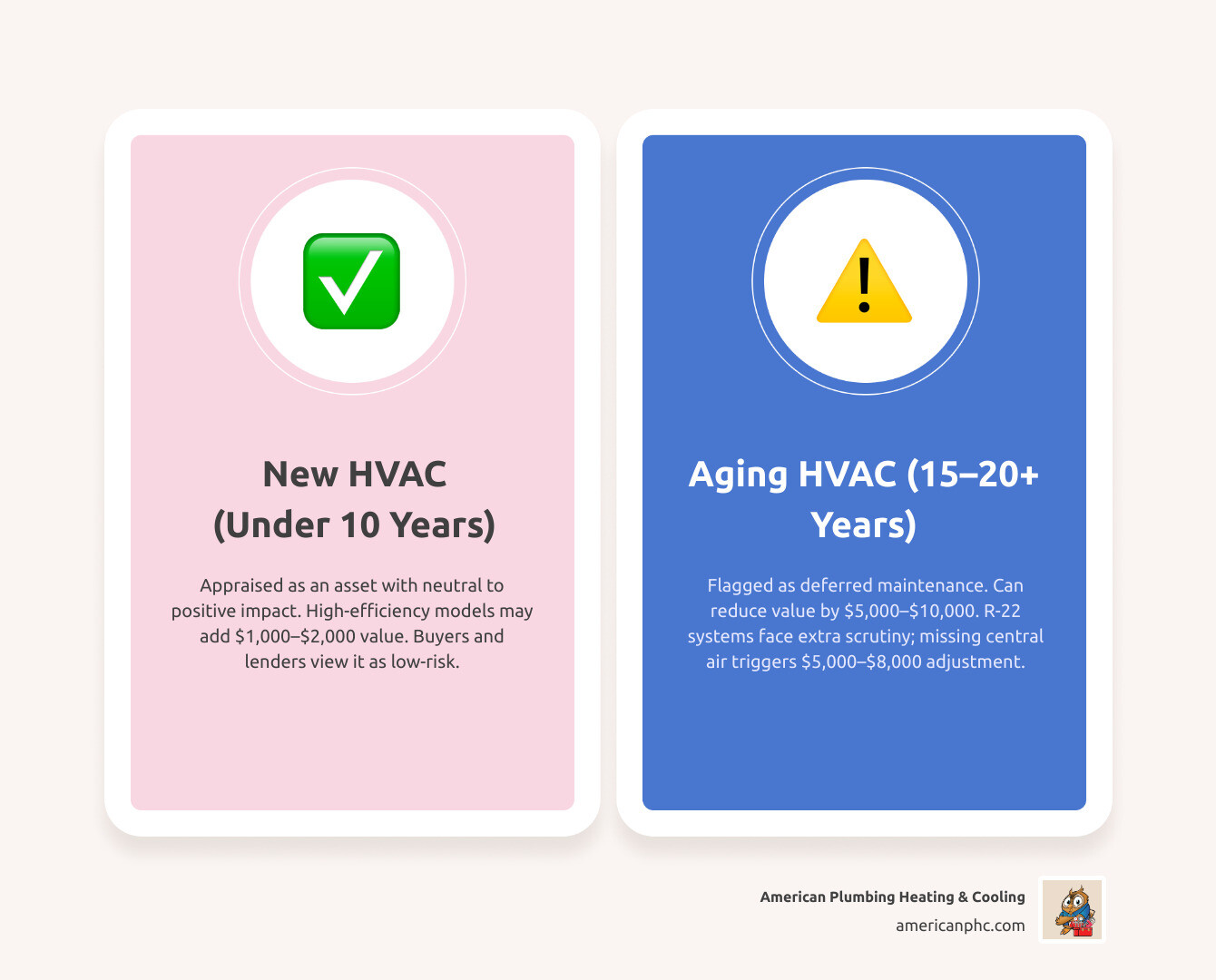
| New or recently replaced (under 10 years) | Positive or neutral — viewed as an asset |
| Well-maintained, 10–15 years old | Minimal impact if documented and functional |
| Aging system, 15–20 years old | Flagged as deferred maintenance — potential value reduction |
| Failing or over 20 years old | Can reduce appraised value by $5,000–$10,000 or more |
| Missing central air (in markets where it is expected) | $5,000–$8,000 downward adjustment |
| High-efficiency system (SEER2 18+, AFUE 95%+) | Potential positive adjustment of $1,000–$2,000+ above standard |
Appraisers evaluate your HVAC system as part of your home's overall physical condition — right alongside the roof, plumbing, and electrical systems. They are not HVAC technicians, so they rely on visual checks, functional operation, system age, and any documentation you provide. A system that looks neglected, runs poorly, or uses phased-out R-22 refrigerant sends a clear signal: deferred maintenance. And deferred maintenance lowers appraised value.
For Florida homeowners in Sarasota, Bradenton, Pensacola, and surrounding areas, this matters even more. Central air conditioning is not a luxury here — it is a baseline expectation. A home without a properly functioning cooling system is not just uncomfortable; it is a liability in the eyes of an appraiser and a red flag for buyers and lenders alike.
Whether you are preparing to sell, refinance, or tap into your home equity through a HELOC, the condition of your HVAC system plays a real role in the outcome.
How Appraisers Evaluate Your Heating and Cooling System
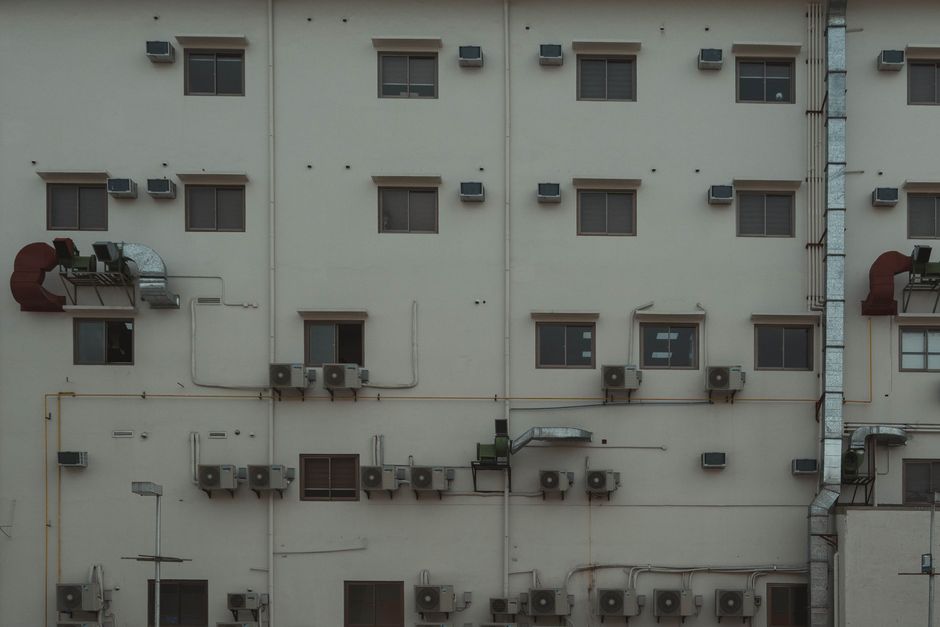
When an appraiser steps onto your property in Sarasota or Bradenton, they aren't there to perform a 50-point mechanical inspection like we do during a tune-up. Instead, they are looking at your HVAC system through the lens of a "Physical Condition" category. This means they are assessing how much life is left in the system and whether it meets the standard for a livable, modern home in the current market.
The evaluation generally covers:
- Visual Assessment: They check for rust, corrosion, and general wear and tear. A unit covered in debris or showing signs of salt-air damage (common in places like Siesta Key or Pensacola) can signal poor maintenance.
- Functional Testing: They will typically turn the system on to ensure it actually blows conditioned air. If the thermostat doesn't respond or the unit makes loud, grinding noises, it gets flagged.
- Manufacturer Labels: Appraisers look at the data plate to verify the age and the tonnage (the cooling capacity) to ensure it is properly sized for your home's square footage.
- Efficiency Ratings: They note the SEER2 (Seasonal Energy Efficiency Ratio) and AFUE (Annual Fuel Utilization Efficiency). If you want to understand what these numbers mean for your home, check out A Homeowner Guide to Efficiency Ratings.
How hvac condition affects home appraisals in Sarasota
In the Sarasota market, appraisers are particularly sensitive to climate control. Because our humidity levels are so high, a system that can’t effectively dehumidify is seen as a functional deficiency. One major red flag is the presence of R-22 refrigerant. Since this refrigerant has been phased out, systems that still use it are considered "end-of-life" liabilities because repairs are prohibitively expensive. In our local market, an appraiser will likely compare your home to recent sales in neighborhoods like Lakewood Ranch or Venice. If those comparable homes have new, efficient systems and yours is 20 years old, you can expect a downward adjustment in value.
How HVAC Condition Affects Home Appraisals and Property Value
We often tell our customers that a high-quality HVAC system is like a shield for your home equity. While a new system might not always increase your appraisal dollar-for-dollar compared to the installation cost, it prevents the massive value deductions that come with an old or failing unit.
| System Status | Impact on Home Equity |
|---|---|
| New High-Efficiency | Can increase appraised value by 5% to 7% |
| Standard Replacement | Typically recoups 40% to 70% of cost in added value |
| Failing/Outdated | Often triggers a $5,000 to $10,000 value penalty |
| Missing AC | Can result in a "functional obsolescence" penalty of $8,000+ |
How hvac condition affects home appraisals is also a major factor in financing. If you are applying for a Home Equity Line of Credit (HELOC) or a refinance, your borrowing limit is tied directly to your appraised value. A $10,000 deduction for a failing HVAC system doesn't just lower your home's worth; it reduces your available credit. Lenders for FHA or VA loans may even require a functional heat and air source before they will clear the loan for closing. For more on how efficiency ties into your bottom line, see Energy Efficiency and Your Home Value Connection.
How hvac condition affects home appraisals for Pensacola sellers
In Pensacola and Milton, the "market expectation" is central air. If you are trying to sell a home that relies on window units while the neighbors have central HVAC, you are facing a significant uphill battle. Appraisers call this "functional obsolescence." Beyond the appraisal, a new system gives you incredible negotiation leverage. It removes the "post-purchase anxiety" for buyers who might otherwise ask for a $10,000 price concession to cover a future replacement.
Maximizing ROI: High-Efficiency Upgrades for Florida Homeowners
If you are going to replace your system before an appraisal, going the high-efficiency route is the smartest move for ROI. In 2026, energy standards have shifted, and systems using the new R-454B refrigerant are becoming the gold standard for future-proofing your home value.
High-efficiency systems—those with high SEER2 and HSPF2 (Heating Seasonal Performance Factor) ratings—can offer a 50% to 80% ROI in added home value. These systems often include features like:
- Variable-speed compressors: For better humidity control and lower bills.
- Zoned systems: Allowing different temperatures in different rooms, which appraisers view as a premium feature.
- Smart Thermostats: While they don't add thousands on their own, they improve "marketability" and signal to the appraiser that the home is modern and well-cared for.
To make these upgrades more affordable, we recommend checking out The Floridians Guide to High Efficiency Cooling Incentives and How Florida Homeowners Can Cash In on the Inflation Reduction Act.
Leveraging local benefits for better valuations
Florida homeowners have unique opportunities to boost their property value while saving money. Between utility rebates from local providers and federal tax credits that can cover up to 30% of a heat pump installation, the net cost of an upgrade is often much lower than the value it adds to the appraisal. We can help you navigate these options; learn more at Maximize Your Utility Rebates on the Florida Gulf Coast and How to Get Paid for Upgrading Your Florida Home.
Preparing for the Visit: Documentation and Maintenance Tips
Don't leave your appraisal to chance! Since appraisers aren't technicians, they might miss the fact that you just invested in a high-end system or that you've had it serviced every year. We recommend creating an "HVAC Portfolio" to hand to the appraiser during their visit.
Your portfolio should include:
- Installation Invoices: Proves the date of install and the cost.
- Efficiency Labels: Shows the SEER2/AFUE ratings clearly.
- Municipal Permits: Appraisers value permitted work much higher than "DIY" or unpermitted swaps.
- Service History: A log of professional tune-ups shows the system has been maintained, which can make a 12-year-old system look better than a neglected 8-year-old one.
- Warranty Info: Highlight if the warranty is transferable to a new owner.
Choosing the right partner for these records is key. As a company with over 100 years of combined experience, we provide the detailed documentation appraisers love to see. You can read about the Benefits of Choosing a Daikin Elite Dealer Since 2014 to see how our certifications add weight to your home's pedigree.
Frequently Asked Questions about HVAC and Appraisals
How old does an HVAC system need to be before it hurts my appraisal?
The "danger zone" typically starts around the 15-year mark. In the harsh Florida climate, systems over 15 to 20 years old are almost always flagged as nearing the end of their useful life. At this point, the appraiser may view the system as a liability rather than an asset, assuming the next owner will have to replace it immediately. However, a well-documented maintenance history can sometimes push a healthy 18-year-old system into the "neutral" category.
Will a new HVAC system increase my HELOC credit limit?
While it won't typically cause a massive spike in value on its own, it protects your existing equity. If your old system would have triggered a $10,000 deduction, replacing it effectively "saves" that $10,000 in appraised value. This keeps your Loan-to-Value (LTV) ratio in a healthy range, which can be the deciding factor in whether your HELOC is approved for the amount you need.
Is getting my HVAC serviced before an appraisal worth it?
Absolutely. A pre-appraisal service visit provides operational proof that the system is working perfectly. It also allows us to clean the coils and the outdoor unit, improving the "visual condition" rating. A clean, quiet, and efficient system supports the overall impression of a well-maintained home, which can lead to a higher overall condition rating for the entire property.
Conclusion
At American Plumbing Heating and Cooling, we’ve spent years helping homeowners in Sarasota, Bradenton, Pensacola, and across Southwest Florida maximize their home comfort and their property value. We know that how hvac condition affects home appraisals is a top concern when you're looking to sell or tap into your equity.
Whether you need a quick tune-up to get "appraisal-ready" or you're looking to invest in a high-efficiency replacement that will pay dividends for years to come, our team of certified pros is here to help. With honest upfront pricing and 24/7 emergency availability, we ensure your home stays cool and your equity stays protected.
Explore our professional HVAC services to protect your home value or give us a call today to schedule your consultation!
Need HVAC Help?
Our certified technicians are ready to help with all your heating and cooling needs.
Request ServiceAbout the Author
American Plumbing Heating and Cooling Team
Licensed Florida contractors — HVAC CAC1821761 · Plumbing CFC1431919
More Articles
View All PostsRelated Articles


Ready to Get Started?
Whether you need a repair, maintenance, or a new system installation, our expert team is here to help.