
A Practical Guide to How Hurricane Season Affects Your AC and Plumbing
By the American Plumbing Heating and Cooling Team
Licensed Florida contractors — HVAC CAC1821761 · Plumbing CFC1431919

Learn how hurricane season affects your AC and plumbing with expert Florida prep and recovery tips.
Reviewed bythe American Plumbing Heating and Cooling Team — Licensed Florida contractors — HVAC CAC1821761 · Plumbing CFC1431919. Published July 24, 2026. About American Plumbing Heating and Cooling
Dealing with this problem right now? Call (941) 735-6616 and talk to our local team.
Request ServiceWhat Hurricane Season Does to Your AC and Plumbing — and Why It Matters
How hurricane season affects your AC and plumbing is something every Florida homeowner needs to understand before June 1 arrives. Hurricanes don't just damage roofs and windows. They hit your home's mechanical systems hard — and the damage isn't always obvious until you try to turn things back on.
Here's a quick overview of the main ways hurricanes damage AC and plumbing systems:
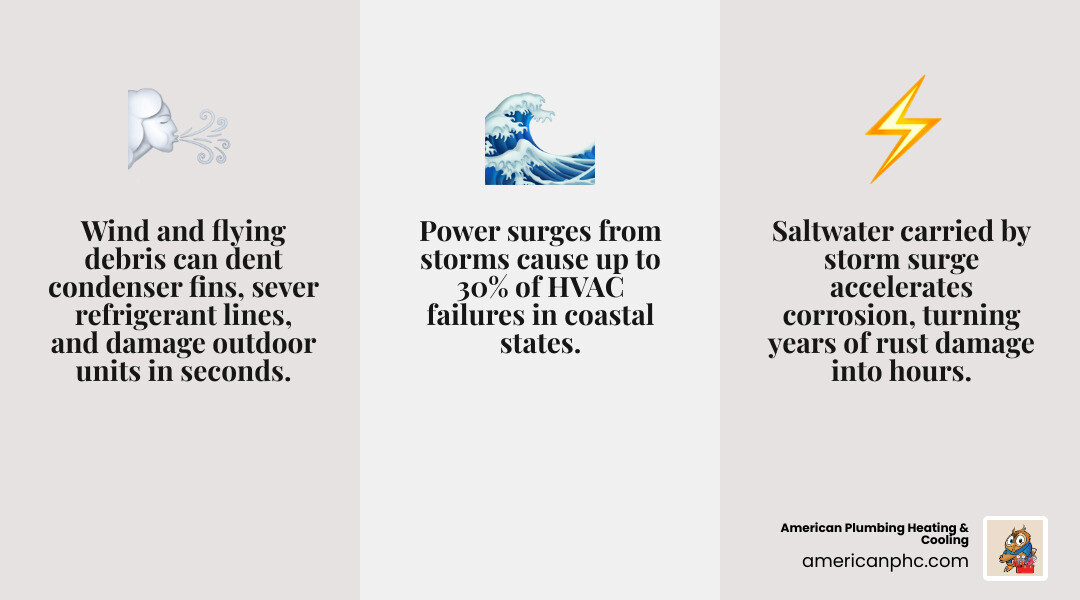
- Wind and flying debris can dent condenser fins, loosen panels, and sever refrigerant lines on outdoor AC units
- Saltwater carried by storm surge and wind accelerates corrosion on metal components, compressing years of rust damage into a matter of hours
- Flooding can submerge compressors and electrical components, causing shorts and contamination that make systems unsafe to restart
- Power surges — which are responsible for up to 30% of HVAC failures in coastal states — can destroy control boards, capacitors, and compressors
- Sewer backups spike by over 200% in hurricane-affected areas as overwhelmed municipal systems push waste back into homes
- Pipe stress from soil movement, pressure changes, and floodwater infiltration can cause cracks or bursts in your home's plumbing
The combination of all these forces is what makes hurricane season uniquely brutal on home systems. A single storm can do what years of normal wear would not. And in the Florida heat that follows every storm, losing your AC isn't just uncomfortable — it can become a health emergency fast.
The good news is that smart preparation before a storm, and careful recovery after one, can protect your systems and get you back to normal much faster.
How Hurricane Season Affects Your AC and Plumbing
When a major storm rolls across Florida, our homes are put to the ultimate test. While we often focus on boarding up windows and stocking up on bottled water, the internal networks that keep our homes livable—our cooling and plumbing systems—face extreme stress. Hurricanes cause an estimated $54 billion in annual damages to U.S. homes, with HVAC and plumbing systems among the most frequently damaged components.
Understanding How Hurricane Season Affects Your HVAC and Plumbing Systems is the first step toward preventing catastrophic failures. The damage typically occurs in waves: first from the high winds and flying debris, then from rising floodwaters and saltwater storm surges, and finally from the unstable electrical grid during and after the storm. By recognizing these threats early, we can take targeted actions to minimize our risks.
Wind, Debris, and Saltwater: How Hurricane Season Affects Your AC and Plumbing
The outdoor condenser unit of your central air conditioner is built to withstand standard outdoor exposure, but it is not designed to survive hurricane-force winds or airborne projectiles. High winds can easily bend delicate aluminum condenser fins, reducing airflow and forcing your system to work much harder once power is restored. Flying debris, such as tree branches or loose patio furniture, can puncture refrigerant lines or completely crush the unit's fan blade and casing.
For coastal residents in areas like Sarasota, Cape Coral, and Pensacola, saltwater represents a silent, highly destructive threat. Windborne salt spray and storm surges carry salt particles far inland. When saltwater coats your outdoor AC unit, it initiates rapid galvanic corrosion.
Salt accelerates the rusting process of copper coils, aluminum fins, and steel cabinets. Furthermore, salt particles accumulate on the coils, forming an insulating layer that severely reduces heat exchange efficiency long after the storm has passed. This is why keeping up with the Ultimate Checklist for HVAC Maintenance in Tropical Coastal Florida is critical for coastal properties.
Flooding and Surges: How Hurricane Season Affects Your AC and Plumbing
Flooding is perhaps the most devastating threat to both your electrical and plumbing systems. When floodwaters rise, your outdoor compressor and its electrical controls can become fully submerged. Flooding from hurricanes can reduce HVAC system lifespan by 40-60% due to corrosion and electrical damage. If water enters the compressor housing or the electrical control box, it can ruin the system's insulation, contaminate the refrigerant, and short out sensitive wiring.
On the plumbing side, heavy rainfall and storm surges saturate the ground and overwhelm municipal wastewater systems. Sewer backups and plumbing failures increase by over 200% in hurricane-affected areas due to overwhelmed municipal systems. When local lift stations lose power or are inundated with stormwater, raw sewage can be pushed backward through residential lateral lines directly into low-lying homes.
Additionally, rapid soil shifts caused by extreme saturation can put immense physical pressure on buried pipes, leading to underground cracks, leaks, or total pipe collapses. Recognizing these warning signs is crucial, especially When Your HVAC Failure Is a True Emergency that threatens your home's safety and structural integrity.
Pre-Storm Preparation: Protecting Your AC and Plumbing
Preparing your home's mechanical systems before a storm makes landfall can mean the difference between a quick recovery and thousands of dollars in repairs. If you wait until a tropical storm watch is issued, local hardware stores will be crowded, and service technicians will be fully booked.
Taking proactive steps is essential. Reviewing a comprehensive Hurricane Season Plumbing HVAC Prep Florida plan well in advance ensures you are ready when the weather takes a turn.
Securing and Powering Down the Outdoor AC Unit
One of the most common mistakes homeowners make is running their air conditioning during a storm. To protect your system, you should shut it down before the outer wind bands arrive.
Follow this safe shutdown sequence:
- Turn the system off at your thermostat.
- Flip the outdoor electrical disconnect switch located near your condenser unit.
- Turn off the dedicated AC circuit breaker inside your main electrical panel.
Shutting down your system prevents it from running under unsafe voltage conditions, such as brownouts, which can quickly burn out the compressor motor.
To prepare for the heat that follows a power outage, pre-cool your home by lowering your thermostat several degrees in the 24 hours leading up to the storm. This helps trap cool air inside your insulated walls for as long as possible.
Additionally, ensure your outdoor unit is physically secured. Florida building codes require outdoor condensers to be anchored to concrete pads to resist high winds. Inspect your hurricane tie-down straps or brackets to ensure they are tight and free of rust.
If you want to learn more about preparing your system for extreme weather, check out our guide on How to Prepare AC for Florida Heat in 7 Easy Steps.
Plumbing Safeguards to Prevent Sewer Backups and Flooding
Your plumbing system requires equal attention before a storm hits. If you live in a low-lying area or a designated flood zone, a sewer backflow preventer is your single best line of defense. This one-way valve installed on your main sewer line allows wastewater to exit your home but prevents rising municipal sewage from flowing backward into your drains.
If you plan to evacuate or if severe flooding is expected in your neighborhood:
- Locate and shut off your main water valve: This prevents contaminated floodwater from entering your home's clean water lines if municipal water pressure drops.
- Test your sump pump: If your home relies on a sump pump, test it by pouring five gallons of water into the pit to ensure the float switch activates the pump. Consider investing in a battery-powered backup system, as standard pumps will fail during a power outage.
- Clear your drains: Ensure your gutters, downspouts, and yard drains are entirely free of leaves and debris so stormwater can flow away from your foundation. Keeping your indoor drains clean is also important; however, Why Regular Drain Cleaning Is a Total Pipe Dream for Your Home if you rely solely on harsh chemical cleaners instead of professional solutions.
Post-Storm Recovery: Safe Restart Procedures
Once the storm has passed and the skies clear, the temptation to immediately flip your breakers and turn your AC back on is strong. However, rushing to restart your systems without a proper inspection is a leading cause of post-storm equipment failure.
Taking a few minutes to perform basic safety checks will protect your equipment and keep your family safe. If you find yourself facing damage, knowing How to Stay Safe During a Heating or Cooling Emergency is vital for navigating the aftermath of a storm.
When Is It Safe to Turn the AC Back On?
Before restoring power to your air conditioner, perform a thorough visual inspection of the outdoor unit. Look for any signs of physical shifting on the concrete pad, bent fan blades, or loose wiring.
If your outdoor unit was submerged in floodwater, do not turn it back on. Water can enter the sealed compressor housing, ruin the electrical control board, and short-circuit the system. Running a flooded unit can permanently destroy the compressor.
If the unit is dry and appears undamaged, wait for utility power to stabilize for at least an hour before restarting. Power grids fluctuate wildly immediately after restoration, and these rapid voltage changes can easily fry sensitive electronics.
When you are ready to restart, turn on the indoor breaker first, then the outdoor disconnect, and finally set your thermostat to cool. If the system makes unusual grinding noises, trips the breaker immediately, or fails to blow cool air, shut it down right away. Understanding What to Expect During an Emergency HVAC Service Call can help ease your mind if you need to schedule a professional repair.
Post-Storm Plumbing Checks and Water Restoration
Restoring your water and plumbing systems also requires a careful, step-by-step approach:
- Inspect for visible leaks: Walk around your property and check exposed pipes, outdoor spigots, and your water heater for any signs of physical damage or shifting.
- Restore your main water valve slowly: If you turned off your main water valve, open it slowly to prevent a sudden pressure surge from damaging your fixtures.
- Flush your taps: Run cold water through a single tub faucet or utility sink for 3 to 5 minutes. This clears out any sediment, air pockets, or discolored water that may have entered your home's piping during municipal pressure fluctuations.
- Wait for utility clearance: Do not drink, cook with, or bathe in tap water until local authorities officially declare the municipal water supply safe.
- Check your water heater: If your water heater was exposed to standing water, have a professional inspect the gas valves or electrical elements before turning it back on.
The Role of Professional Pre-Season Maintenance
The best time to handle a hurricane emergency is months before the storm ever forms. Proactive pre-season maintenance ensures your systems are running at peak efficiency and are physically prepared to withstand extreme weather.
Weak components—such as a slightly corroded electrical contactor or a partially clogged drain line—are almost guaranteed to fail under the added stress of a tropical storm.
| Maintenance Task | DIY Scope | Professional Scope | Why It Matters for Hurricanes |
|---|---|---|---|
| Surge Protection | Check status lights on plug-in protectors | Install whole-home surge protection at main panel | Homes without surge protection are 3x more likely to experience compressor failure. |
| Coil Cleaning | Gently rinse debris from outer fins with hose | Deep-clean coils with specialized, self-rinsing solutions | Removes corrosive salt deposits and restores heat transfer efficiency. |
| Drain Lines | Pour vinegar down the condensate T-joint | Flush drain line with pressurized air/water; test float switch | Prevents indoor water damage when high humidity forces the AC to run continuously. |
| Physical Security | Clear loose leaves and trim nearby branches | Inspect structural brackets, concrete pad, and tie-down straps | Prevents high winds from dislodging or tipping the outdoor condenser. |
Investing in professional maintenance is the most effective way of Preventing HVAC Emergencies with Regular Maintenance. When you Schedule Hurricane Readiness Check Florida, our certified technicians will inspect every critical point of your system, ensuring your home is prepared to weather the storm.
Frequently Asked Questions About Storm Damage
Should I cover my outdoor AC unit with a tarp during a hurricane?
No, you should never wrap your outdoor AC unit tightly in a standard plastic tarp or trash bag. While it might seem like a good way to keep water out, tight plastic wraps trap condensation and moisture inside the unit. This trapped moisture accelerates rust on electrical connections and creates a breeding ground for mold and mildew.
Additionally, if the power flickers and the system attempts to run while covered, it will overheat and burn out the compressor within minutes. If you want to protect the unit from falling debris, you may use a breathable, hurricane-rated cover specifically designed for your system—but only after the system is completely powered down at the breaker.
Will homeowners insurance cover hurricane damage to my AC and plumbing?
In most cases, standard Florida homeowners insurance policies will cover damage caused by wind, falling trees, or airborne debris, subject to your windstorm deductible. However, there is a major catch: standard policies typically exclude damage caused by rising floodwaters or storm surges.
If your outdoor condenser or indoor plumbing is ruined because your yard flooded, you will generally need a separate flood insurance policy to cover those repairs. We highly recommend taking clear, dated photos of your HVAC and plumbing equipment before the start of every hurricane season to provide invaluable documentation for any insurance claims.
Can I run my central air conditioner on a portable generator?
Generally, no. A typical 3-ton residential air conditioner requires a massive amount of power to start up—often pulling between 15,000 to 18,000 startup watts. Most portable generators under 7,500 watts simply cannot handle this initial startup surge, and attempting to do so can damage both your generator and your AC compressor.
If you want to run your AC on generator power, you either need a properly sized whole-home standby generator installed with an automatic transfer switch, or you must install a soft-start kit on your AC unit. A soft-start kit reduces your compressor's startup power demands by up to 65%, making it much easier to run your cooling system on backup power.
Conclusion
Understanding how hurricane season affects your AC and plumbing is an essential part of living in Florida. From the destructive force of saltwater corrosion and high winds to the hidden dangers of power surges and sewer backups, these powerful storms present unique challenges to our homes. By taking the time to secure your outdoor condenser, install backflow preventers, and follow safe post-storm restart procedures, you can protect your investments and keep your family comfortable.
At American Plumbing Heating and Cooling, we have been helping Florida homeowners prepare for and recover from storm season since 2014. With over 100 years of combined team experience, our certified professionals serve communities across Southwest and Northwest Florida, including Sarasota, Bradenton, Milton, Navarre, Pensacola, and Cape Coral.
Whether you need a pre-season safety inspection, a whole-home surge protector installation, or 24/7 emergency storm repairs, we are here to provide honest, upfront pricing and dependable workmanship.
Don't wait until the next storm is on the horizon. Contact us today to learn more about our plumbing services or to schedule your comprehensive hurricane readiness check. Let us give you the peace of mind you deserve this season!
Need HVAC Help?
Our certified technicians are ready to help with all your heating and cooling needs.
Request ServiceAbout the Author
American Plumbing Heating and Cooling Team
Licensed Florida contractors — HVAC CAC1821761 · Plumbing CFC1431919
More Articles
View All PostsRelated Articles


Ready to Get Started?
Whether you need a repair, maintenance, or a new system installation, our expert team is here to help.